Greenland Deal Takes Effect
Denmark's parliament voted 109-0 to approve a defense agreement with the United States and Greenland that lets the US build a missile-defense system on the Arctic island and set up two new military areas there. Greenland's foreign minister said a diplomatic note sent to Washington afterward put the agreement into force.
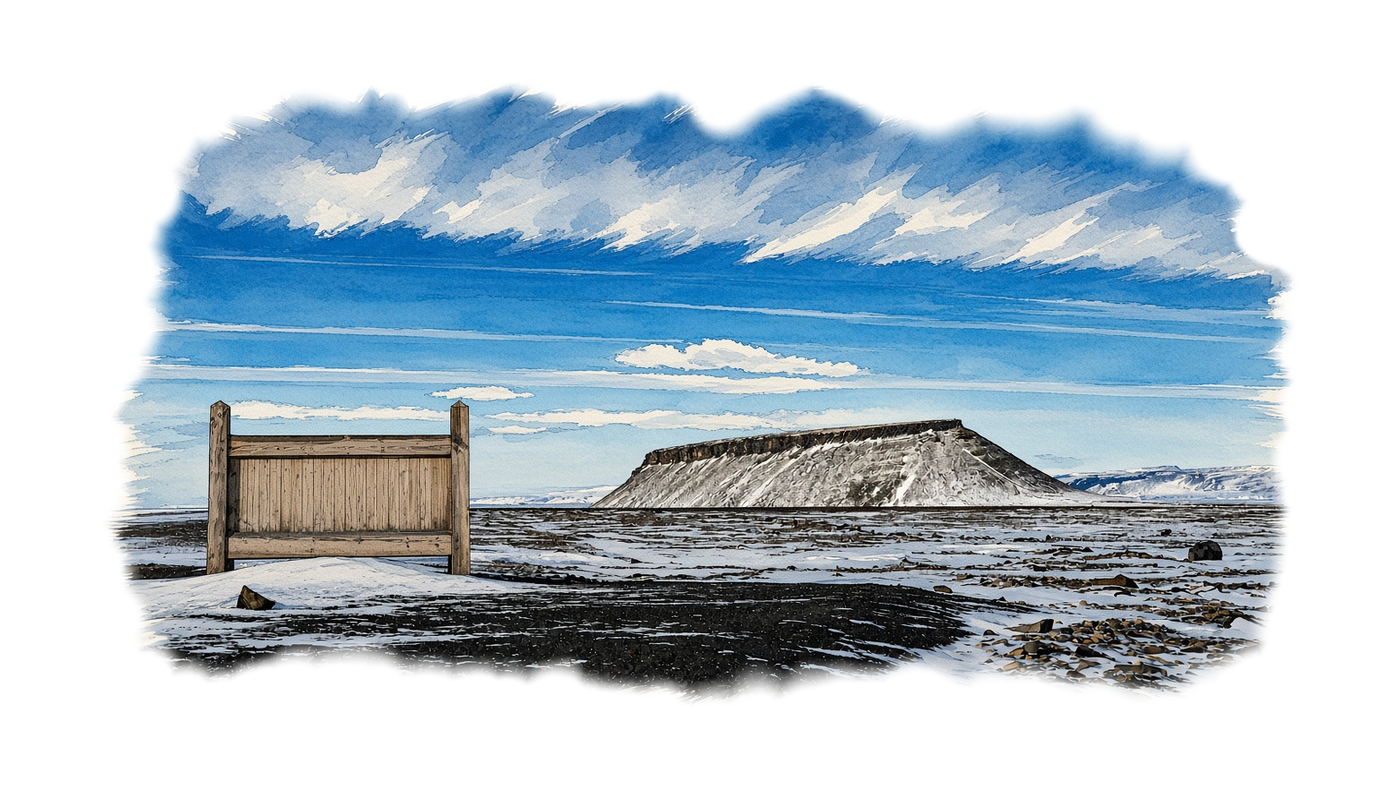
Archive photo: Mount Dundas above Pituffik Space Base, the US base in northwest Greenland, April 2026.Illustration by Agentic Newsgathering, based on a U.S. Space Force photo by Senior Airman Ryan Quijas (public domain).
Denmark's parliament approved the defense and security agreement between the United States, Denmark and Greenland in a 109-0 vote. Greenland is a self-governing territory of Denmark with about 57,000 people, and President Donald Trump had repeatedly said he wanted the United States to take control of it. Greenland's own parliament approved the deal earlier this month, so the Danish vote was the last one needed. Denmark and Greenland then sent Washington a note saying both parliaments had consented, and Greenland's foreign minister, Múte B. Egede, told Danish broadcaster DR the agreement had entered into force. The deal amends a 1951 defense agreement. It allows the United States to build the missile-defense system Trump calls "Golden Dome" in Greenland, to set up new defense areas at Narsarsuaq in the south and Mestersvig in the northeast and to expand its existing Pituffik Space Base. It also reaffirms Danish sovereignty over Greenland and Greenlanders' right to self-determination. Danish Foreign Minister Lars Løkke Rasmussen said the United States has not yet told Denmark of any concrete plans for new bases. Officials from the three governments will meet in December to start putting the deal into practice.
Terms of the agreement
The agreement amends and supplements the older treaty under which the United States already defends Greenland. It expands the US military role on the island, including permission to establish the missile-defense system Trump calls "Golden Dome." It allows new US defense areas at Narsarsuaq, in southern Greenland, and Mestersvig, in the northeast, and an expansion of Pituffik Space Base, the northernmost US base. Any other future sites would need approval from both Denmark and Greenland. The agreement has no end date.
It also reaffirms Danish sovereignty over Greenland and the right of Greenland's people to self-determination. According to The Guardian, the agreement recognizes Greenland as an equal partner, gives the United States underwater access around the island, and says Greenland would remain in NATO if it became fully independent.
Denmark's defense minister, Jeppe Bruus, said the three governments will now work on a Greenland law to screen outside investors on security grounds, along with the plans for the two new US areas. "I expect that the US will now also start to be more concrete on the purposes and the arrangement around these two areas," he told Reuters.
Steps to ratification
The three governments concluded the agreement in New York on September 22. Under Section 19 of Denmark's constitution, the Danish parliament had to consent, and Greenland's parliament, the Inatsisartut, had to approve it as well. The Inatsisartut approved it on November 3; ArcticToday reported the vote there was 16-0, with seven members abstaining. The Danish parliament passed it on a second reading. The US side needed no vote: the Danish parliament said Trump had the authority to conclude the agreement for the United States without later approval from Congress.
Officials have described the final step differently. The Danish parliament said the government could now formally notify the United States that both parliaments had consented, which would make the agreement legally binding. Egede told DR the agreement had entered into force. According to DR, Denmark and Greenland stamped and sent the note to the United States on Thursday morning. Løkke Rasmussen told The Guardian that what remained was for Trump to send a notification to the US Congress.
Reaction in Copenhagen, Nuuk and Washington
"This is a positive development, as it removes all uncertainty surrounding Greenland and establishes a proper framework for future cooperation," Løkke Rasmussen told reporters, according to The Guardian. He added that trust with the United States had been damaged and that "there is a significant task of rebuilding ahead." He told the Greenlandic newspaper Sermitsiaq that it remains an open question how far the Americans want to use the options the agreement creates, but that nothing can happen at Narsarsuaq or Mestersvig without a prior process. He said Denmark had heard nothing concrete from the United States so far and had held no further talks with it about either site. The Guardian reported that he said the US had yet to inform Denmark of any plans to establish new military bases.
US Secretary of State Marco Rubio wrote on X that the agreement "modernizes the United States-Denmark-Greenland defense partnership and bolsters the national security of the United States and our allies in NATO." The US ambassador to Denmark, Ken Howery, wrote on social media that he was "thrilled" by the unanimous vote, according to The Guardian.
Egede told DR that officials from Greenland, Denmark and the United States will meet in the United States in early December to begin putting the agreement into practice. He said trust has to be rebuilt after the process the three governments have been through.
Road to the deal
Trump's refusal to rule out military or economic force to acquire Greenland set off a diplomatic crisis inside NATO in January, followed by months of negotiations. Before the signing, Trump said the United States would "immediately begin the process of developing a large military presence in the appropriate part of Greenland." Last month he said "massive oil, gas and mineral exploration" was set to begin there. Greenland has banned new oil drilling, and Denmark has said any resource extraction must respect local law.
Naaja Nathanielsen, a Greenlandic member of the Danish parliament, told Reuters the pressure had bred distrust of the US administration in Greenland. "It's been really difficult for Greenlanders these past two years. It's been seeping into every aspect of our lives," she said.
Mikkel Vedby Rasmussen, a political science professor at the University of Copenhagen, told Reuters the deal was more likely a beginning than an end. "With the treaty in hand, the US will be able to demand greater influence on decisions that have security policy implications and on part of the extraction of strategic resources," he said.