Zelensky Presses US on Starshield Limits
Ukraine's president asked the United States and SpaceX to lift a speed cap on the military version of Starlink that he says is stopping interceptor drones from catching Russian attack drones over occupied land; SpaceX says nothing has changed.
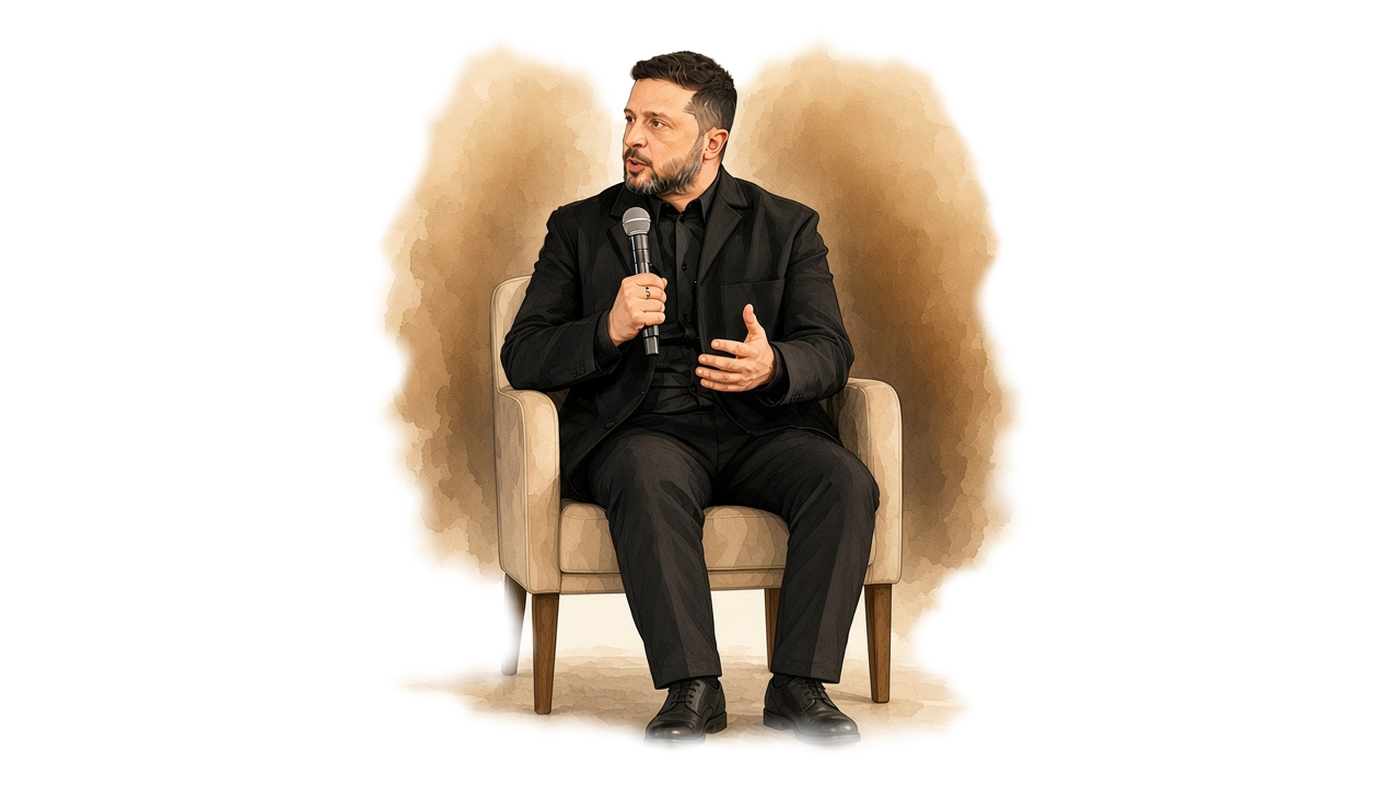
Volodymyr Zelensky at an interview in New York, September 2026.Illustration by The Good Times, based on a photo by Xuthoria / Wikimedia Commons (CC BY-SA 4.0). The illustration is licensed CC BY-SA 4.0.
President Volodymyr Zelensky asked the United States and Elon Musk's SpaceX to lift speed limits on Starshield, the military-grade Starlink service the US government provides to Ukraine. On Sunday he said the limits "are still there" and that Ukrainian interceptor drones lose contact with their operators above 100 miles per hour (161 kilometers per hour) along the front and over Russian-occupied territory, so they cannot catch Russia's jet-powered Shahed drones before they reach power substations. "We are counting on these restrictions being lifted," he wrote, adding that protecting lives and the energy grid before winter depends on it, and that "it is important to be on the right side of history." He said Ukraine's foreign and defense ministries and his office have been told to work closely with Washington and SpaceX. The cap itself is not new. On Friday, Zelensky said the speed limit had been in force since Monday, November 9, in occupied areas and not across the whole of Ukraine. SpaceX has called the reports false and told Ukraine's defense ministry it is not imposing restrictions. Secretary of State Marco Rubio earlier told Zelensky that the US government, not SpaceX, had more control over Starshield, Zelensky said. A bipartisan House caucus has asked for a full explanation.
What is new, and what has been in force since November 9
Ukraine uses ordinary Starlink terminals for battlefield communications and Starshield, the military version, to guide the drones it sends up to intercept Russian missiles and drones. Those interceptions usually happen over Russian-held territory, before the attackers reach areas Kyiv controls.
The cap itself is not new this weekend. On Friday, November 13, Zelensky said speed limits of around 100 miles per hour had been enforced on the network since Monday, November 9, but only in Russian-occupied areas and not the whole of Ukraine, the BBC reported. He told journalists that day that Ukraine tests the connection every day and gets the same result, and that the limits had been in place for five days, the Kyiv Independent reported. "If you impose restrictions there, you are already partially recognizing the temporarily occupied territories as not ours," he said. "We have to shoot them down at other lines of defense, and this gives the Russians more opportunities to attack."
What is new is Sunday's appeal. Zelensky said the limits on "the operating speed of Starshield terminals along the front line and in the temporarily occupied territories are still there," and that "our interceptor drones lose connection with their operators at a speed of 161km/h (100mph) and simply cannot catch up with Russian jet-powered 'shaheds.'" "We are counting on these restrictions being lifted," he wrote. "The protection of lives and Ukraine's energy infrastructure ahead of winter directly depends on this." He said the foreign and defense ministries and the president's office had been instructed to work closely with the American side and SpaceX. "It is important to be on the right side of history," he said.
The latest episode was first raised publicly on Thursday, November 12, when Zelensky said units had recorded "significant disruptions" along the front and in occupied areas, and that these were "not random errors but systematic speed restrictions." A Ukrainian official told Axios that the limits had worsened over three days, and that by Thursday "100% of the missions fail because of restrictions." Ukraine's chargé d'affaires in Washington, Denys Sienik, told Axios that Starshield shuts down when drones fly at more than 100 miles per hour.
What SpaceX and Washington say
SpaceX has denied the reports. "This is false. There has been no change," the company's media relations department told Axios and Ars Technica on November 12. Zelensky said SpaceX told Ukraine's defense ministry it was "not imposing any restrictions" and called the problem technical. "We do not believe that is the case," he said, adding that this did not match what Rubio had told him about government control. "The current Starshield restrictions suggest that SpaceX imposed them. That's what our team is telling me. So this doesn't quite line up with what we heard earlier."
The BBC said it had asked the White House and Starlink for comment. Who imposes the cap is disputed. Musk said last month that Starshield systems "are owned and controlled by the US government" and that "any limits on speed or usage are decided by the US military and ultimately POTUS," Ars Technica reported. President Trump said then that he had told Musk to "put it back," the BBC reported. An earlier round of limits was lifted by October 24, Ars Technica reported, before Ukraine said the restrictions had returned.
The Congressional Ukraine Caucus, a bipartisan group, said it was "extremely alarmed" by the reports and was "demanding a full accounting" from the administration and SpaceX, Axios reported. The Kyiv Independent quoted the group as calling for full access to be restored. "Congress has been clear that Ukraine's ability to defend itself and the rest of Europe is a vital national interest of the United States," it said.