China Confirms Summit With Trump and Putin
China has confirmed that President Xi Jinping will meet President Donald Trump and Russia's Vladimir Putin in Shenzhen, and its Foreign Ministry called the first face-to-face meeting of the three countries' heads of state a gathering of groundbreaking significance.
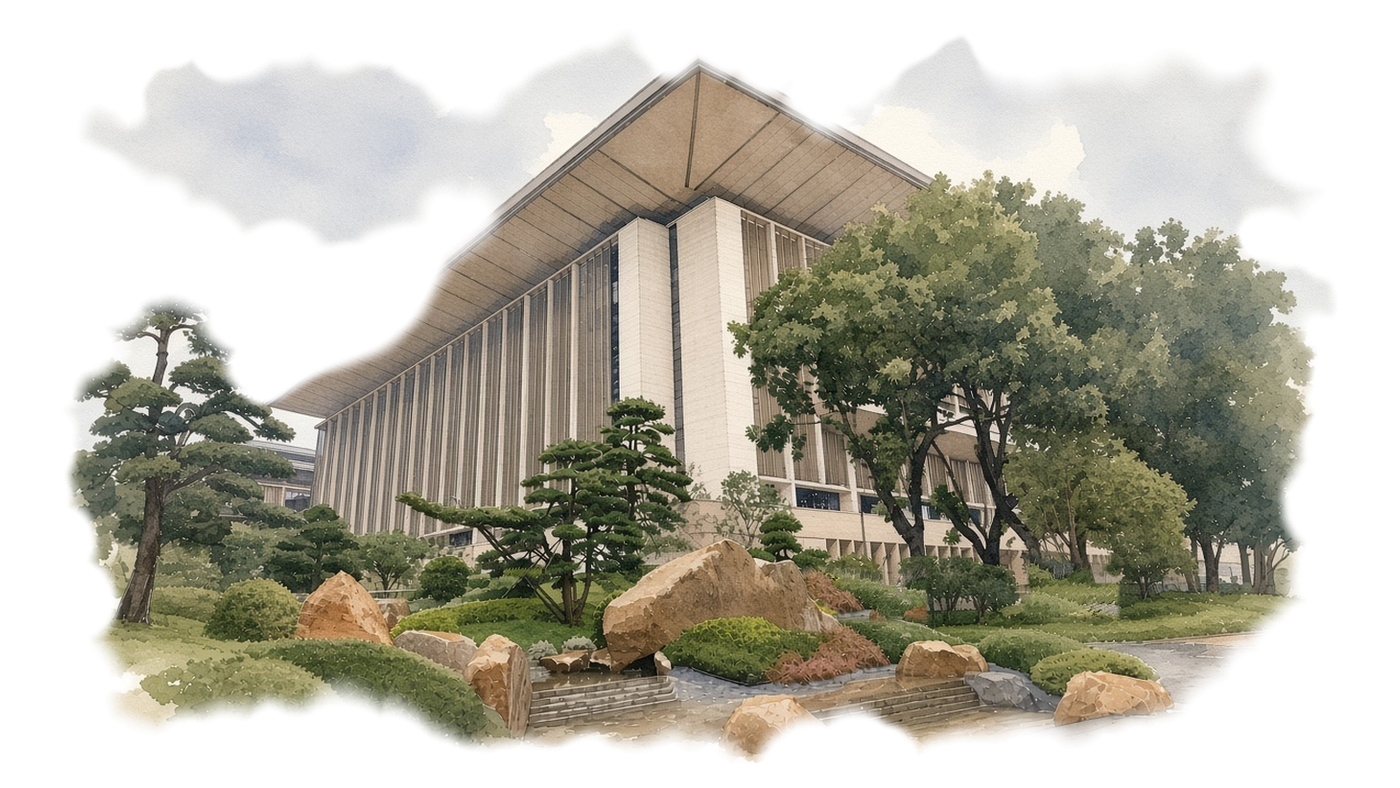
The Shenzhen International Exchange Center at Xiangmi Lake, Futian, August 2026.Illustration by The Good Times, based on a photo by Lhzss8 / Wikimedia Commons (CC BY-SA 4.0). The illustration is licensed CC BY-SA 4.0.
China has confirmed that President Xi Jinping will meet President Donald Trump and Russia's Vladimir Putin in Shenzhen, and its Foreign Ministry called the first face-to-face meeting of the three countries' heads of state a gathering of groundbreaking significance. The meeting is set for November 19, on the sidelines of the Asia-Pacific Economic Cooperation summit. Foreign Ministry spokesperson Mao Ning said the three presidents would have "an in-depth exchange of views on safeguarding world peace and enabling strategic stability in major-country relations." White House assistant press secretary Olivia Wales said Trump will discuss the reduction of nuclear weapons; New START, the last US-Russia nuclear arms treaty, expired on February 5. A senior US official said Iran will be raised and Ukraine will not, called the session "the entry point" at leader level, and said no agreement is expected. David Roche, a strategist at Quantum Strategy, told CNBC the summit was unlikely to produce much of substance but was an "almost 100% photo op" that would raise China's standing at the top table. Trump is due in Manila first, for an Association of Southeast Asian Nations gathering and a joint trade statement with Thailand, before traveling on to Shenzhen.
Beijing confirms the meeting
China's Foreign Ministry said Xi Jinping will hold "the China-Russia-U.S. Summit" with Vladimir Putin and President Donald Trump in Shenzhen. The White House and the Kremlin had already said the three-way meeting would take place.
The meeting is set for November 19, the second and last day of the Asia-Pacific Economic Cooperation leaders' gathering in the city. Olivia Wales, a White House assistant press secretary, told reporters that "President Trump will conclude his visit to China with a trilateral meeting" with the Chinese and Russian presidents, and that it would be the first such meeting of the three countries' leaders. Trump is also set to hold a bilateral working lunch with Xi that day. He is not scheduled to have a separate meeting with Putin.
Why China calls it groundbreaking
At her regular press conference on November 16, Foreign Ministry spokesperson Mao Ning said, "This will be the first ever face-to-face meeting between the Chinese, Russian and U.S. heads of state. The three presidents will have an in-depth exchange of views on safeguarding world peace and enabling strategic stability in major-country relations. The summit is of groundbreaking significance."
China, Russia and the United States, she said, are founding members of the United Nations and permanent members of the Security Council, and "in history, the three countries fought side by side to win the World Anti-Fascist War," China's name for World War II. Under current circumstances, she said, the three "shoulder important responsibilities to work together in addressing global challenges and promoting world peace and stability." Asked whether China would raise nuclear arms control or the situation in Iran, she did not say. "The three heads of state will have an in-depth exchange of views on important issues bearing on global peace," she said. "We will release information about the summit in a timely manner."
Peter Alexander, the Shanghai-based managing director at Z-Ben Advisors, told CNBC, "For Xi, just the ability to bring Putin and Trump to the table, a first among equals scenario, will deliver much of the political benefit even before the discussions begin." David Roche, a strategist at Quantum Strategy, told CNBC the summit was unlikely to produce much of substance but was an "almost 100% photo op" that would raise China's status and power at the top table.
Some outlets have reached for an older comparison. NBC News billed the gathering as "Yalta 2.0," after the February 1945 conference in Crimea at which Franklin D. Roosevelt, Winston Churchill and Joseph Stalin shaped the postwar settlement. The Guardian reported that Ukrainian President Volodymyr Zelensky was among those who had expressed concern that the world would witness a "Yalta 2.0 moment" if the three men met. The Wall Street Journal reported in October, citing a former Russian intelligence officer briefed on the matter, that Putin first raised a three-way meeting in an October 9 telephone call with Trump, and that the Kremlin had in mind a discussion of the war in Ukraine.
Nuclear arms, Iran and Ukraine
Wales, briefing reporters before the trip, said, "The president has made it clear that, among other topics, he will discuss the reduction of nuclear weapons in the world, whose proliferation President Trump believes is very dangerous." A senior US official, speaking on condition of anonymity, said, "I think the president does intend to talk about Iran in the trilateral meeting with Xi Jinping and Vladimir Putin." Washington, the official said, has "a whole other track" of negotiations with Kyiv and Moscow on the war in Ukraine, and "China is not really a part of that track, so it doesn't seem appropriate to have the Ukraine discussion there."
"I would characterize this as the entry point, the first conversation, certainly at the leader level between these countries," the official said, according to Anadolu. "We do not expect to get to any kind of agreement," the official said.
New START, the last remaining nuclear arms-control treaty between the United States and Russia, expired on February 5. Foreign Policy wrote that the two countries were left without limits on their arsenals for the first time since 1972. UN Secretary-General Antonio Guterres said it was the first time in more than half a century that the world faced a situation "without any binding limits on the strategic nuclear arsenals" of the two countries. The treaty had capped each side's deployed strategic warheads at 1,550.
The Stockholm International Peace Research Institute and the Federation of American Scientists, in estimates for January 2026, put the United States' total inventory at 5,042 warheads and Russia's at 5,420. Those totals include retired warheads awaiting dismantlement; the two countries' military stockpiles are 3,700 and 4,400 warheads. China's arsenal is estimated at about 620 warheads. The Pentagon's 2025 report on China's military, as described by the Federation of American Scientists, said China's stockpile "remained in the low 600s through 2024" and that China "remains on track to have over 1,000 warheads by 2030."
China has long said the two larger arsenals should be reduced before it joins talks on its own. "China's nuclear strength is by no means at the same level with that of the U.S. and Russia," Mao told reporters on October 16. "It is neither fair, reasonable nor realistic to ask China to join the so-called trilateral nuclear disarmament negotiations at this stage." A Reuters report carried by NBC News said China has rebuffed attempts to talk about nuclear arms with Russia and the United States.
The road through Manila
Trump is scheduled to leave Washington on November 16 for Manila, where he is to attend a summit of the Association of Southeast Asian Nations and a meeting of the Quad, the grouping of the United States, Japan, India and Australia, before flying to Shenzhen, ABC News and Anadolu reported. Wales said he would also sign a trade agreement with Thailand in Manila. Thailand's Commerce Ministry, and Bloomberg citing a Thai cabinet memo, said the document is a joint statement announcing progress on a reciprocal trade agreement, not the final pact, and is not legally binding. After the events in the Philippines, Trump is due in Shenzhen on November 18 for the APEC meetings, with the working lunch with Xi and the three-way meeting set for November 19.
- China's Foreign Ministry (November 16 announcement)
- China's Foreign Ministry (Mao Ning press conference, November 16)
- China's Foreign Ministry (Mao Ning press conference, October 16)
- NBC News (Reuters)
See all (23)Show fewer
- Channel News Asia
- The Hindu
- AFP via France 24
- Anadolu (White House briefing)
- The Jerusalem Post
- South China Morning Post
- CNBC
- NBC News (Yalta 2.0)
- The Guardian
- Anadolu (Wall Street Journal report)
- The Hill
- Foreign Policy
- UN News
- SIPRI Yearbook 2026, Chapter 8
- Federation of American Scientists (world nuclear forces)
- Federation of American Scientists (Pentagon 2025 China report)
- ABC News
- Nation Thailand
- Bloomberg Law