EU Moves to Cut Off 60 Russian Banks
The European Commission has proposed a 22nd package of sanctions on Russia that would impose a transaction ban on about 60 Russian banks and remove all 60 from SWIFT, the messaging network banks use to send payment instructions across borders. The measures remain a Commission proposal and are not yet law.
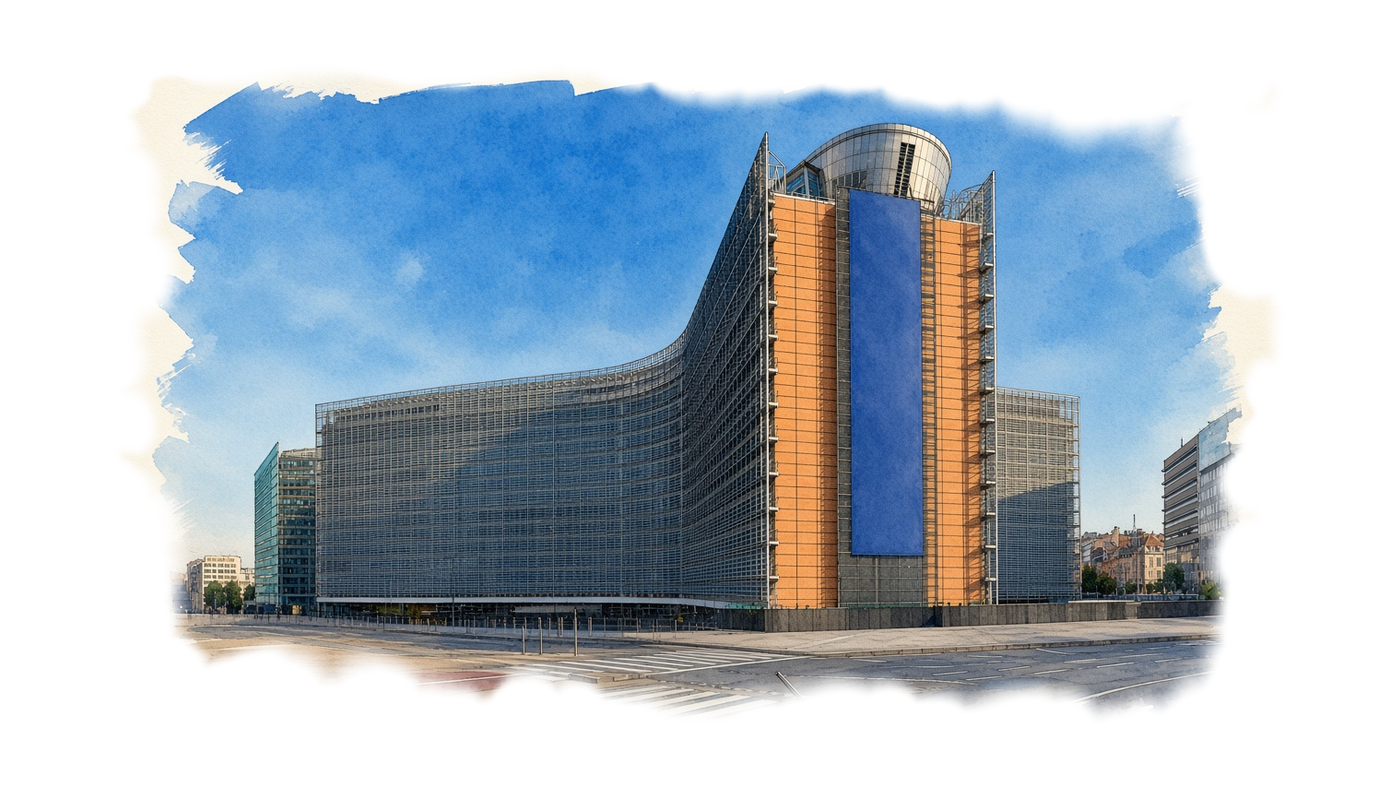
The Berlaymont, the European Commission's headquarters in Brussels, August 2020.Illustration by Agentic Newsgathering, based on a photo by Benoit Brummer (CC BY 4.0). The painting carries the same CC BY 4.0 license.
The European Commission has proposed a 22nd package of sanctions on Russia that would impose a transaction ban on about 60 Russian banks and remove all 60 from SWIFT, the messaging network banks use to send payment instructions across borders. Commission President Ursula von der Leyen also said the package would target crypto and payment networks, including in third countries, and that the Commission has set up a Crypto Sanctions Task Force. The proposal would expand an EU ban on energy services so that "no European company can help Russia build, operate or repair its energy infrastructures," covering work on refineries and, for the first time, electricity services. It would add more than 70 ships to a list tied to Russia's "shadow fleet" of tankers used to move oil while avoiding restrictions, and ban tanker vessels insured in Russia. Other measures would bar Russian former combatants from EU visas, stop Europeans from sitting on the governing bodies of companies in Russia and restrict Russian flags, symbols, sponsors and board posts in European sport. The package, announced on November 23, is a Commission proposal and is not yet law. Reuters reported that sanctions require unanimity among EU governments to be adopted.
A proposal, not a finished ban
The European Commission is the EU's executive arm: it can put sanctions on the table, but they do not take effect until the governments of the member countries adopt them. Reuters reported that sanctions require unanimity among those governments to be adopted.
Von der Leyen outlined the 22nd package in a statement released on November 23. The statement did not name the banks.
A 22nd package means 21 earlier rounds of EU sanctions on Russia are already in place, dating from the full-scale invasion of Ukraine in 2022. The new list is an addition to that stack, not a replacement for it.
Banks, SWIFT and crypto
The financial measures are the core of the package. A transaction ban would be extended to some 60 Russian banks, and all 60 would be removed from SWIFT. Those are two distinct steps. A transaction ban tells banks and companies under EU jurisdiction not to deal with the listed institutions. A SWIFT cutoff goes to the messaging layer: SWIFT is a cooperative based in Belgium that carries standardized messages between banks so they can arrange cross-border payments. Being cut off from it does not confiscate a bank's money, but it makes it far harder to settle payments with counterparties abroad, including those that are not themselves under EU law.
The Commission also said it would target crypto and other payment networks, including those in third countries accused of helping Russia get around earlier restrictions. Von der Leyen said a Crypto Sanctions Task Force had been launched to support that work. "We are striking harder at Russia's ways to finance its war, by targeting its banks and crypto platforms," she said. "We will focus on Russia but also include third countries that help Russia to evade our sanctions. This is a major focus of our new package." Reuters reported that Kyrgyzstan was the first country this year to be hit by the EU's anti-circumvention tool, over banks and crypto companies.
Energy and ships
On energy, the Commission would expand an existing ban on European companies providing services so that they cannot help Russia "build, operate or repair its energy infrastructures." Refineries are singled out. Electricity services are included for the first time, von der Leyen said.
The package would add more than 70 ships to the EU list of vessels linked to Russia's "shadow fleet," a term used for tankers that move oil while trying to stay outside earlier price-cap and insurance rules. Listing a ship typically restricts European services, ports or insurance for that vessel. The Commission also proposed a ban on all tanker vessels insured in Russia, a broader step that would turn on where the ship is insured, not only on a name-by-name list.
Visas, company boards and sport
The Commission is proposing a way to put in place an EU visa ban on Russian former combatants, a step agreed in the previous package pending a check that it could be carried out, Reuters reported. Entry to the EU "will be off limits," she said. She pointed to what she called an escalation in "non-conventional kinetic activities of Russian operatives in Europe." Further measures would prohibit Europeans from holding posts in the governing bodies of companies in Russia.
On sport and culture, the Commission proposed bans, at sports events in the EU, on Russian teams and athletes competing under the Russian flag, and a ban on the display of official Russian symbols. "Sports events cannot be a forum for propaganda activities. Today, for any sports events in the EU, we are introducing bans on Russian teams and athletes competing under the Russian flag," von der Leyen said in a video address, Reuters reported. The package would also restrict money from Russian sponsors flowing to European sports and cultural associations, and restrict Russians from holding posts on the boards of European sports federations.
What happens next
None of these steps is in force yet. They remain a Commission proposal until EU governments adopt them. No timetable was attached to the statement.