Prices Climb, Officials Weigh Faster Hikes
Consumer prices rose 0.4% in October, more than forecast, for a third straight month of gains of 0.4% or more. Two Federal Reserve officials said rates may need to rise sooner and by more.
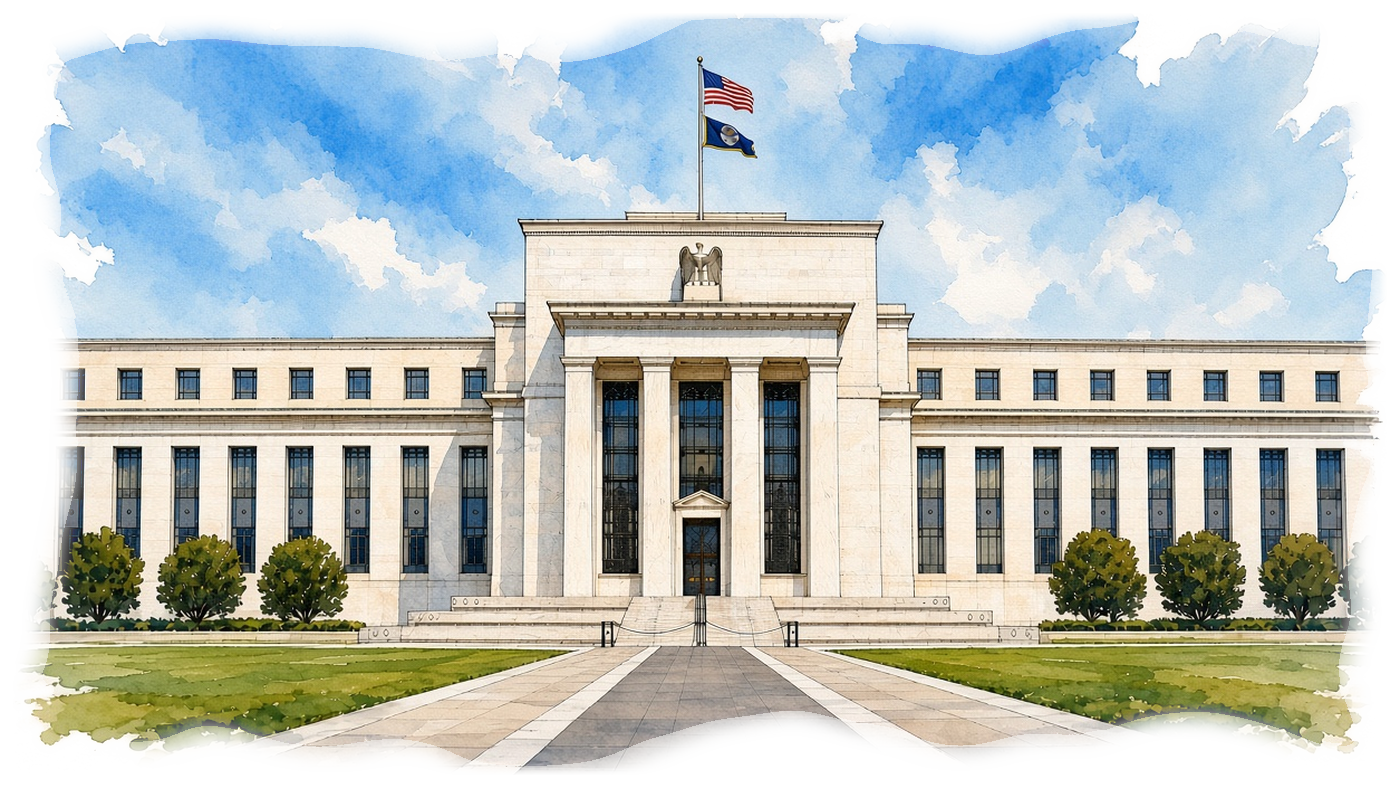
The Federal Reserve's Eccles Building in Washington, March 2011.Illustration by The Good Times, based on a photo by the Federal Reserve / Wikimedia Commons (public domain)
American consumer prices rose 0.4% in October, more than the 0.3% economists expected, the Bureau of Labor Statistics reported. It was the third month in a row of gains of 0.4% or more. Prices excluding food and energy rose 0.3%, also above forecasts. The bureau published no yearly rate because last year's government shutdown stopped it from collecting October 2025 prices; economists' estimates put annual inflation at 3.9% to 4%, up from 3.7% in September. Food rose 0.5%, beef 0.9%, electricity 0.9%, and rents and housing accounted for more than 30% of the rise. Fed Governor Christopher Waller said a half-point rate increase should be on the table in December, and Dallas Fed President Lorie Logan said she sees a need for two more quarter-point increases. Traders now price in a December hike almost fully, according to CNBC's reading of CME Group's FedWatch tool. Fed officials name the Iran war's effect on oil, tariffs and the spending boom on artificial intelligence as the main drivers, and inflation-adjusted weekly earnings fell again. The open question is whether higher prices are spreading from one-time shocks into the wider economy.
Consumer prices in the United States rose 0.4% in October, the Bureau of Labor Statistics reported, above the 0.3% that economists had forecast. It was the third straight month of increases of 0.4% or more. Core prices, which leave out food and energy, rose 0.3% for a third month, also more than expected.
The bureau did not publish a year-over-year rate. Last year's federal government shutdown prevented it from collecting consumer prices in October 2025, so there is no figure to compare against. Economists who estimated the gap put annual inflation at 3.9% to 4.0%, up from 3.7% in September, according to Reuters.
Where the increases showed up
Food prices rose 0.5% after barely moving for three months. Beef rose 0.9%, snacks 1%, and the cost of eating out 0.5%. Stephen Stanley, chief US economist at Santander US Capital Markets, said the grocery gains "may finally be the beginning of a pass-through of higher transportation costs," with diesel up 2.7% in the month after an 11.9% jump in September. Gasoline rose 1% and electricity 0.9%. Shelter, which includes rent and hotel rooms, accounted for more than 30% of the overall increase.
Tariff-sensitive goods also climbed: household furnishings rose 0.7% and toys 1.8%. Smartphone prices rose a record 1.4%, and computers kept getting more expensive, which Reuters tied to the artificial intelligence spending boom. Used cars and trucks fell 1.2%. Inflation-adjusted average weekly earnings fell again.
What the Fed is saying
The Fed held its benchmark rate at 3.75% to 4% at its October meeting, in a 10-2 vote. Hours before the report, Fed Governor Christopher Waller said in London that a half-point increase should be on the table in December if core prices came in "around 0.3." After the report, Dallas Fed President Lorie Logan said she sees a need for two more quarter-point increases and that "it may be possible to move more rapidly this winter than the [Federal Open Market Committee] has moved so far this fall." Philadelphia Fed President Anna Paulson named tariffs, energy prices and the AI buildout as the main factors keeping inflation high and said "further gradual tightening seems appropriate."
Traders fully price in a quarter-point increase when the Fed meets on Dec. 8 and 9, according to CNBC's reading of CME Group's FedWatch tool, and put the odds of a half-point move at about 14%, up from near zero before the report. Reuters put the chance of a quarter-point hike at about 89%. Stocks fell and Treasury yields rose. A net 37% of small businesses in the National Federation of Independent Business October survey said they plan to raise prices in the next three months, the highest share since July 2022.
The question ahead
Gasoline prices have been easing, and oil prices fell at least 10% in the first part of November, according to Reuters. Fed officials are weighing whether that relief reaches the rest of the economy or whether higher prices have already spread into food, services and borrowing costs for mortgages and credit cards. Producer prices for October, which feed the Fed's preferred inflation gauge, are due Friday.