Starship Set for a Double Catch
SpaceX is targeting a test flight, pending regulatory approval, that would try for the first time to catch both the Super Heavy booster and the Starship upper stage at the launch tower.
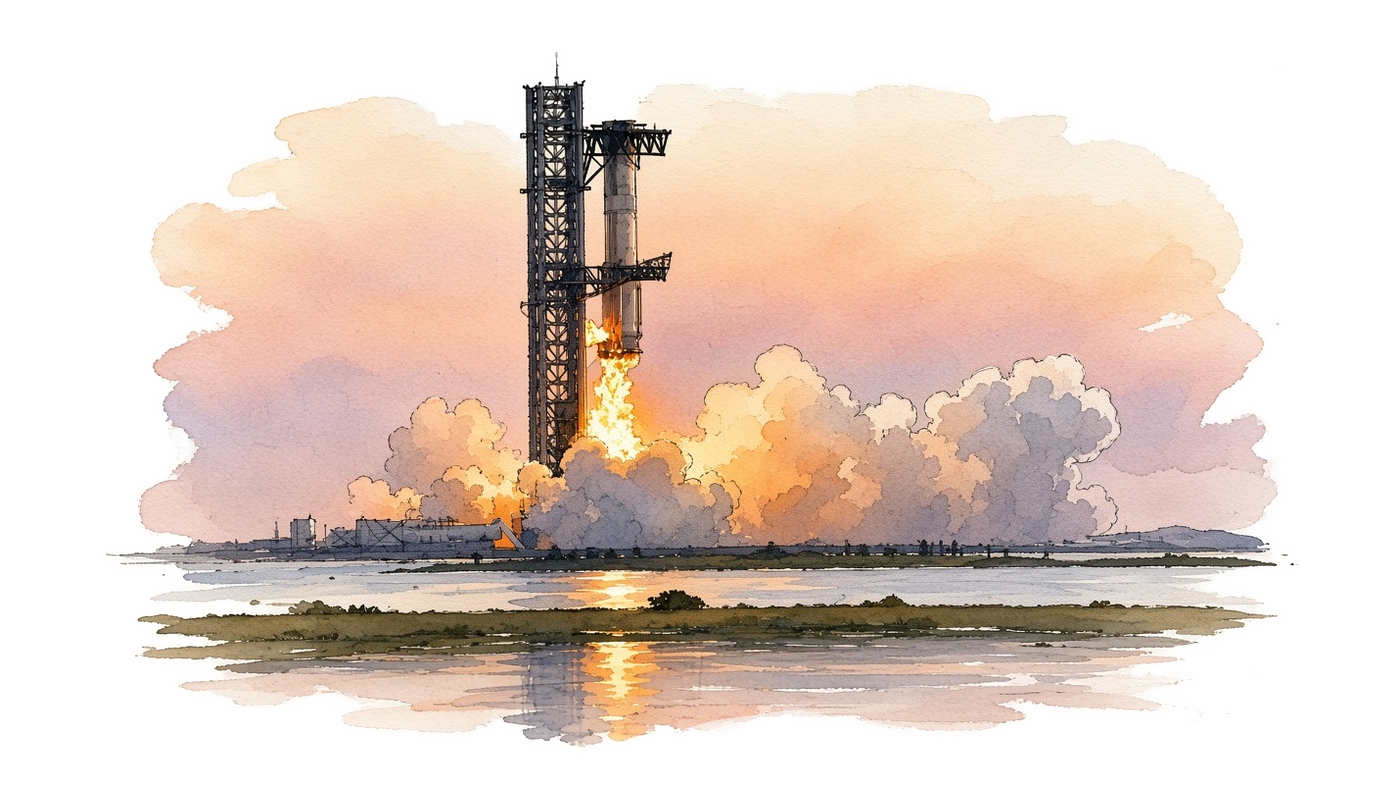
The launch tower's arms catch a Super Heavy booster at Starbase, Texas, on Starship's fifth test flight, October 2024.Illustration by The Good Times, based on a photo by Steve Jurvetson / Wikimedia Commons (CC BY 2.0)
SpaceX is preparing to launch Starship on a test flight that would attempt to catch both of the rocket's stages back at its launch tower in South Texas, something it has never done. The company is targeting a 75-minute window opening at 4:45 p.m. Central time on November 13, pending regulatory approval, and says the schedule is likely to change. The Super Heavy booster is due back for a catch by the tower's mechanical arms about six and a half minutes after liftoff. The Starship upper stage is planned to deploy 26 Starlink V3 satellites, circle Earth about 14 times at roughly 275 kilometers, and return more than 22 hours later for the first attempt to catch the ship itself. SpaceX says that would be the first full recovery of an orbital launch system. The ship will try to come home only if flight controllers confirm the systems needed for reentry and landing are healthy; otherwise the flight is designed to end safely over the ocean.
SpaceX is preparing Starship, its fully reusable rocket, for a test flight that would attempt to bring both of its stages back to the launch site and catch them on the tower at Starbase, the company's facility in South Texas.
"The upcoming flight is planned to be the first to return both Starship and Super Heavy to the launch site for catch," SpaceX said in its mission description. "If successful, this will mark the first full recovery of an orbital launch system and a breakthrough moment in making Starship a reliable, rapidly reusable rocket."
Flight 15 is set to launch as soon as Friday, November 13, pending regulatory approval, in a 75-minute window that opens at 4:45 p.m. Central time, or 5:45 p.m. Eastern. SpaceX notes that its schedule is dynamic and likely to change.
Two catches, a day apart
Super Heavy, the first stage, is scheduled to separate from the ship about two minutes and 21 seconds after liftoff, turn back toward Starbase and be caught by the tower's arms, known as chopsticks, about six and a half minutes into the flight. It will be the first catch attempt for a third-generation Super Heavy. SpaceX has caught first-generation boosters on three earlier flights, and two of those boosters have flown again.
The Starship upper stage, which has never been caught, is expected to reach orbit at about 275 kilometers, deploy 26 Starlink V3 satellites, and complete about 14 orbits over more than 22 hours. Three of the satellites carry cameras to photograph the ship's heat shield before it attempts to return. SpaceX's timeline places the ship's deorbit burn about 21 and a half hours after launch and the catch about 22 hours and 32 minutes after liftoff.
The ship will attempt a return only if the flight control team confirms that the systems critical for reentry, the landing burn and the tower approach are healthy. The flight profile is designed so that the ship can instead be put on a passively safe suborbital path or deorbited at several predetermined areas over the ocean.
The record so far
Starship reached orbit for the first time on Flight 14 on September 28, deploying payloads in space for the first time, according to SpaceX, before splashing down about three hours after liftoff. The heat shield for Flight 15 keeps the improvements made on Flight 14, SpaceX says, including extra retention on tiles in the areas judged most at risk of falling off during ascent, and much of it uses a curved tile design that the company says reduces heating in the gaps between tiles.