America's Schools Are Closing Faster
Preliminary federal data show public school closures rising every year since the pandemic low, while enrollment has fallen faster still.
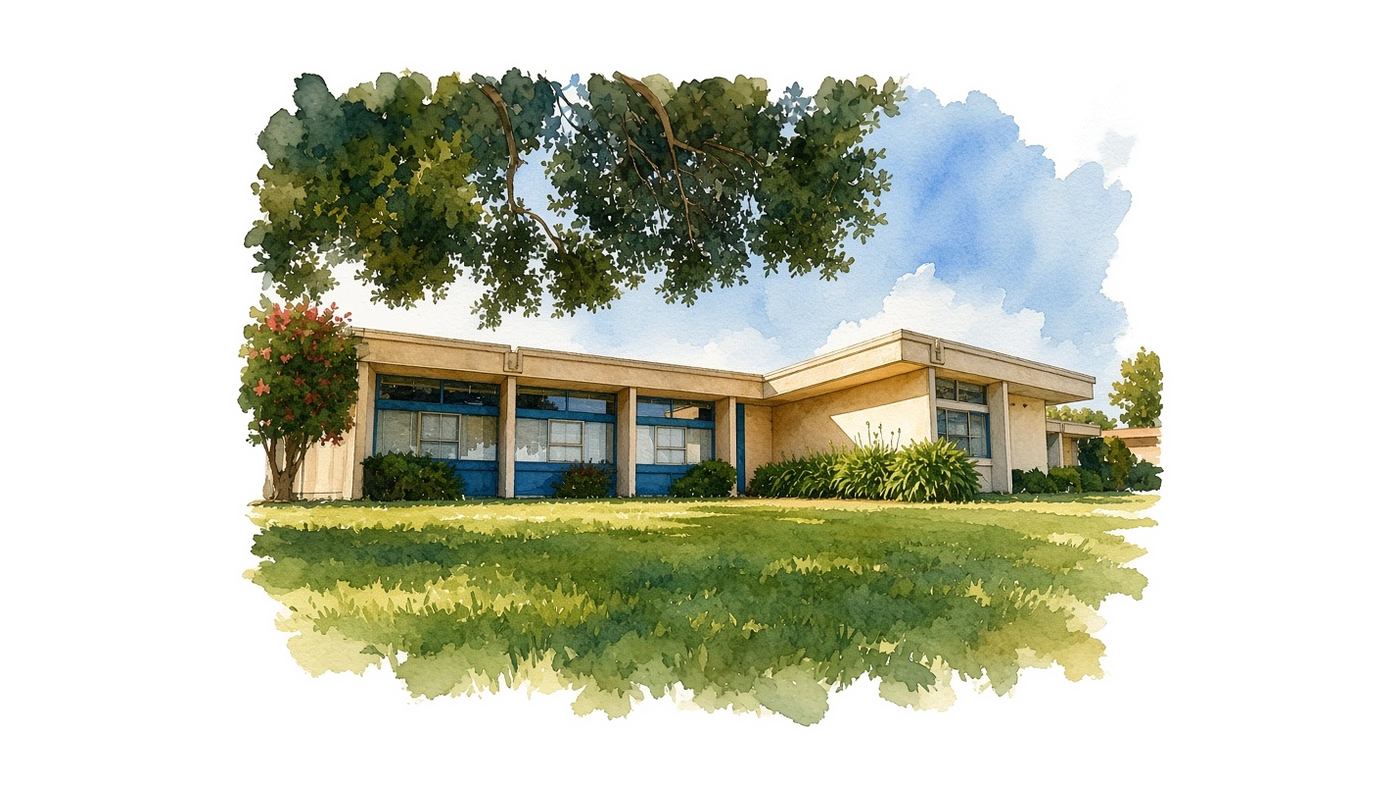
Treasure Island Elementary School in San Francisco, closed since 2005, in May 2025.Illustration by The Good Times, based on a photo by 9yz / Wikimedia Commons (CC BY 4.0)
A total of 1,156 public schools closed during the 2025–26 school year, the highest number since the pandemic, according to an analysis of preliminary federal data by Big Local News at Stanford University, done with the Associated Press and the Hechinger Report. A separate count of the preliminary federal school directory by the data site US School Ratings found 1,187 schools marked closed. The annual closure rate fell to 0.83% in 2021–22 and has risen every year since, to 1.15%. Enrollment has dropped faster than schools have closed: public schools lost more than 1.4 million students, roughly 3%, between fall 2019 and fall 2024, according to separate Stanford research. Cities had the highest closure rate. Districts often close schools to save money, but research cited by the AP finds closures do not, on average, improve a district's finances, and studies it cites suggest students who go through a closure can fall behind. The 2025–26 figures are preliminary and may change.
More U.S. public schools are closing each year, and the pace has picked up steadily since the pandemic.
A total of 1,156 schools closed during the last academic year, the most since the pandemic, according to an analysis of federal data by Big Local News at Stanford University. Reporters from the Associated Press, Big Local News and the Hechinger Report worked together on the analysis, which counted schools, including charter and alternative schools, reported as newly closed in each district across 11 school years. The annual closure rate dropped from 1.21% in 2019–20 to 0.83% in 2021–22, then rose each year to 1.15% in 2025–26.
A separate review of the preliminary 2025–26 federal directory by the data site US School Ratings counted 1,187 schools marked closed; the two analyses use different methods. NDTV, citing National Center for Education Statistics data, reported that closures have risen for four straight years, from 755 in 2021–22.
Fewer students per building
Enrollment has fallen faster than schools have closed. Public schools lost more than 1.4 million students, roughly 3%, between fall 2019 and fall 2024, while the number of teachers grew slightly, according to Stanford education researchers Tom Dee and Jaymes Pyne. In one in four schools, enrollment has fallen 15% or more since 2019. Average enrollment per school slipped from 556 to 538, and the average student-teacher ratio from 16 to 15.3.
The decline tracks long-term demographic change. The Centers for Disease Control and Prevention counted about 3.61 million births in 2025, roughly 16% below the 2007 peak, according to US School Ratings, and projections cited by NDTV show public schools losing nearly 4 million students between 2019 and 2031. "We call it the big shrink," Marguerite Roza, director of Georgetown University's Edunomics Lab, told The Washington Post, according to NDTV.
Where closures are concentrated
Cities had the highest closure rate in 2025–26, at 1.48%, followed by towns at 1.23%, according to Big Local News; rural areas, at 1.04%, and suburbs, at 0.94%, were below the national rate. Among states, North Dakota, Minnesota and Louisiana had the highest average annual closure rates from 2019–20 through 2025–26. Large districts that have voted on multiple closures in recent years include Cleveland, Philadelphia, Tulsa, Atlanta, Houston and Pittsburgh, according to a tracker cited by US School Ratings. In Vallejo, California, the district has closed five campuses since 2025, the AP reported.
What the data cannot say
Districts often close schools because buildings with fewer students still carry many of the same fixed costs. Yet research cited by the AP finds that closures do not, on average, improve a district's financial standing, and that they can push some families toward charter or private schools. Studies cited by the AP suggest students who go through a closure can fall behind, in some cases well past graduation, and that receiving schools can also be affected; a review of research by US School Ratings, covering studies from Chicago, Michigan and Texas, finds that results vary and that the school a student moves to matters most.
The analysts note limits. The 2025–26 closure figures are preliminary and subject to change, and federal enrollment data for that year have not yet been released. The AP's guide to the data says the analysis cannot explain why a particular school closed, which schools are more likely to close or what happened to the students affected.