Roman Telescope's Main Camera Beats Its Optics Target
NASA says engineers have finished checking out the Nancy Grace Roman Space Telescope's main camera and tuned its optics to an error of 63 nanometers, inside the roughly 90-nanometer requirement, after moving a mirror by about one-sixteenth the width of a human hair. The telescope launched on August 30 and is on its way to an orbit about a million miles from Earth.
NASA's newest space telescope has passed a key test of its main camera. Engineers finished checking out the Nancy Grace Roman Space Telescope's Wide Field Instrument, the camera that every one of the mission's big sky surveys depends on, and aligned the telescope's optics.
NASA set a requirement that the optics deviate from perfection by no more than about 90 nanometers, roughly 1,000 times thinner than a human hair. After the corrections, NASA says, the error is 63 nanometers, and the camera's performance is nearly 30% better than the Roman team predicted. To get there, engineers moved the telescope's secondary mirror by about one-sixteenth of the diameter of a human hair.
"It's both exciting and a huge relief to see that it's working well," said Dave Hickey, a systems engineer for the instrument at NASA's Goddard Space Flight Center in Maryland.
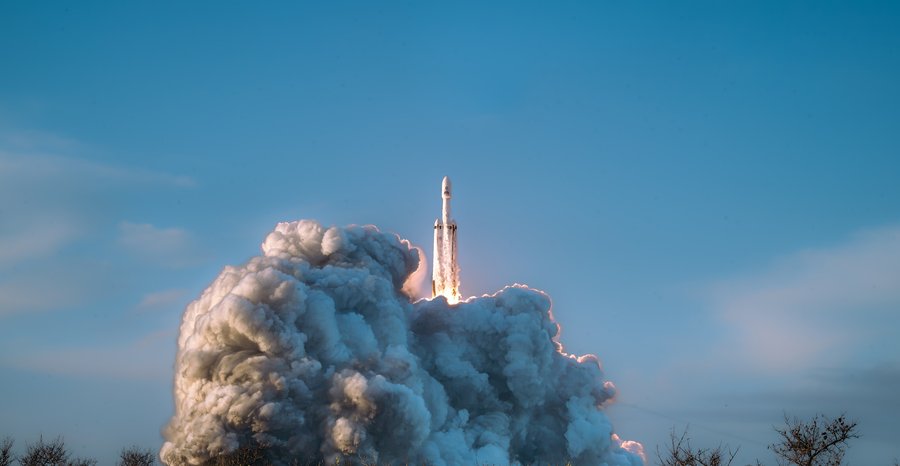
Roman launched on a SpaceX Falcon Heavy from Florida on August 30. It is still traveling to its observing post about a million miles from Earth, and NASA plans to release its first science images by early 2027. All of its data will be public, with no waiting period.
Greenbelt, Md. — NASA engineers have finished checking out the main camera on the Nancy Grace Roman Space Telescope and aligned the telescope's optics to within 63 nanometers of perfection, inside the mission's requirement of about 90 nanometers.
The Wide Field Instrument, which NASA describes as a 300-megapixel infrared camera built from 18 detectors, each about the size of a saltine cracker, is the camera that Roman's sky surveys depend on. NASA says its field of view is at least 100 times larger than the Hubble Space Telescope's, from a main mirror the same size as Hubble's, 2.4 meters, or 7.9 feet, across. "All of Roman's sweeping surveys will rely on the Wide Field Instrument," said Dave Hickey, a systems engineer for the instrument at NASA's Goddard Space Flight Center in Greenbelt, Maryland. "Many of the mission's primary goals, like studying dark matter and dark energy, wouldn't be possible without it, so it's both exciting and a huge relief to see that it's working well!"
How the camera was checked
The team first tested the detectors and their electronics, then the element wheel, which holds filters that pass chosen wavelengths of light and tools that spread light into its colors. Engineers then switched on the calibration system's internal lights, dimmable LEDs of several colors controlled from the ground that measure how each detector responds to light. They moved the camera's focus mechanism out of the deliberately out-of-focus position it was stowed in for launch, and they put the thermal system through its paces to keep the instrument at the right temperatures.
"Calibrating an instrument is like tuning a piano or guitar before a concert," said Maxime Rizzo, another systems engineer on the instrument at Goddard. "You adjust everything until it's just how you want it and then leave the settings alone so it performs consistently while you use it."
A mirror moved by a fraction of a hair
To bring the optics into alignment, engineers raised or lowered the secondary mirror above the primary mirror by a tiny amount. "We moved the secondary mirror by about one-sixteenth of the diameter of a human hair," said Alden Jurling, a senior optical engineer on Roman at Goddard. Scaled up to the height of the Empire State Building, he said, the change is a little less than a single U.S. penny stacked on the tip of the tower.
The requirement for image quality was set at about 90 nanometers RMS, a measure of how far the optics deviate from perfection. After the corrections, the camera's optics measure 63 nanometers, and NASA says the Wide Field Instrument's performance is nearly 30% better than the Roman team predicted. Matthew Bolcar, Roman's optical systems lead at Goddard, said testing and modeling on the ground, by Goddard and by the contractors L3Harris and BAE Space and Mission Systems, "left only small corrections for us to make to bring everything into near-perfect alignment." Ground tests could not fully copy conditions in space, such as weightlessness, he said, but "both instruments" ended up "either matching or exceeding the performance we had predicted."
Engineers also fixed a slight blur in Roman's second instrument, a coronagraph built to block a star's glare so that faint planets beside it can be seen. NASA says its images were less out of focus than the team had expected, and the correction was relatively simple.
The mission so far
Roman launched on a SpaceX Falcon Heavy rocket from Kennedy Space Center in Florida on August 30. NASA moved the launch up because the telescope was finished early; NASA Administrator Jared Isaacman said it was "delivered ahead of schedule and on budget." Engineers began bringing the camera online on September 11, after letting it dry out for 10 days.
The telescope is traveling to its observing post near a point in space called L2, about a million miles from Earth, and is being tested along the way; NASA says it arrives about early December. Its first course-correction burn used about 18 kilograms of fuel, against 200 kilograms budgeted, and NASA said in September that Roman now carries fuel for at least 22 years of science operations, against a design life of 10.
Roman is built to survey the sky for signs of dark energy and dark matter and for planets around other stars. NASA says it will send back about 1.4 terabytes of data a day, the highest rate of any NASA astrophysics mission so far, and that all of it will be public right away. The telescope is named for Nancy Grace Roman, NASA's first chief of astronomy, whom the agency calls the "mother of Hubble."