Pope Leo Asks Putin for a Ceasefire in Oleshky
In a phone call, Pope Leo XIV asked Russian President Vladimir Putin for a ceasefire in Oleshky, a Russian-held town in southern Ukraine where fewer than 2,000 civilians are cut off, so food and medicine can get in and people who want to leave can go safely. The Kremlin said Russia supported the Vatican's effort and the two sides agreed to cooperate; no ceasefire has been announced.
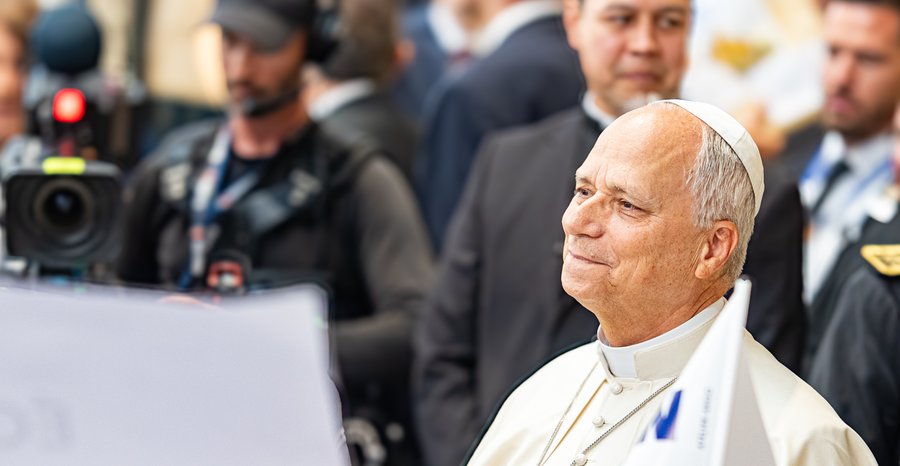
Pope Leo XIV spoke by phone with Russian President Vladimir Putin and asked for a ceasefire in Oleshky, a town in southern Ukraine's Kherson region that Russian forces have held since the first day of the 2022 invasion. The Vatican said the pope wants the fighting to stop so that food and medical aid can get in and civilians can leave "voluntarily and safely."
The Kremlin said Putin supported the Vatican's intention to help make the town's residents safe and get vital supplies to them, and that the two sides "agreed to cooperate." It also said Putin gave the pope "a comprehensive explanation" of why it holds Ukraine's government responsible for conditions in the town.
Cardinal Pietro Parolin, the Vatican's secretary of state, said the call was the pope's own idea and that about 2,000 civilians in the town need a way out. Ukraine's foreign minister put the number at about 1,700 and thanked the pope. The United Nations says the last regular food delivery by road reached the town on May 26. No ceasefire has been announced.
Vatican City — Pope Leo XIV asked Russian President Vladimir Putin in a telephone call for a ceasefire in Oleshky, a Russian-occupied town in Ukraine's Kherson region, so that food and medicine can reach the civilians still there and those who want to leave can get out.
The Holy See Press Office, the Vatican's official spokesman's office, said the pope "expressed his deep concern about the grave humanitarian situation in the city of Oleshky, in the Kherson region, and called for a ceasefire to allow the delivery of food and medical assistance, and the voluntary and safe evacuation of the civilian population." It said he "reaffirmed the Holy See's commitment to promoting dialogue and peace." The Holy See is the government of the Catholic Church. It was the pope's second phone call with Putin; the first was on June 4, 2025.
What the Kremlin said
The Kremlin published its own account. It said Putin thanked the pope for his willingness to help resolve the conflict and for his humanitarian efforts, and stressed cooperation between Russia and the Vatican in protecting Christians and Christian holy sites. On Oleshky, which the Kremlin called "the Russian town of Aleshki," it said the pope "was provided with a comprehensive explanation as to the Kiev regime's responsibility for the difficult humanitarian situation there." It said "support was expressed for the Vatican's intention to facilitate creating the necessary conditions to keep the town's population safe and beginning vital supplies," and that "the two sides agreed to cooperate in this regard." It called the conversation "constructive and mutually respectful."
Russia and Ukraine each accuse the other of blocking supplies to the town.
The town
Oleshky sits on the east bank of the Dnipro River, across from the Ukrainian-held city of Kherson, on the front line. About 24,000 people lived there before the invasion. Hundreds of residents were killed when the nearby Kakhovka Dam collapsed in June 2023 and flooded the area.
According to the AP, the people who remain have no electricity, heating or running water, and the roads out are mined and exposed to drone attacks. Ukraine's foreign minister, Andrii Sybiha, said about 1,700 people remain, that the hospital has run out of medicine and that families are "surviving on leftover vegetables, home preserves and even snails." Tetiana Hasanenko, the exiled head of the town's Ukrainian military administration, told the AP that about 100 bodies are being kept in the hospital basement. Russian-installed officials said they had delivered two metric tons of aid this month and acknowledged it was not enough. A Ukrainian marine brigade says it has flown more than seven metric tons of food and medicine across the river by drone since September.
Talks that stalled
Ukraine says it has offered a local ceasefire, a safe route out and reception for evacuees on its side of the river. Earlier this month, the office of Ukraine's human rights commissioner, Dmytro Lubinets, said talks with Russia had produced no practical result because Russia had not given "clear, verifiable and practically implementable security guarantees." The International Committee of the Red Cross has said it is ready to act as a neutral go-between once both sides agree. Lubinets's office said it had verified 358 people who need help to leave. In September, Ukraine's council of churches and religious groups asked Pope Leo to help.
What the Vatican and Ukraine said
Cardinal Parolin said, "It was the Holy Father who took the initiative to plead the case of this besieged city, where some 2,000 civilians need humanitarian routes through which they can leave." He said he hoped Putin "will agree to do what the Pope has asked," and that Putin's taking the call "may, I hope, be a sign that the Pope's request will indeed be carried out."
In a Facebook post reported in German by Vatican News, Ukraine's embassy to the Holy See thanked the pope for what it called a gesture of solidarity, support and commitment to Oleshky's residents, saying Ukraine had repeatedly appealed to the Holy See about the town at all levels. The pope's ambassador in Kyiv, Archbishop Visvaldas Kulbokas, told the Italian Catholic news agency SIR that the call was a very important act, according to the same report.