Trump Pulls Vance Off Iran Talks
President Trump said the United States does not need a deal with Iran and moved Vice President JD Vance off the effort to restart negotiations; the naval blockade and sanctions stay in place.
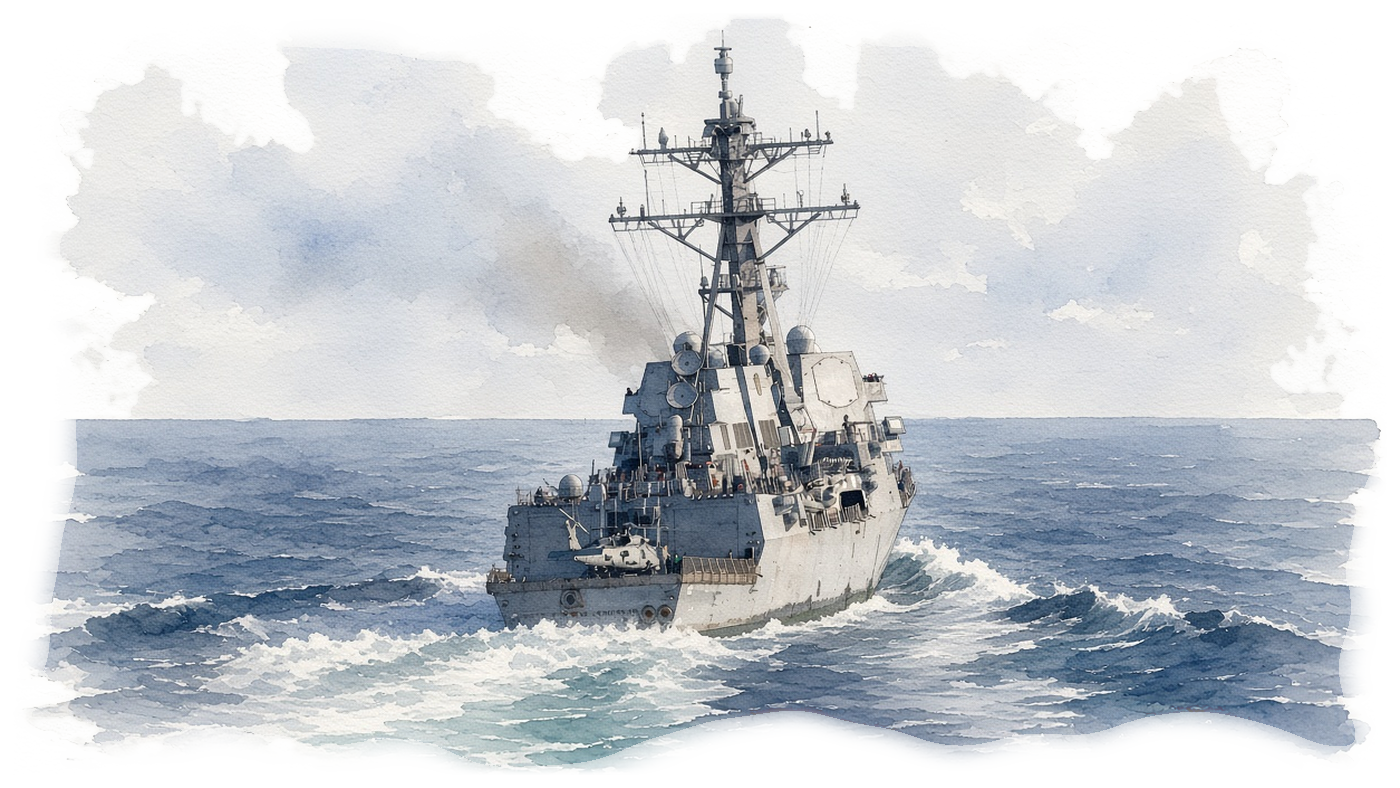
The US Navy destroyer USS Frank E. Petersen Jr. sailing in the Arabian Sea, March 2026.Illustration by The Good Times, based on a US Navy photo by NAVCENT Public Affairs / Wikimedia Commons (public domain)
President Donald Trump said the United States no longer needs a deal to end the war with Iran and reassigned Vice President JD Vance, who had been leading efforts to restart negotiations, to domestic work. "We don't need a deal with Iran," Trump wrote on Truth Social. "Those days have long since passed. We've got their money, Hundreds of Billions of Dollars, and we've got their Strait!" He told Vance to give his "complete and total attention" to what Trump called corruption and crime in Democratic-run cities and states. What stays in place is the US naval blockade of Iranian ports and economic sanctions, which Trump says are working. Earlier in the week he said further escalation "won't be necessary," and after meeting Qatar's prime minister he wrote that Gulf states would prefer to keep the blockade. Vance had been in near-daily contact with mediators in Qatar and Pakistan and had written to Iran's top security official, Mohsen Rezaei, about direct talks. The war began in February with US and Israeli strikes; Iran's closure of the Strait of Hormuz drove up fuel prices worldwide, and 23 US service members have died. Vance has said the war cost Republicans the midterm elections.
In a Truth Social post, President Donald Trump said the United States is no longer seeking a negotiated end to the war with Iran. "We don't need a deal with Iran," he wrote. "Those days have long since passed. We've got their money, Hundreds of Billions of Dollars, and we've got their Strait!"
He redirected Vice President JD Vance, who had led the latest attempt to reopen talks, to focus his "complete and total attention on the Massive Corruption and Crime taking place in Democrat run Cities and States throughout the U.S."
What stays in place
The order ends the diplomatic track Vance was running; it does not change the military posture. The US blockade of Iranian ports and the economic sanctions remain, and Trump has said they are doing the work. On Nov. 9 he told reporters that further escalation "won't be necessary," adding, "Iran, militarily, is effectively over. We're just keeping it the status quo." In a 60 Minutes interview taped Nov. 6, he said the US military can keep escorting ships through the Strait of Hormuz, with unnamed countries in the region helping to pay.
After meeting Qatar's prime minister, Sheikh Mohammed bin Abdulrahman Al Thani, Trump wrote that "Qatar, Saudi Arabia, UAE, Bahrain, Kuwait, and others, would prefer the status quo, in other words, a continuation of the Greatest Naval Blockade in History," according to NBC News. The United States has mostly reopened the strait to shipping, including crude oil, and has not carried out large strikes on Iran for several months, The Guardian reported.
Before the Nov. 3 midterms, Trump had said a deal could come after the election. "I believe we'll make a deal right after the election because it doesn't make sense for them not to," he said at the United Nations in September, according to NBC News.
The talks Vance was running
Vance led a US delegation to Islamabad in April to negotiate an end to the war and helped arrange a tentative deal in June that fell apart. In recent weeks he spoke almost daily with Qatar's prime minister and Pakistan's army chief, Asim Munir, Axios reported, and he wrote to Mohsen Rezaei, secretary of Iran's Supreme National Security Council, about resuming direct talks. The Wall Street Journal reported a day before Trump's post that Vance was weighing a face-to-face meeting with a senior Iranian security official.
After the midterms, in which Democrats won both the House and the Senate, Vance wrote on X: "The reason we lost is the war."
The war so far
The war began in February with joint US and Israeli strikes on Iran. Iran responded by closing the Strait of Hormuz, and fuel prices rose around the world. Twenty-three US service members have been killed, according to USA Today. Trump has said the war was needed to keep Iran from getting a nuclear weapon.
Mohammad Bagher Ghalibaf, the speaker of Iran's parliament, told Al Jazeera that Tehran had sent a seven-condition ceasefire proposal to Washington through Qatari mediators and was waiting for an official American response. Iran claimed on Nov. 13 that it had struck a US early-warning radar in Bahrain, a claim that has not been independently confirmed.