Huang Steps Down at Nvidia
Jensen Huang resigned as Nvidia's chief executive, president and board member, effective immediately; finance chief Colette Kress is running the company while the board searches for a successor.
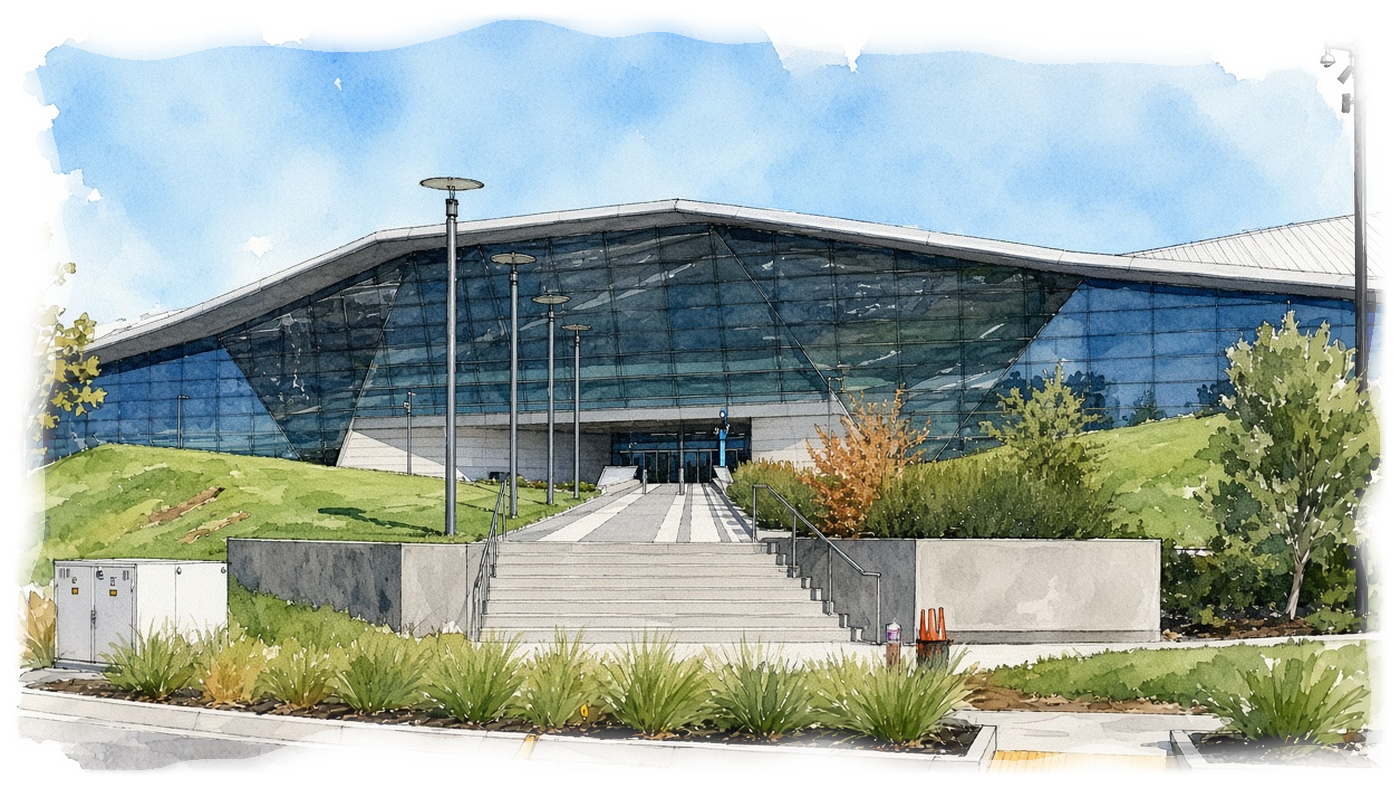
Nvidia's Endeavor headquarters building in Santa Clara, California, August 2018.Illustration by The Good Times, based on a photo by Coolcaesar / Wikimedia Commons (CC BY-SA 4.0); the painting is CC BY-SA 4.0
Jensen Huang resigned as president, chief executive and a board member of Nvidia, the company he co-founded in 1993 and built into the main supplier of chips that power artificial intelligence. The board accepted the resignation on Nov. 11, effective immediately, according to an SEC filing, and announced it the next day. Colette Kress, 59, the chief financial officer since 2013, is interim chief executive and keeps the finance job. Harvey C. Jones, 73, a director since 1993 and a former Synopsys chief executive, becomes the board's first chair. The board will consider inside and outside candidates for a permanent chief and expects operations to continue without interruption. Nvidia gave no reason. The resignation follows reporting by The Financial Times and The New York Times on two relationships: one with Alice Huang, no relation, an executive at Megaspeed, a Singapore-based cloud company and a large Nvidia customer, whom the Times reported was passing information to China's Ministry of State Security, and one with Kimberly Powell, an Nvidia vice president who reported to him. Nvidia shares closed down 4.3%, after falling as much as 14% earlier in the day, according to CNBC, and finished barely above a $4 trillion market value. The company reports quarterly results on Nov. 17.
Nvidia's board announced that Jensen Huang has resigned as president, chief executive officer and a member of the board, effective immediately. A Form 8-K filed with the Securities and Exchange Commission, listing Nov. 11 as the date of the event, says the board accepted the resignation of Jen-Hsun Huang, the name used in the filing, that day. The company's statement, issued Nov. 12 and attached to the filing, carries no comment from Huang and gives no reason for his departure. The filing was signed by Colette M. Kress as interim chief executive.
What the board did
Kress, 59, who has been Nvidia's executive vice president and chief financial officer since September 2013 after nearly 25 years in finance at companies including Cisco and Microsoft, is interim chief executive. She keeps the finance role while the board looks for a permanent chief and says it will weigh internal and external candidates.
The board also changed its own structure. Harvey C. Jones, 73, a board member since 1993, a former chief executive and executive chairman of Synopsys and the managing partner of Square Wave Ventures since 2004, is the first chair in Nvidia's history. "Colette has helped lead NVIDIA through a period of extraordinary growth and has a deep understanding of our business, customers, operations and financial position," Jones said in the company's statement. "The Board has full confidence in Colette and the leadership team, and we expect the company's operations, customer commitments and product roadmap to continue without interruption."
Kress said she is "committed to building on the extraordinary foundation Jensen created over the last 33 years" and that the company's focus "remains on serving our customers, partners, developers and shareholders."
Huang led Nvidia from its founding in 1993. The company's chips are the main hardware used to train and run AI systems in the United States, demand for them has long run ahead of supply, and its investment portfolio across AI companies is worth about $99 billion, The Verge reported. TechCrunch, citing the company's own figures, put that portfolio at $99 billion at the end of the second quarter, with another $25 billion of commitments. Huang also kept a close relationship with President Donald Trump, including on questions of chip sales to China.
The reporting that came before
Over the past week The Financial Times reported that Huang had been in a relationship with Alice Huang, no relation, an executive at Megaspeed, a Singapore-based cloud provider and a large Nvidia customer. The New York Times reported that she was passing information to China's Ministry of State Security while seeking information about advanced American AI chips, and CNBC reported that US intelligence officials believe she is a spy for China. Huang acknowledged in a memo to employees over the weekend that he had been "unfaithful" to his wife and apologized to his family and shareholders.
On Wednesday the Times, citing five people who worked at Nvidia, reported a second relationship, with Kimberly Powell, Nvidia's vice president for healthcare, who reported to him. The Wall Street Journal reported that the board would meet that evening on his future. The resignation was accepted that night.
The market and what comes next
Nvidia shares closed down 4.3% on Nov. 12, according to CNBC and NBC News, after falling as much as 14% earlier in the session, CNBC reported. The company's market value fell below $4 trillion in early trading for the first time since 2025 and ended the day barely above that level. NBC News reported that the shares had erased about $500 billion in value over the week.
The Verge reported that names circulating for the permanent job include Kress, Apple hardware chief Johny Srouji, Nvidia vice president Ian Buck, AMD chief executive Lisa Su and Arm chief executive Rene Haas; none has been named by the board. Nvidia said it will report third-quarter fiscal 2027 results on Nov. 17 at about 1:20 p.m. Pacific time, as previously scheduled, followed by an earnings call at 2 p.m. In an email to staff, Kress said the company will host a company meeting on Nov. 18.