Climate Talks Open in Antalya
Nearly 200 countries begin two weeks of UN negotiations in Turkey, with Turkey presiding, Australia running the talks and no Trump administration officials present.
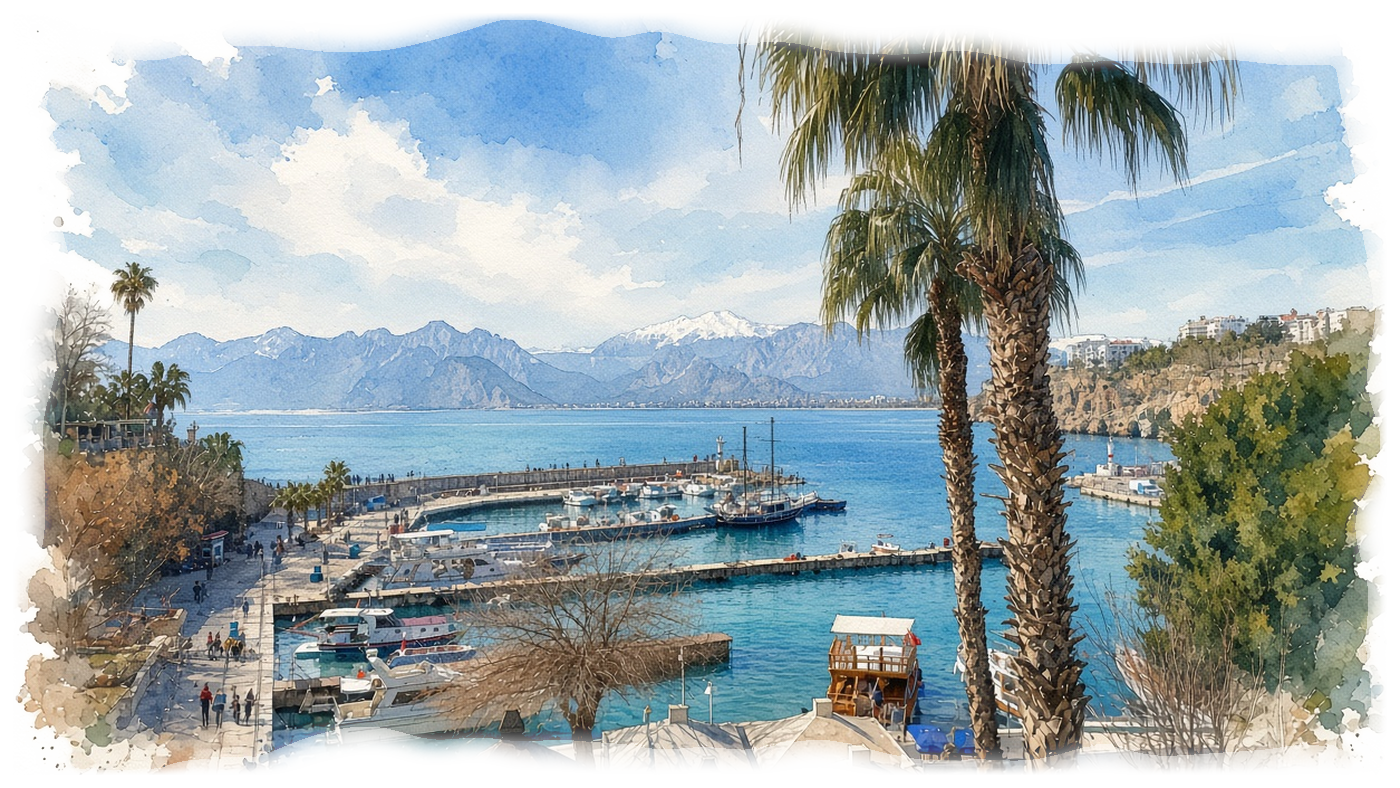
Archive photo: The marina in Antalya, Turkey, host city of this year's UN climate talks, in February 2022.Illustration by The Good Times, based on a photo by Sharon Hahn Darlin / Wikimedia Commons (CC BY 2.0)
Nearly 200 countries opened two weeks of United Nations climate talks in Antalya, Turkey, where the hosts promised a short, practical decision rather than a long political declaration. Turkey's environment minister, Murat Kurum, took the gavel as president of the summit, known as COP31, while Australia's climate and energy minister, Chris Bowen, leads the negotiations under a co-presidency agreed at last year's conference. A late dispute over the agenda was settled: a work program on climate finance was added, and African calls for a separate item on adaptation finance will be taken up within other strands of the talks. Turkey is inviting countries to join a voluntary pledge to raise electricity's share of world energy demand from about 20% to 35% by 2035. UN climate chief Simon Stiell told delegates that "no COP is a silver bullet" and urged them to "supercharge solutions." The Trump administration sent no officials, though a U.S. congressional delegation is due. The summit runs to November 20.
Delegations from nearly 200 countries began two weeks of United Nations climate negotiations in Antalya, on Turkey's Mediterranean coast, with the hosts describing the gathering as a summit about carrying out existing commitments rather than writing new ones.
Murat Kurum, Turkey's environment minister, formally became president of the conference, the 31st Conference of the Parties to the UN climate convention. Australia's climate and energy minister, Chris Bowen, is overseeing the negotiations under an unusual co-presidency agreed at COP30 in Brazil, an arrangement that settled a dispute over which country would host. The two men raised their clasped hands to applause during the opening ceremony, which began an hour and a half late without explanation.
"Our decisions must take shape in a city's infrastructure, on a farmer's land and along a factory's production line. Families must feel their impact in lower energy bills," Kurum told delegates.
An agenda settled overnight
Negotiators had worked late into the night over demands from developing countries to put climate finance on the formal agenda. Kurum announced that the issues had been resolved. A work program on climate finance, agreed at COP30, won a place on the agenda. African countries had sought a separate item on tripling adaptation finance, the money that helps poorer nations pay for measures such as sea walls and drought-resistant crops; that request was set aside, and the subject will instead be handled within other negotiating tracks. Nepal, recovering from severe flooding, did not win a standalone item on mountains and told the plenary the compromise "falls short of our expectations."
Bowen said the co-presidents would build a decision throughout the conference rather than waiting for its final days. "There will be no surprises," he said. "It will not be a lengthy political declaration, but a focused, practical, concrete response to the challenges and opportunities before us."
Electricity at the center
Turkey is asking countries to sign a voluntary pledge to raise the share of global energy demand met by electricity from around 20% today to 35% by 2035. The European Union has called for "clean" electrification, wording that could open a debate over the role of oil, gas and coal in generating that power.
Stiell, the executive secretary of UN Climate Change, told the opening plenary that "no COP is a silver bullet" and that no single conference "can bridge the chasm between the science and reality." He urged governments to triple adaptation funding as agreed last year, ease access to climate finance, triple renewable capacity by 2030, move electricity across grids and borders, and cut methane from oil, gas and waste. Action on methane and electrification together, he said, could cut half a degree Celsius from projected warming.
The backdrop
The World Meteorological Organization reported that global average temperatures from January to September were 1.47 degrees Celsius above preindustrial levels and that 2026 is on track to be one of the four warmest years on record. A strengthening El Niño, a natural climate pattern that releases ocean heat into the air, is expected to peak in December and last until at least February. "We have entered a new age of climate extremes," UN Secretary-General António Guterres said.
Almost all major countries have now filed national climate plans covering the period to 2035; Egypt and Argentina submitted theirs in recent days. The United States, which is not a party to the Paris Agreement, sent no officials from the Trump administration. A U.S. congressional delegation is expected in Antalya, and Brazil's president, Luiz Inácio Lula da Silva, is among the leaders due to speak later in the week. The conference is scheduled to close on November 20.