Task Force Targets Iran Routes
CENTCOM orders a Tampa-based team of about 20 people to coordinate action against weapons and sanctioned goods moving across Iran’s borders and the Caspian Sea.
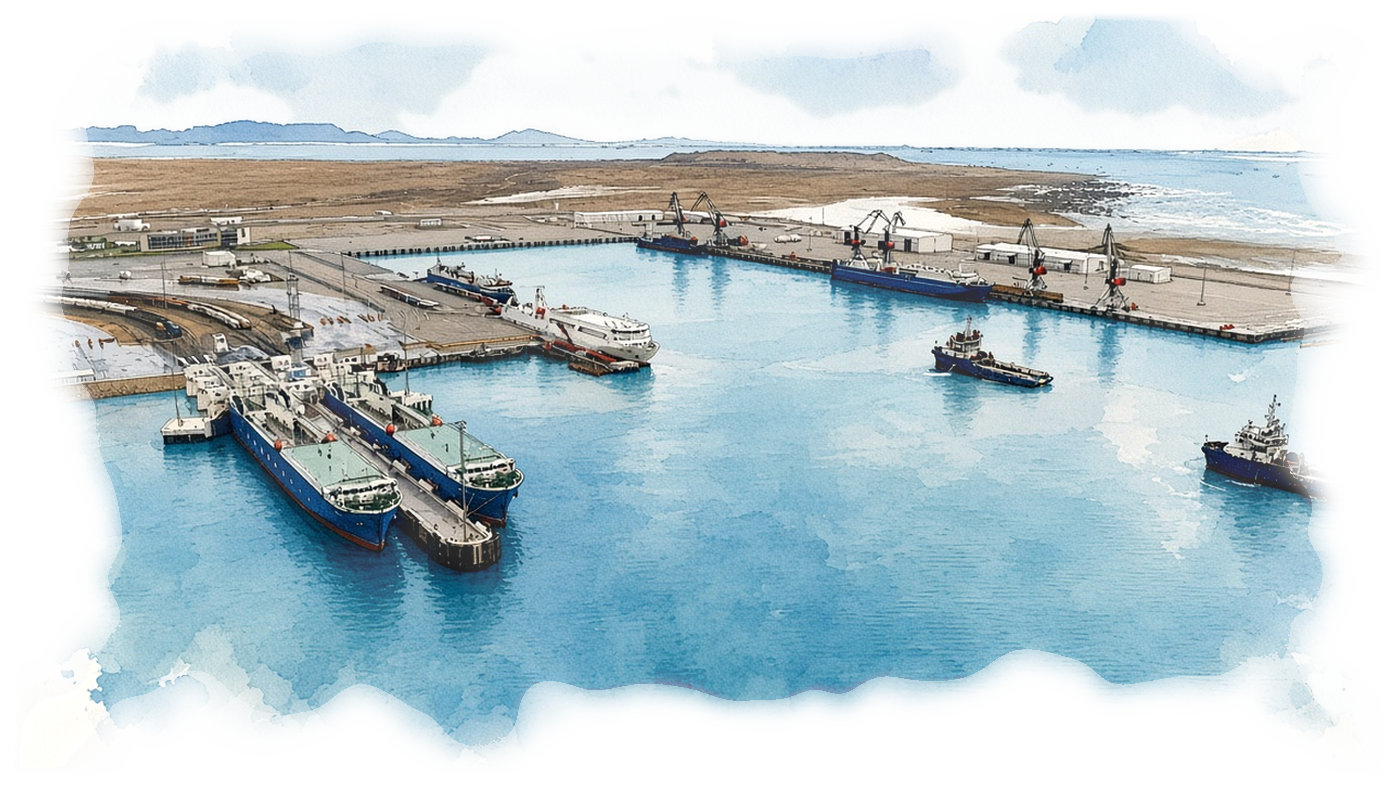
Cargo ships at the Port of Baku at Alat on the Caspian Sea, Azerbaijan, May 2018.Illustration by The Good Times, based on a photo by the Press Service of the President of Azerbaijan / Wikimedia Commons (CC BY 4.0)
U.S. Central Command has ordered a Tampa-based task force to coordinate efforts against weapons and sanctioned goods moving across Iran’s land borders and the Caspian Sea. Task Force Iron Gate will consist of about 20 civilian and military personnel working with other U.S. agencies, the command said. It is an internal coordinating staff, not an announced new combat deployment. Adm. Brad Cooper directed its formation, saying it would reinforce the naval blockade. CENTCOM estimates that the blockade has prevented more than $25 billion in Iranian crude exports; that figure is the command’s assessment. Reuters reported that a military official expected the new team to work with the Treasury, State and Justice Departments and the intelligence community. A separate Reuters investigation found that Iran had imported at least $2 billion in hardware, explosives and heavy-duty trucks since January 2025 through routes including the Caspian Sea, Central Asia and China. The announcement names no individual border crossings or new interdictions.
U.S. Central Command has ordered the creation of Task Force Iron Gate, an internal staff intended to help other American agencies disrupt the movement of weapons, sanctioned goods and revenue across Iran’s land borders and the Caspian Sea.
Adm. Brad Cooper directed the formation of the team on November 7. CENTCOM said approximately 20 civilian and military personnel would be based at its headquarters in Tampa, Florida. Their remit includes advanced weapons systems, technologies with both civilian and military uses, sanctioned materials and what the command calls illegal revenue streams.
The announcement describes coordination with other U.S. government agencies. It does not announce a new combat force, identify border crossings to be targeted or report that a land route has been closed. The task force adds a coordinating team to the existing campaign rather than establishing a second naval blockade.
“The establishment of Task Force Iron Gate reinforces the success of our ironclad blockade against Iran at sea,” Cooper said in the command’s statement. He said closer interagency collaboration would constrain Iran’s ability to finance terrorism, rebuild weapons factories and replenish its military.
A U.S. military official, speaking anonymously to Reuters in a report carried by CNBC, said the partners were expected to include the Treasury, State and Justice Departments and the intelligence community. CENTCOM’s own announcement did not name those agencies individually.
The routes within the team’s remit extend beyond the waters patrolled under the naval blockade. A Reuters investigation found that Iran had built a network of military agencies to import at least $2 billion in hardware, explosives and heavy-duty trucks since January 2025. The material traveled by cargo ship across the Caspian Sea from Russia, by truck from Central Asia and by freight plane from China, the investigation reported.
That account describes channels used to evade sanctions and the blockade, not goods already seized by the new task force. CENTCOM announced no individual interception or confiscation by Iron Gate.
The command estimated that its naval blockade had prevented Iran from exporting more than $25 billion in crude oil in recent months. The command said strict enforcement would continue against ships entering or leaving Iranian ports.
Cooper’s order leaves that maritime operation in place. The newly announced staff’s task is to work across agencies on the routes and transactions that fall outside it.