Paraguay's President Resigns Over Bank Collapse
Paraguay's president resigns as a digital bank tied to him freezes millions of accounts and his own party joins an impeachment vote.
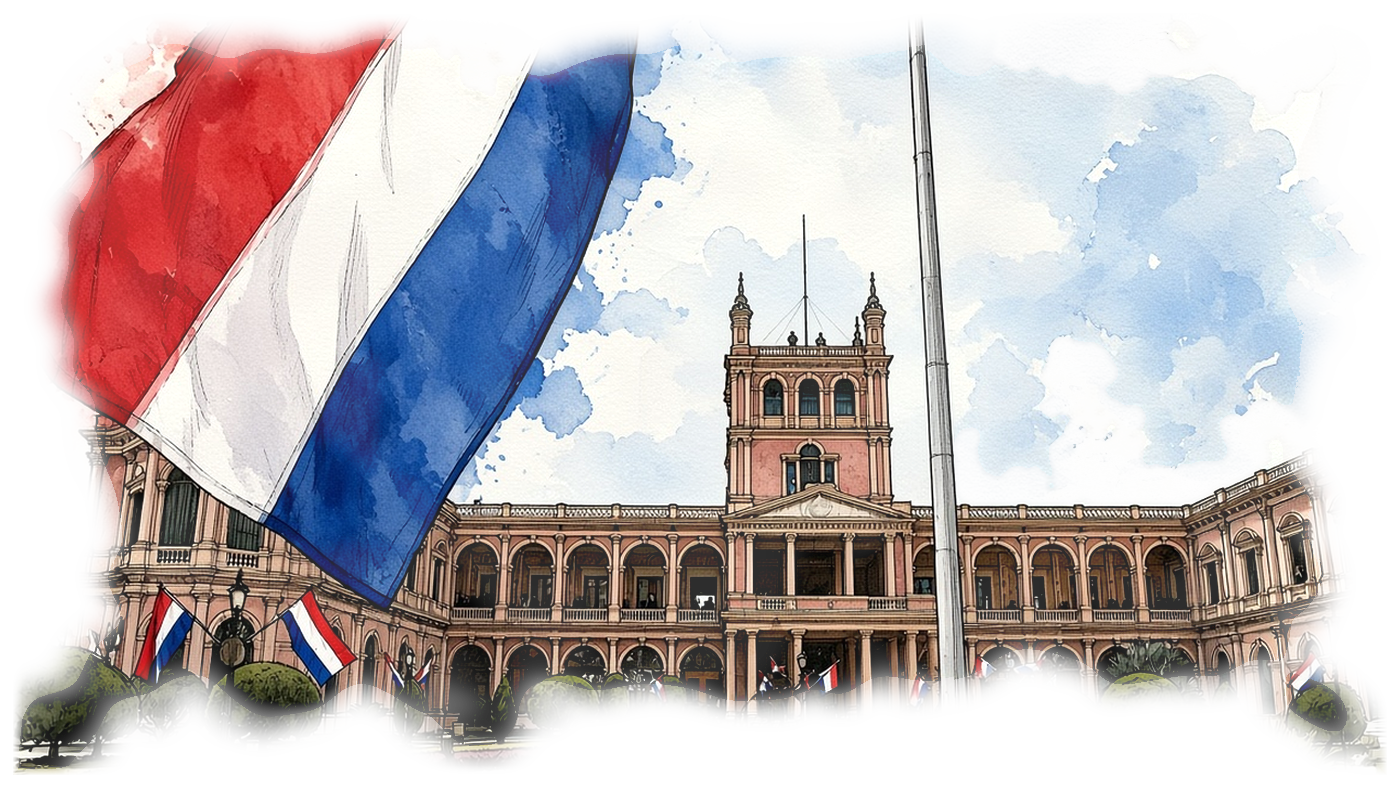
The Palacio de López, seat of Paraguay's presidency, in Asunción, August 2023.Illustration by Agentic Newsgathering, based on a photo by the Office of the President, Republic of China (Taiwan) / Shufu Liu (CC BY 2.0)
Paraguay's President Santiago Peña announced his resignation in a video on X after the collapse of Ueno Bank froze accounts for about three million customers and drove protests into the streets of Asunción. The digital lender, which Ueno has said serves about 60% of the country's adult population and held pensions and other public funds, was seized by the central bank after its solvency ratio fell below half the required minimum. Lawmakers accused Peña, a former shareholder in the bank's parent company until he sold his stake last year, of conflicts of interest; he has denied wrongdoing. Minutes after his resignation message, the Chamber of Deputies voted 78 to 0 to impeach him and send the charges to the Senate. Peña said he stepped down to protect stability, social peace and democratic institutions. Vice President Pedro Alliana is next in line once Congress accepts the resignation. Congress has also approved a process to repay depositors.
Ueno had grown fast. As of last month the bank said it held roughly $800 million in public-sector deposits, about a quarter of its total, including money from operators of Paraguay's hydroelectric dams. The Social Security Institute, which manages pension and health care funds for most workers, held about $355 million at the bank, about 9% of its investments, according to financial manager Gladys Vera. When the central bank ordered a resolution process, the app, cards and transfers stopped, branches closed, and customers lined up unable to withdraw savings. Retirees, depositors and workers marched in Asunción demanding their money and Peña's removal. Police used pepper spray and rubber bullets to disperse protesters the night before the resignation. Hundreds of Ueno employees also protested unpaid wages.
Impeachment articles from opposition lawmakers and Colorado Party dissidents accused Peña of conflicts of interest, misuse of pension funds and preferential treatment for Ueno. They cited two loans he received from the bank and his appointment of central bank chief Carlos Carvallo, a former Financiera Ueno chair. Peña sold his shares in Ueno Holding in April 2025. His resignation followed the withdrawal of support by Congress President Basilio Núñez and Colorado Party leader Horacio Cartes. The Chamber of Deputies rejected a separate bid to impeach Alliana. A joint congressional session was set to receive Peña's resignation; if accepted, Alliana would be sworn in to finish the term through August 2028. Prosecutors have detained senior Ueno executives and charged bank officials in the case.