Israel's $4 Billion a Year in U.S. Aid to End This Year, President Says
Israel's roughly $4 billion a year in U.S. aid "gets cut off at the end of the year," President Donald Trump said, adding that Prime Minister Benjamin Netanyahu raised the idea and that Israel can still buy American weapons.
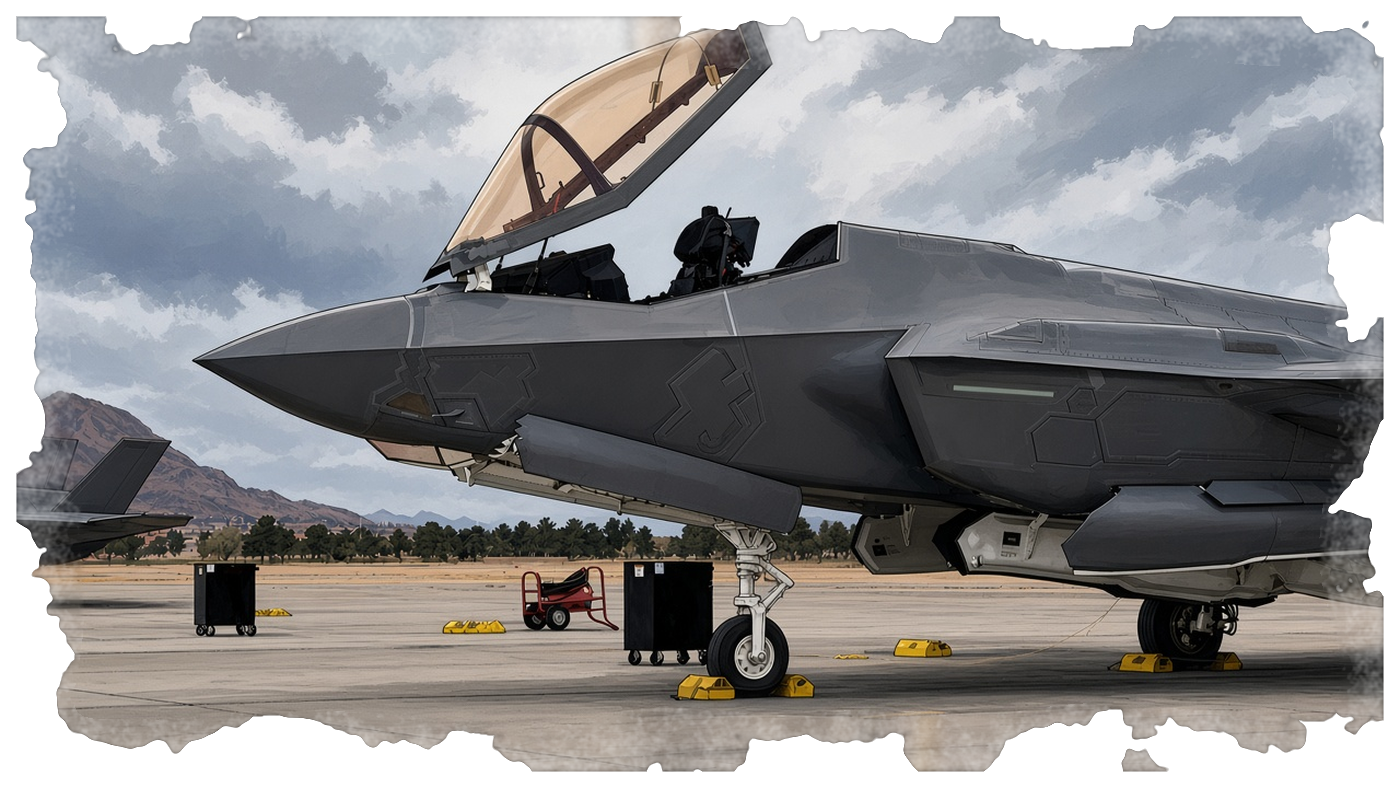
An Israeli Air Force F-35I fighter jet on the flight line at Nellis Air Force Base, Nevada, March 2023.Illustration by The Good Times, based on a photo by Airman 1st Class Trevor Bell / U.S. Air Force via Wikimedia Commons (Public domain)
President Donald Trump said the United States will stop giving Israel about $4 billion a year at the end of this year. "We were giving them $4 billion – we are – but it gets cut off at the end of the year," he told Fox & Friends. He said he and Netanyahu "made a deal months ago," that Netanyahu "brought it up," and that Israel does not need the money. "They can buy whatever they want," he said of U.S. weapons. He gave no details on how the aid would end. It is not clear which money he meant. The 2016 U.S.-Israel agreement provides $3.8 billion a year through 2028, but it is not legally binding and Congress approves the money each year. Netanyahu's office has not commented. Israeli defense and finance officials were surprised by the remarks, Israeli media reported. Opposition leader Yair Golan called it "a severe blow to Israel's security."
Trump spoke in a phone interview with Fox & Friends. "Bibi Netanyahu and I have made a deal that we give Israel $4 billion a year, and we made a deal months ago that we're stopping," he said. "By the end of this year we won't be paying Israel. Now we'll help Israel if they need it."
He said Netanyahu proposed it. "Can I be honest with you? He brought it up," Trump said. "He said, 'I think it would be appropriate if we do not receive aid.'" Asked why the aid would stop, he said: "Because they don't need it." Asked whether he meant military hardware or cash, he said: "You can consider it barter. You can consider military aid or cash. What we give them, $4 billion of things and money, and they don't need it." Asked whether Israel could still buy U.S. weapons, he said: "Oh yeah, they can buy whatever they want."
Trump linked the decision to the midterm campaign. "Why should we suffer the slings from lunatics like an El-Sayed when they don't need it?" he said, referring to Abdul El-Sayed, the Democratic Senate nominee in Michigan, who has criticized U.S. aid to Israel. "The left uses the $4 billion payment that everybody knows about ... as a signal of unfairness, and we can't allow that to happen," he said.
He gave no details on how the aid would end, and several questions remain open. It is not clear which funding he meant. It is not clear whether "the end of the year" means the end of the calendar year or of a fiscal year. It is not clear whether Congress would have to act.
Under a memorandum of understanding signed in 2016, the United States committed $38 billion in military aid to Israel over fiscal years 2019 to 2028: $3.3 billion a year in Foreign Military Financing and $500 million a year for joint missile defense. The memorandum is not a legally binding treaty, and the money is subject to annual appropriations by Congress.
In January, Netanyahu told The Economist he wanted to reduce U.S. military aid over the next 10 years. In May, he told CBS's 60 Minutes: "I want to taper off American support for Israel to zero."
Netanyahu's office has not commented on Trump's remarks. Israel's public broadcaster KAN reported that officials in the Defense Ministry and the military were surprised. Channel 12 and Ynet reported that the Finance Ministry did not know Trump was going to announce the end of the aid.
Golan, who leads the Democrats party, said: "The cessation of American aid deals a severe blow to Israel's security and the quality of life in the country." He said a responsible prime minister would have fought to increase American aid rather than give it up. Gadi Eisenkot, who leads the Yashar party, said the defense establishment was learning of the change through the media. "He can no longer be trusted and must be replaced," Eisenkot said of Netanyahu.