Supreme Court Turns Away 9/11 Plea Appeal
The justices declined to hear Khalid Sheikh Mohammed and another accused 9/11 plotter, who wanted plea deals restored that would have traded guilty pleas for life sentences instead of a possible death sentence. They also turned away Gwynne Wilcox, leaving in place a ruling that the president can fire members of the National Labor Relations Board at will.
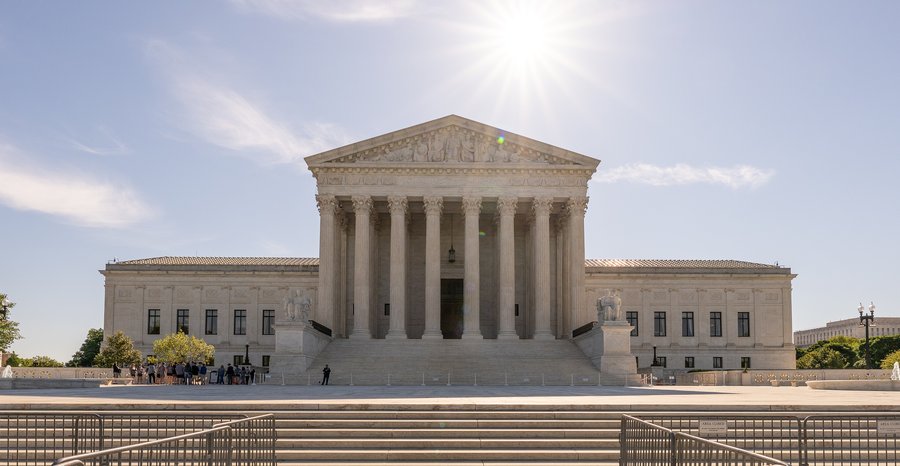
The Supreme Court refused to hear appeals from Khalid Sheikh Mohammed, who is accused of planning the September 11, 2001, attacks, and another defendant, Walid bin 'Atash. They wanted the court to restore plea deals that would have let them plead guilty and serve life sentences, avoiding the death penalty.
The deals were struck more than two years ago at Guantánamo Bay. Then-Defense Secretary Lloyd Austin withdrew them, saying the decision was his to make, and a federal appeals court in Washington agreed the deals were not binding. With the justices declining to step in, that ruling stands and the deals stay void. The court gave no reasons. Justice Brett Kavanaugh did not take part in Mohammed's case.
In the same list of orders, the court turned away Gwynne Wilcox, whom President Trump removed from the National Labor Relations Board shortly after his second inauguration. That leaves in place an appeals court ruling from December 2025 that Congress cannot limit the president's power to fire board members.
Washington — The Supreme Court refused to take up appeals from Khalid Sheikh Mohammed, the man accused of planning the September 11, 2001, attacks, and fellow defendant Walid bin 'Atash, who asked the justices to restore plea deals that would have spared them the death penalty.
The court denied both petitions without comment in its list of orders. Justice Brett Kavanaugh did not take part in Mohammed's case.
What the plea deals were
More than two years ago, after nearly two decades in custody at Guantánamo Bay, the men reached agreements with military prosecutors to plead guilty in exchange for life sentences, removing the possibility of execution. Lloyd Austin, then the secretary of defense, then said he had the final say over such deals and withdrew the government's consent. The U.S. Court of Appeals for the District of Columbia Circuit sided with the government, ruling that it could do so and that the agreements were not binding.
The denial leaves that ruling in place. The deals stay void, and without them the death penalty remains possible for the men. The court's orders say nothing about when their cases will go forward.
The labor board firing
The court also declined to hear Gwynne Wilcox, a member of the National Labor Relations Board whom President Trump removed shortly after his second inauguration. The law governing the board lets a president fire a member only for "neglect of duty or malfeasance in office," and Trump alleged neither. Lower courts first ordered Wilcox reinstated, but the Supreme Court paused those orders in May 2025 and allowed her removal while the case went on.
In December 2025 the D.C. Circuit ruled that the law's protection against removal violates the Constitution's separation of powers. "Congress," Judge Gregory Katsas wrote for the majority, "cannot restrict the President's ability to remove NLRB … members" because they "wield substantial executive power." By turning Wilcox away, the justices left that ruling standing, though they did not rule on the question themselves.
Other orders
The court agreed to hear a case on the federal ban on home distilling, and asked the solicitor general for the government's view of an Iowa law that makes it a crime to be in the state after illegally reentering the United States. In a separate statement joined by Justice Neil Gorsuch, Justice Sonia Sotomayor said she had "serious concerns" about Chicago's practice of seizing and selling cars over unpaid parking tickets without compensating owners, while agreeing that the court should not take that case now.