Russia's Lavrov Goes to Tehran
Russian Foreign Minister Sergey Lavrov made his first visit to Iran since the U.S.-Israeli war on it began, said Moscow is working to prevent "the return of a large-scale war," and said Russian specialists will gradually go back to Iran's Bushehr nuclear power plant. Gulf states had asked him a day earlier to press Tehran to reopen shipping through the Strait of Hormuz.
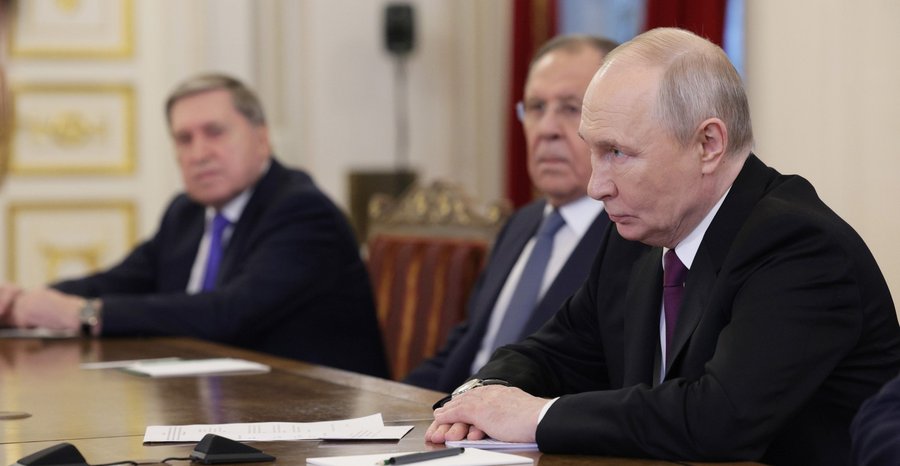
Russia's foreign minister, Sergey Lavrov, flew to Tehran for his first visit since the United States and Israel began their war on Iran. He said Moscow's efforts are "aimed at preventing the return of a large-scale war," with talks between Iran and the United States at a standstill.
Lavrov met Iran's foreign minister, Abbas Araghchi, and President Masoud Pezeshkian. He called the U.S.-Israeli attacks on Iran illegal, said Russia stands by a 20-year strategic partnership with Iran that took effect on October 2, and said Russian specialists who left Iran's Bushehr nuclear power plant during the war will gradually return.
A day earlier in Bahrain, Gulf states asked Lavrov to use Moscow's influence to get Iran into "serious dialogue" and restore shipping through the Strait of Hormuz, the route for much of the world's oil. Britain's navy counted 10 attacks on ships in and near the strait last week, and Brent crude, the world benchmark, stayed above $105 a barrel.
The same day, Israeli Prime Minister Benjamin Netanyahu released a phone call in which he told President Trump, "Donald, we have a job to finish."
Tehran, Iran — Russia's foreign minister, Sergey Lavrov, arrived in Tehran on his first visit to Iran since the United States and Israel launched their war on the country, and said Moscow wants to stop the fighting from returning at full scale.
His visit was "aimed at preventing the return of a large-scale war," Lavrov said, as direct talks between Tehran and Washington remain stalled. At a joint news conference with Iranian Foreign Minister Abbas Araghchi, he condemned the U.S.-Israeli attacks on Iran as illegal.
What Moscow offered Tehran
The war began on February 28. Lavrov said Russia is committed to a 20-year strategic partnership agreement with Iran that came into force on October 2, and that Russian specialists who left the Bushehr nuclear power plant during the war will gradually return. He linked a reopening of shipping lanes to protection for Iran against new attacks, and backed a memorandum of understanding Iran and the United States signed in June, which later collapsed, as a framework for easing tensions.
He also met President Masoud Pezeshkian, who said Iran is willing to resolve tensions through dialogue and blamed U.S. military bases in neighboring countries for instability. The secretary of Iran's Supreme National Security Council, Gen. Mohsen Rezaei, called for stronger cooperation with Russia on regional security, Iranian state media reported.
Araghchi blamed the United States and Israel for the danger to shipping. "The existing insecurity around the Strait of Hormuz is a direct result of the military aggression by the US and [Israel] against Iran, and it is ongoing in different forms," he said.
The Gulf's request
Lavrov came to Tehran from Bahrain, where the six Gulf Cooperation Council states met him for a strategic dialogue. They asked him to use Russia's influence to push Iran toward "serious dialogue" and to restore shipping through the strait. The council's secretary-general, Jasem Al-Budaiwi, said its members have faced more than 7,000 Iranian missiles and drones since the war began, and the council said it wants Iran's nuclear and missile programs, and its support for armed groups in the region, included in any talks to end the war.
Oil, shipping and Washington
The Strait of Hormuz carries a large share of the world's oil, and the United States runs a naval blockade of Iranian ports. Britain's maritime trade office counted 10 attacks on commercial ships in and near the strait last week and said October is the worst month for such attacks since March. Brent crude stayed above $105 a barrel after nearing $110 over the weekend.
In Washington, President Trump said Russia and China have done "very little" for Iran. The same day, Israeli Prime Minister Benjamin Netanyahu released a video of a phone call with Trump, a day after Trump endorsed him for reelection, in which Netanyahu said, "Donald, we have a job to finish. We'll finish it together." Trump told him, "You're the man I want by my side, Bibi."