NASA Opens Race to Replace Space Station
NASA's final call for private space stations to succeed the International Space Station guarantees each first-round winner at least $100 million in orders; bids are due Dec. 8 and winners will be picked next spring.
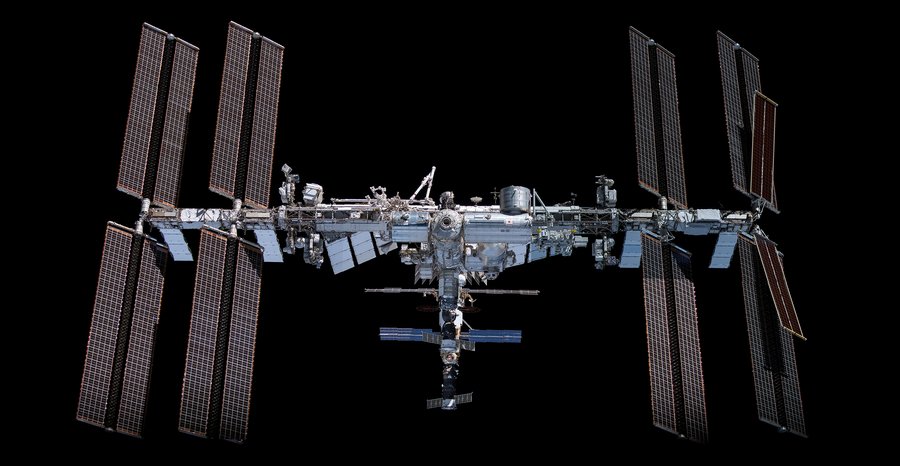
Washington — NASA on Friday, 9 October, released its final request for proposals for commercial space stations, the private outposts it wants to replace the International Space Station when that station is retired.
A request for proposals is the formal document in which a government agency tells companies exactly what it wants to buy and invites them to bid. This one runs to 360 pages. Proposals are due on Tuesday, 8 December, and NASA expects to award contracts in spring 2027.
"We've made it clear that NASA will never give up its presence in low Earth orbit," NASA Administrator Jared Isaacman said. Low Earth orbit is the region of space closest to the planet, where the station flies. "We will continue to need a place to conduct research, develop technologies, train crews, and prepare for missions to the Moon and Mars," he said.
Why it matters
The International Space Station is due to be brought down around 2030 or 2032, Ars Technica reported. NASA says the new stations are meant to ensure "a sustained human presence" in orbit after that. The first could be ready as early as 2030, Ars Technica reported.
NASA's plan is to stop running its own station. Instead it would buy time and services on stations that companies build, own and run, as it already buys rides to orbit from private rockets. Isaacman said that would let NASA "concentrate more of our resources on the near-impossible missions ahead," meaning the Moon and Mars.
How the contest works
NASA says it will award fixed-price contracts to "two or more" companies for early development. In a fixed-price contract the price is agreed up front, so the company carries the risk if costs rise. Later, one or more of those companies will be chosen for final design, testing, certification and services.
The solicitation guarantees each winner at least $100 million in orders. Later phases will be worth billions, Ars Technica reported: a second phase starting next year pays for building and certifying the stations, and a third includes buying at least four missions for NASA astronauts.
Companies expected to bid include Axiom Space, Voyager Space, whose station is called Starlab, and Vast Space, Ars Technica reported. Blue Origin won money in an earlier round. SpaceX appears unlikely to bid for now.
"The release of the RFP is an important milestone," said Marshall Smith, chief executive of Voyager's Starlab. Axiom said its team was "energized for the next steps." Vast said it was in final integration of Haven-1, its first small station, "and ready to keep building."
The ride problem
The hardest part may be getting astronauts there. SpaceX's Crew Dragon is the only American spacecraft now carrying people to orbit, and SpaceX has said it plans to retire Crew Dragon, probably when the space station is brought down, Ars Technica reported. It has not offered to sell seats to private station operators.
The new request eases that problem. Companies do not need a signed contract with a ride provider to bid, and NASA offers to supply transport for its first four astronaut missions to the new stations. NASA's documents also put a price on those flights: about $325 million for a four-seat crew flight in 2030 and about $300 million for a cargo flight, Ars Technica reported. Two weeks ago NASA gave Boeing an extra $359 million to keep working on its Starliner capsule, Ars Technica reported.
"The opportunity is significant, but the economics ultimately have to work," Isaacman said. "We want to see credible plans, strong technical execution, and companies prepared to invest in destinations that can serve NASA while developing additional customers and markets of their own."
How we got here
NASA spent most of the year asking industry what would work. It published two requests for information in March, a draft of this request in July, and held an industry day and one-on-one meetings so companies could comment on the plan, the agency said.
What happens next
Companies have until 8 December to bid. NASA plans to choose its first-phase winners in the spring. Those companies then have only a few years to launch a working station before the old one comes down.