India Shuts Capital to Stop Election Protest
Police held thousands of people on Saturday, Indian newspapers reported, to stop a youth march against the official whose agency has removed about 130 million names from voter lists; on Sunday the leaders were freed, the Supreme Court barred detentions outside the law, and returning protesters were taken away again.
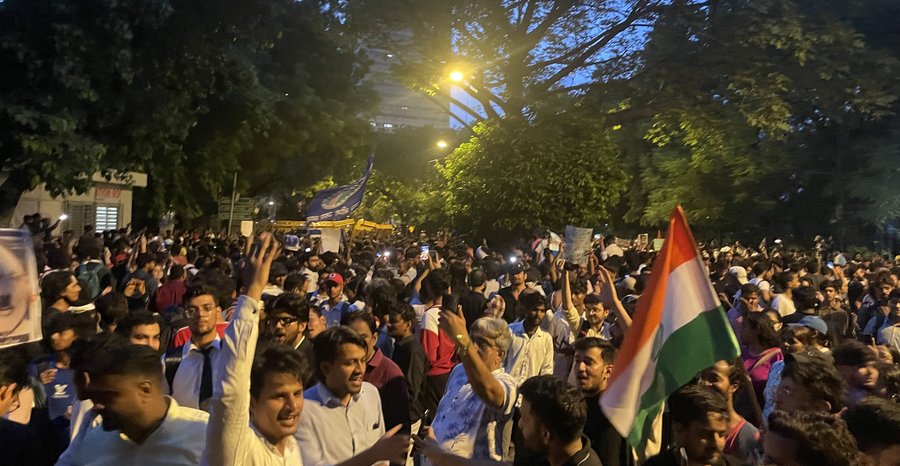
New Delhi — India's capital was put under tight police control on Saturday, 10 October, to stop a protest against the country's top election official. Thousands of people were detained, according to Indian newspapers, metro stations were closed, trains were cancelled and mobile internet was cut in the city centre.
The march was called by the Cockroach Janta Party, or CJP, a movement led by young people that is not a registered political party. It wants Chief Election Commissioner Gyanesh Kumar to resign. Kumar heads the Election Commission of India, the body that runs national and state elections in the world's largest democracy.
Why people are protesting
Over the past year the Election Commission has run what it calls a Special Intensive Revision, a nationwide check of the voter lists that decide who may vote. Election Commission data shows about 130 million names have been deleted during the exercise, including 63 million people who moved, 30 million who could not be traced and 28 million who had died, Reuters reported.
The commission says the figure counts entries flagged at the draft stage and that anyone wrongly removed can register again. It calls the review routine work to remove dead, duplicate or ineligible voters, the BBC reported.
Opposition parties accuse Kumar of shaping the lists to help Prime Minister Narendra Modi's Bharatiya Janata Party, the BJP. They say the deletions changed the result of some recent state elections that the BJP won. The commission and the BJP deny this.
The anger grew after the Indian Express newspaper reported that the two other members of the three-person commission had objected to Kumar's decisions. On 5 October, India's Supreme Court asked the commission, Kumar and the government to answer a petition saying 14 decisions about the review were taken by Kumar alone, despite at least 14 objections recorded by the other two commissioners. The petitioner's lawyer pointed to the law saying the commission's decisions should be unanimous where possible and otherwise made by majority. The court declined to suspend Kumar before hearing his side. "There is a mandatory law, and we expect them to follow it. If there is any violation, we will undo," Chief Justice Surya Kant said, according to the legal news site LiveLaw.
What happened on Saturday
Delhi Police refused permission for the march at Jantar Mantar, the city's official protest site, and issued orders banning gatherings across the New Delhi district, The Tribune reported. Police said the group had applied too late and had broken a signed promise during earlier protests, The Tribune and the Hindustan Times reported.
CJP founder Abhijeet Dipke and two other leaders, Saurav Das and Ashutosh Ranka, were detained on board their plane from Mumbai as soon as it landed, the group said, Reuters reported. Police also detained former chief ministers Arvind Kejriwal, Mamata Banerjee, Pinarayi Vijayan and Manik Sarkar as they tried to join, the Indian Express and the Hindustan Times reported. The YouTuber Dhruv Rathee was detained at his home in Gurugram, near Delhi, the two papers said. A chief minister is the elected head of an Indian state's government.
Across the city of about 20 million, 45 metro stations and markets were shut and mobile internet was suspended in the central business district, Reuters reported. Buses carrying detained protesters were driven away from the protest area. Two digital news outlets said four of their reporters were detained.
Counts of those held differ, and the authorities have given no official figure, a petitioner told the Supreme Court on Sunday, LiveLaw reported. The Indian Express and the Hindustan Times put the number at about 7,000. The news agency PTI said more than 7,000, and The Hindu, citing police sources, gave the same figure. Earlier on Saturday the BBC reported hundreds detained, and Reuters described police dragging scores of people onto buses.
The court's limit
On Friday, the Supreme Court had told the authorities that a total shutdown of Delhi's metro and railways would hurt ordinary people. "There shall be no complete prohibition on movement of Metro," the bench of Chief Justice Kant, Justice Joymalya Bagchi and Justice V Mohana said, ordering services to run "in an aptly regulated manner" and the plans to be published, The Tribune reported. On Saturday night the Delhi Metro said all its stations had reopened.
By the end of Saturday police had released most of those held, but Dipke, Das, Ranka and Rathee were kept overnight, the Hindustan Times reported. Police said the three party leaders were held under preventive arrest, an arrest meant to stop an offence before it happens rather than a criminal charge, and would be brought before a magistrate on Sunday morning, ThePrint reported.
The United Nations human rights office said it was concerned by reports of mass detentions, a statement the Indian government rejected, The Hindu reported.
Who is behind the movement
The CJP grew out of a joke. In May, after Chief Justice Kant compared some jobless young people to "cockroaches," a remark he later said was misunderstood, Dipke posted on X: "What if all cockroaches come together?" The post spread, the BBC reported, and the movement led five weeks of protests this summer that ended in July with the resignation of Education Minister Dharmendra Pradhan over leaked exam papers.
What happened on Sunday
Rathee was released in the early hours of Sunday, and a Gurugram police spokesperson said no charges were brought against him, The Hindu reported. A police source warned he could be detained again if he tried to go to Jantar Mantar.
On Sunday morning, Dipke, Das and Ranka were brought before an executive magistrate, a government official with powers to order people to keep the peace, at the Delhi Cantonment police station. Police said they had been held under sections of India's criminal procedure law that allow arrest to prevent an offence and let a magistrate demand a promise of good behaviour. The magistrate released all three on a bond of 50,000 rupees on condition that they keep the peace and behave well for one year, the New Indian Express reported. That sum is about $520. It is not clear whether that condition stops them from protesting, the BBC reported. "The CJP will neither back down nor be intimidated," Dipke said after his release, the BBC reported. He left Delhi for his grandmother's funeral; she died around the time of his arrest.
The new march went ahead without him. Protesters returned to central Delhi at the 10 a.m. call, but more than 30,000 police and paramilitary officers were deployed across the city and kept them from reaching Jantar Mantar, the news agency PTI reported. Police detained protesters marching from Connaught Place, a central shopping district, including John Brittas, a member of parliament from the Communist Party of India (Marxist), police sources told PTI, and members of student groups. The BBC said it saw many people put on buses and driven away, some chanting "Gyanesh must go!" Police said they were likely to file criminal cases over alleged assaults on officers during the protests, The Hindu reported.
The Supreme Court steps in
The Supreme Court held a special Sunday sitting to hear complaints about the crackdown. One was a request to punish officials for contempt of court, meaning for disobeying the court's Friday order against shutting the metro and railways. Another was a habeas corpus petition, which asks a court to order that people held unlawfully be brought before it and freed. Lawyers told the judges that people had been pulled off trains and picked up far outside the protest zone, and the senior lawyer Shadan Farasat said he had himself been thrown onto a moving bus, LiveLaw reported. The government's top court lawyer, Solicitor General Tushar Mehta, said those detained had been released and that the metro had been fully running since 10 p.m. on Saturday.
Justices Joymalya Bagchi and V Mohana ordered that no one be detained except in the way the law allows, especially people gathering peacefully and unarmed outside the area under the protest ban. They ordered metro and train services to run normally unless public order requires limits, internet service to stay on, people to be allowed to move freely around the city, and police barricades to be reviewed at once, LiveLaw reported. They also said lawyers must not be blocked from doing their work. The judges ordered the officials named in the contempt request to file sworn replies and a report on whether they had obeyed the court, and asked for the government's response by Tuesday.
What it means in practice
Every national and state election in India is run by this one commission, and the voter list decides who can cast a ballot. Critics say eligible people have been struck off; the commission says it is removing dead, duplicate and ineligible entries and that anyone wrongly removed can register again. The Supreme Court is now examining whether the decisions were made lawfully. For the rest of the world, the question is whether the largest democracy's voting system keeps public trust, and whether its government will allow large protests about it in the capital.
What happens next
The CJP says it will keep protesting until Kumar resigns. The government and the police must answer the Supreme Court by Tuesday on the crackdown, and the separate case over whether Kumar's decisions on the voter lists were lawful continues. A series of state elections begins in early 2027.