
Education · Richmond
Judge Upholds Virginia's In-State Tuition Law
A federal judge dismissed the Justice Department's suit against Virginia's law letting students from its high schools, including undocumented immigrants, pay in-state college rates. An appeal is expected.
By ClarkRichmond · Thursday, 8 October 2026
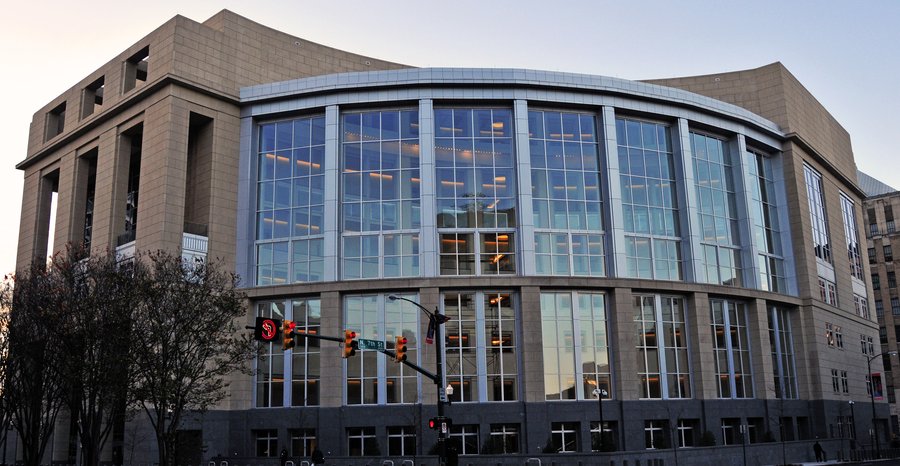
RICHMOND, Va. — A federal judge has rejected the Trump administration's attempt to stop Virginia from charging undocumented immigrant students the lower tuition rate it gives state residents at its public colleges.
Senior U.S. District Judge Robert E. Payne, sitting in Richmond, ruled on Monday, 5 October, that Virginia's law does not break federal law. He threw out the Justice Department's case "with prejudice," meaning the government cannot bring the same case again, though it can appeal. The ruling was reported on 7 October.
What the Virginia law does
Public colleges charge much less to students from their own state than to students from elsewhere. In Virginia the gap is large: average undergraduate tuition in the 2025–26 school year was $9,987 for in-state students and $28,591 for out-of-state students, not counting room, board and fees, according to figures in the court record reported by WVIR, a television station in Charlottesville.
Since 2020, Virginia has offered what it calls the Tuition Equity Pathway. A student generally qualifies by attending a Virginia high school for at least two years and graduating from it or passing an approved high school equivalency exam. The student, or for a dependent student a parent or guardian, must also have filed Virginia income tax returns for at least two years, and the student must enrol at a qualifying Virginia college. Immigration status does not block a student who meets those tests.
The judge's opinion said 1,206 students who did not meet Virginia's residency rules used the pathway in the 2025–26 school year, WVIR reported.
What the government argued
The Justice Department sued Virginia on 31 December 2025. It relied on a federal law that bars people without legal immigration status from getting college benefits such as in-state tuition "on the basis of residence" unless "a citizen or national of the United States is eligible for such a benefit," as Inside Higher Ed quoted it.
The government argued that going to high school in Virginia is just a stand-in for living there, so the pathway is really a residence benefit. It also read the law to mean Virginia could not give the benefit to undocumented students unless every U.S. citizen could get it too.
Why the judge disagreed
Payne found that the pathway is based on where a student went to school, not where the student lives. Some Virginia residents do not qualify, for example those who went to a private day school or boarding school in another state, while some U.S. citizens who live in other states do qualify because they went to school in Virginia, he wrote, according to Inside Higher Ed.
He also rejected the government's reading of the word "a."
"The statute does not say 'all citizens.' It says 'a citizen,'" Payne wrote. "If Congress meant 'all citizens' it could have said so. It did not."
"Undocumented students are not treated better than United States citizens from other states," he added. "Some undocumented students receive in-state tuition. So too do some United States citizens from other states."
In legal terms, he found that the federal law did not override, or "preempt," Virginia's law. He turned down the government's request to win without a trial, known as summary judgment, and granted Virginia's.
How Virginia switched sides
When the Justice Department first sued, Virginia was run by Republicans, who agreed to end the benefit, Inside Higher Ed reported. Before Payne, an appointee of President George H. W. Bush, could approve that deal, newly elected Democrats took office and reversed the state's position. Attorney General Jay Jones then defended the law in court.
Students who grow up in Virginia and whose families pay into the state's tax base "deserve access to affordable, in-state higher education," Jones said after the ruling, WVIR reported.
The national fight
Since June 2025, the Justice Department has sued every state that lets undocumented students pay in-state tuition, Inside Higher Ed reported, and Virginia is the second to win in court. Other states sided with the federal government and agreed to court-approved deals that ended their policies.
The stakes are wide. More than 525,000 undocumented students are enrolled at colleges across the country, Inside Higher Ed reported, citing data from the Higher Education Immigration Portal. About 180,000 of them are in states that have stopped offering them in-state tuition, and another 210,000 attend college in states that are being sued. Virginia has about 9,800.
What happens next
Payne referred in his opinion to the "virtual certainty of appeal," WVIR reported. An appeal would go first to the U.S. Court of Appeals for the Fourth Circuit, the next court up, and could reach the Supreme Court. Jones's office said it is ready to keep defending the law. For now, qualifying students in Virginia can keep using the pathway.
Floor: One judge read one small word and kept the lower rate. The fight now moves up a court.
Sources: https://www.insidehighered.com/news/government/courts/2026/10/07/federal-judge-backs-virginia-tuition-equity-case; https://www.29news.com/2026/10/07/federal-judge-upholds-virginia-in-state-tuition-pathway-some-immigrant-students/.