
Physics · Vienna
A Nuclear Clock Keeps Its Own Time
Physicists in Austria and Germany locked a laser to thorium nuclei and ran the clock unaided for about a day, though it still trails the best atomic clocks.
By ClarkVienna · Thursday, 8 October 2026
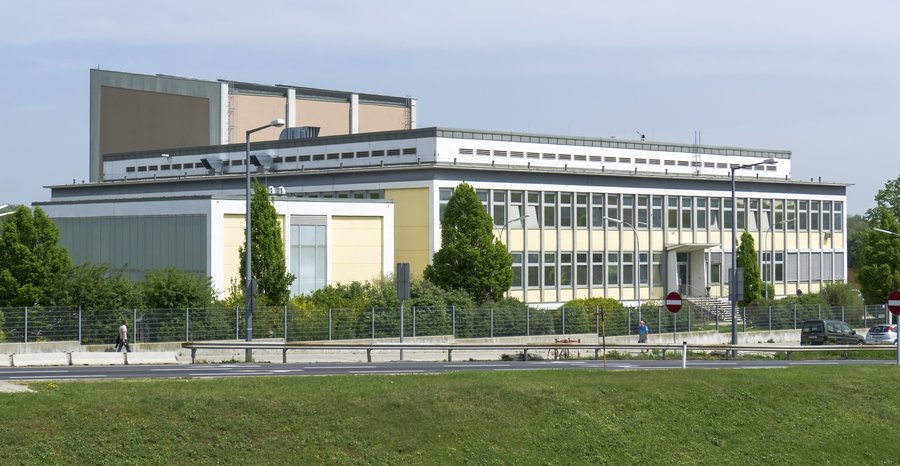
Vienna — Physicists in Austria and Germany have built what they call the first stand-alone nuclear clock, one that keeps time using the nucleus of an atom and steers itself without leaning on an ordinary atomic clock, the Vienna University of Technology said on 7 October.
The prototype, at the university known as TU Wien, ran by itself for about a day. The team, working with Germany's national metrology institute, the Physikalisch-Technische Bundesanstalt (PTB) in Braunschweig, describes it in the journal Nature.
How a clock like this works
Every precise clock counts something that repeats at a fixed rate. A pendulum swings. A quartz crystal in a watch vibrates. The best clocks today, called atomic clocks, count the rhythm of light that the electrons around an atom absorb. A laser is tuned to exactly that rhythm, and the clock counts the laser's waves.
The new clock uses the nucleus, the tiny core of the atom, instead of its electrons. Atomic nuclei are more than ten thousand times smaller than atoms, TU Wien said, so outside disturbances push them around much less. That is why physicists think a nuclear clock could one day be more precise than any atomic clock.
There is a catch. Almost every nucleus can only be nudged into a higher-energy state by a burst of energy far too strong for a laser. Thorium-229, a form of the element thorium, is the exception. It has two energy states unusually close together, so a laser can flip it from one to the other.
A long road
Ekkehard Peik and a colleague first proposed a thorium nuclear clock in 2003, according to the team's paper. In April 2024 the groups led by Thorsten Schumm at TU Wien and Peik at PTB showed for the first time that a laser could flip thorium nuclei. Later that year, thorium was shown to keep time when tied to a conventional atomic clock, TU Wien said.
What is new
Until now the thorium was always the passenger. An outside clock set the laser, and the thorium was checked against it. In the new device, the thorium sets the pace.
"What you really want is a self-stabilizing nuclear clock," Schumm said. "The basic idea is simple: you have a laser and you have thorium. The laser changes the energy state of the thorium nuclei, and the thorium nuclei are used to stabilize the frequency of the laser."
At the heart of the clock is a crystal of calcium fluoride a few millimetres across, grown at TU Wien and seeded with thorium-229. It sits at room temperature. A laser of ultraviolet light with a wavelength of 148 nanometres, far beyond what the eye can see, shines through it.
The thorium nuclei absorb that light only when the laser is tuned exactly right. If the laser drifts, for example because the room warms slightly, the nuclei absorb less, a detector notices, and the system nudges the laser back. That loop is what makes it a self-steering clock.
How good is it
Within a single run of about a day, the clock's stability reached about one part in a million billion, TU Wien said, roughly equal to being off by one second in 30 million years. Between runs on different days, its readings matched only to about one part in two trillion, which the team suspects comes from small differences across the crystal, according to the paper.
"This is not yet at the level of the world's best optical atomic clocks, but for a first prototype it is a fantastic result," Schumm said. The team plans stronger lasers and better thorium crystals to improve it sharply. In its paper, the team writes that future versions could reach the level of today's best atomic clocks while staying small and simple.
To check the clock, the team compared it through an optical fibre link with an ytterbium-ion atomic clock at Austria's Federal Office of Metrology and Surveying. One run analysed in the paper lasted about 23 hours, from 2 to 3 April 2026.
What it is good for
Better clocks do more than tell time. Satellite navigation, for example, works by timing signals very precisely. The thorium nucleus is also unusually sensitive to tiny changes in the basic constants of nature, the paper says. The team used its clock to look for a sign of one proposed form of dark matter, the unseen material that makes up most of the matter in the universe, which would make those constants wobble. It found no such wobble, and the team reports that its result already rules out some versions of the idea more tightly than earlier atomic-clock studies.
A race, and an American link
The race is international. In the same issue of Nature, a research group in China also reported a working nuclear clock; a Nature commentary called the two papers the first implementations of a nuclear clock.
There is a U.S. thread too. The thorium-229 in the Vienna crystal came from the U.S. Department of Energy's National Isotope Development Center and Oak Ridge National Laboratory, and part of the Vienna team's funding came from DARPA, the Pentagon's research agency, the paper says.
Floor: For seventy years the best clocks have listened to electrons. This one listens to the nucleus, and it keeps its own time.
Sources: https://www.tuwien.at/en/all-news/news/die-erste-selbststabilisierende-atomkernuhr-tickt-in-wien; https://arxiv.org/html/2606.04997; https://www.nature.com/articles/d41586-026-03060-9; https://interestingengineering.com/innovation/world-first-self-stabilizing-nuclear-clock-thorium.