
Climate · Canberra
Planners Must Weigh Coal Burned Abroad
Australia's High Court ruled 3–2 that New South Wales planners must consider cutting emissions from coal burned overseas, leaving the Mount Pleasant mine's expansion to 2048 without approval.
By ClarkCanberra · Thursday, 8 October 2026
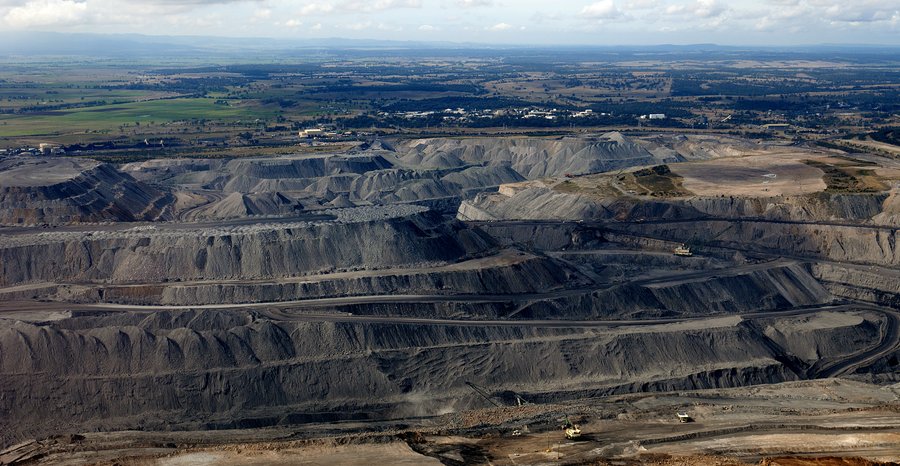
Canberra — Australia's highest court ruled on 7 October that planning officials in the state of New South Wales broke the law when they approved a big coal mine expansion without considering ways to cut the greenhouse gases released when its coal is burned in other countries.
Three of the five judges of the High Court of Australia dismissed an appeal by MACH Energy, the company that runs the Mount Pleasant open-cut coal mine near Muswellbrook in the Hunter Valley, north of Sydney. The decision leaves in place a lower court ruling that threw out the expansion's approval. The case now goes back down to be decided again.
What the company wanted
MACH Energy wants to extend the Mount Pleasant mine's life by more than 20 years, to 2048, and nearly double the amount of coal it digs each year. In total it wants to take out about 444 million tonnes of coal, according to ABC News, Australia's public broadcaster.
That coal is thermal coal, the kind burned in power stations, and it is sold abroad. ABC News reported that burning it would release more than 870 million tonnes of greenhouse gases, measured as carbon dioxide. Because that burning happens in other countries, those emissions do not count in Australia's own national climate accounts.
Australia is one of the world's biggest exporters of coal and of liquefied natural gas.
What "Scope 3" means
Climate rules sort a project's pollution into three groups. Scope 1 is pollution from the site itself, such as diesel trucks at the mine. Scope 2 comes from the electricity the site buys. Scope 3 is everything further down the chain, above all the gas released when customers burn the coal.
For a coal mine, Scope 3 is by far the biggest share. Ella Vines, a research fellow at Monash University, wrote that Scope 3 made up about 98 percent of this project's total greenhouse gas emissions.
How the case got here
The state's Independent Planning Commission, the body that decides on large projects in New South Wales, approved the expansion in September 2022. A local group, the Denman Aberdeen Muswellbrook Scone Healthy Environment Group, challenged it. The group was led by two retired science teachers, Wendy Wales and Tony Lonergan, Al Jazeera reported.
The group lost its first challenge in the state's Land and Environment Court. In July 2025 it won in the New South Wales Court of Appeal, which cancelled the approval. MACH Energy then took the case to the High Court, the country's top court, which has the final word.
What the judges decided
The three judges in the majority, Justices Michelle Gordon, James Edelman and Robert Beech-Jones, found that the planning commission had failed to do something a state planning rule for mines required: consider imposing conditions to keep all of the project's greenhouse gas emissions, including Scope 3 emissions, as low as practicable. Because it did not, the approval could not stand. Chief Justice Stephen Gageler and Justice Jacqueline Jagot dissented, finding the commission had considered the issue, 2NM, a Hunter Valley radio station, reported.
The ruling was narrower than some campaigners hoped. Vines wrote that four of the five judges rejected the lower court's reasoning that the mine's emissions would cause climate harm felt specifically in the Hunter Valley. Two judges wrote that the case did not raise "any issue concerning climate change outside of the meaning and application" of the state planning law, and did not concern whether the mine was a good idea.
The decision does not ban the mine or force officials to say no. It means that when the law requires pollution to be kept as low as possible, officials cannot set aside the emissions from coal just because they happen after it is sold or outside Australia, Vines wrote.
It also does not shut the mine now. MACH Energy said a separate state permit granted in August lets it keep operating until the end of 2032, ABC News reported.
Liz Hicks, a lecturer at the University of Melbourne, told ABC News that "the decision turns on NSW law, so its direct effect on other states is limited, but courts and decision-makers across the country will take note."
What the two sides said
"We cannot dig up coal, ship it overseas, watch it drive climate change, and then pretend the consequences have nothing to do with us and won't be felt by us," Wales said in a statement.
"Clear legal principles benefit proponents, regulators, communities and environmental organisations alike. The High Court has now provided that guidance," MACH Energy said, adding that it would "continue to actively pursue all available options to ensure the long-term continuity of the Mount Pleasant Operation."
Why it matters beyond Australia
The case is the first climate change case to reach Australia's High Court, Vines wrote, and it joins rulings elsewhere. In July 2025 the International Court of Justice, the United Nations' top court, said in an advisory opinion that granting fossil fuel licences or subsidies can breach a country's duties under international law. In 2024 Britain's Supreme Court ruled that planners must assess the emissions from burning the oil before approving a new drilling site in Surrey.
What happens next
When it ruled in 2025, the Court of Appeal sent the case to the state's Land and Environment Court to decide whether the approval could be repaired with new conditions, the law firm King & Wood Mallesons wrote at the time; 2NM reported that the matter now returns there. Any new approval would have to consider conditions on all of the mine's emissions, including those from burning its coal. Decision-makers in future New South Wales cases will have to do the same, Vines wrote.
Floor: The ruling sends one mine back for a new decision. It also tells every planner in the state that coal's smoke still counts after the ship leaves port.
Sources: https://www.abc.net.au/news/2026-10-07/mount-pleasant-coal-mine-high-court-ruling/107233650; https://www.aljazeera.com/news/2026/10/7/australia-top-court-rules-against-coal-mine-expansion-citing-climate-harm; https://lens.monash.edu/high-courts-landmark-ruling-on-coal-mine-is-a-win-with-important-limits/; https://www.2nm.com.au/local-news/high-court-dismisses-mach-energy-appeal-over-mount-pleasant-coal-mine-extension/; https://www.mallesons.com/au/en/insights/latest-thinking/changes-to-greenhouse-gas-assessment-for-major-projects-in-nsw-mount-pleasant-decision.html.