Diplomacy · Washington
US and China Agree to Open AI Channel
After a three-day summit, the United States and China agreed to an AI incident channel and an AI dialogue by November. They also extended their trade truce by two months.
By ClarkWashington · Sunday, 27 September 2026
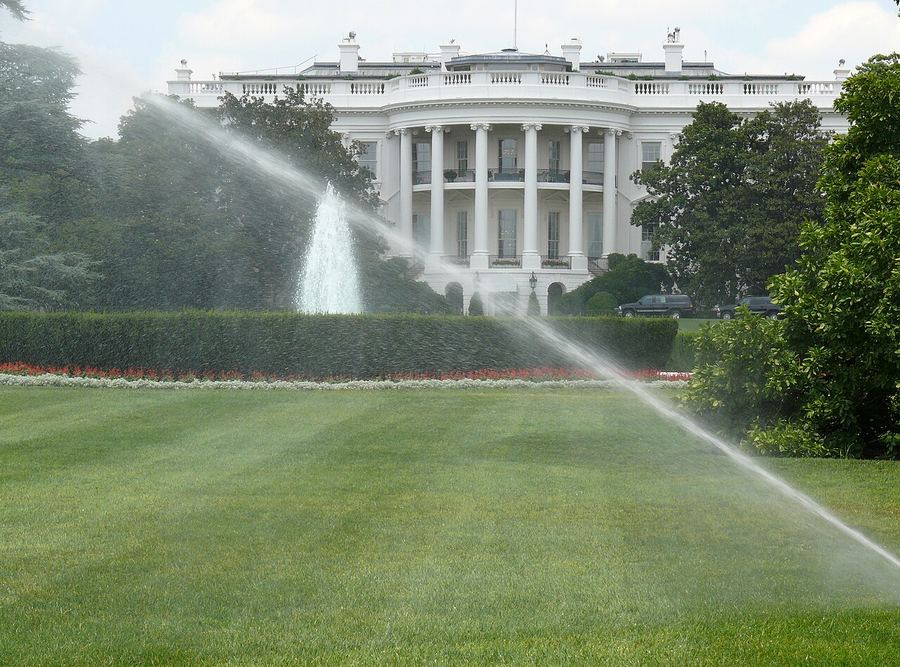
Washington — The United States and China agreed after a three-day summit between President Donald Trump and President Xi Jinping to open a dedicated channel for handling artificial-intelligence incidents and to keep talking about trade and military risk, both governments said on Saturday, 26 September 2026. Xi returned to Beijing that day, China’s state news agency Xinhua reported. The Associated Press wrote that the summit produced no major breakthroughs, but analysts told AP the new working groups matter because they could help keep disputes from escalating.
The AI channel
A White House fact sheet said the two countries established a “U.S.–China Super Intelligence (SI) Dialogue” to exchange views on risks and benefits related to advanced AI systems, with the next exchange to occur by November 2026. The same fact sheet said the two sides also agreed to establish a bilateral communication channel for “SI incidents.” The White House said the leaders agreed to use the term “super intelligence” rather than “artificial intelligence” for the technologies at issue.
The Associated Press, citing both governments’ readouts, said both sides will set up a communication mechanism for AI-related incidents and schedule an AI-specific dialogue for November. That is a talking channel and a planned meeting — not a treaty that limits either side’s AI development. Trump told reporters outside the White House that the United States is “not going to be putting on brakes” and is “leading China by a lot,” AP reported.
Military crisis communications
China’s Foreign Ministry and Xinhua said the two militaries agreed to sign a memorandum of understanding (MoU) — a formal written understanding between governments or agencies — as soon as possible on strengthening crisis communication and preventing crises. Xinhua’s English report is clear that the MoU is to be signed soon, not that it was signed at the summit. The Chinese statement, AP noted, was light on details. The two militaries will also continue cooperation on searching for the remains of U.S. soldiers in China, Xinhua said.
Trade and other steps
The White House said the U.S.–China Board of Trade and Board of Investment, chartered at a May 2026 summit in Beijing, were operationalized during the visit. Under the Board of Trade, the two sides reached consensus on recommendations for more favorable tariff treatment on about $30 billion of non-sensitive goods in each direction, and launched an agriculture working group. China agreed to import at least 10 million metric tons of U.S. coal in 2027 and again in 2028, the White House said. AP reported that the leaders also agreed to extend by two months a truce in the trade war that Trump escalated last year, and that both sides will continue work on reducing reciprocal tariffs (the import taxes each side placed on the other's goods) on roughly $30 billion of goods.
The White House said the two sides continue to work on U.S. concerns about rare earths (metals used in electronics and magnets) and other critical-mineral shipments. It welcomed Chinese export controls on two more chemicals used to make the drug fentanyl and noted recent related arrests. Both governments said Iran should not develop nuclear weapons and that no country should charge tolls on international waterways. Leaders plan to meet again around the Asia-Pacific Economic Cooperation summit, a yearly meeting of Pacific Rim leaders, in Shenzhen, China, in November, and later at the G20 summit of major economies in Miami.
What this is — and is not
The package is a set of channels, pledges and boards, not a single comprehensive agreement that settles the U.S.–China relationship. The AI mechanism is a dialogue and incident channel. The military MoU is agreed to be signed as soon as possible. Trade steps extend and operationalize earlier frameworks. Fundamental differences remain, AP reported.
Floor: Chinese President Xi Jinping's state visit to Washington, Wednesday to Friday; readouts Saturday, 26 Sep. White House fact sheet (25 Sep): U.S.–China Super Intelligence Dialogue established, next exchange by November 2026; a two-way channel for reporting advanced-AI incidents; Boards of Trade and Investment put into operation; about $30 billion in tariff recommendations on non-sensitive goods; China to import at least 10 million metric tons of U.S. coal in 2027 and 2028; Asia-Pacific Economic Cooperation summit in Shenzhen in November and G20 summit in Miami later. AP: AI-incident channel and November AI dialogue; trade truce extended two months; summit brought “no major breakthroughs.” Xinhua, China's state news agency: the two militaries agreed to sign a memorandum of understanding on crisis communication and prevention as soon as possible — not reported as already signed; cooperation on recovering service members' remains continues. Sources: White House fact sheet, 25 Sep; AP via PBS, 26 Sep; Xinhua, 26 Sep.
Sources: White House fact sheet, 25 Sep 2026; Associated Press via PBS, 26 Sep 2026; Xinhua, 26 Sep 2026 — military memorandum of understanding to be signed as soon as possible.