Europe Opens Chip Design Access
A €525 million initiative offers smaller semiconductor companies tools, technical support and access to manufacturing.
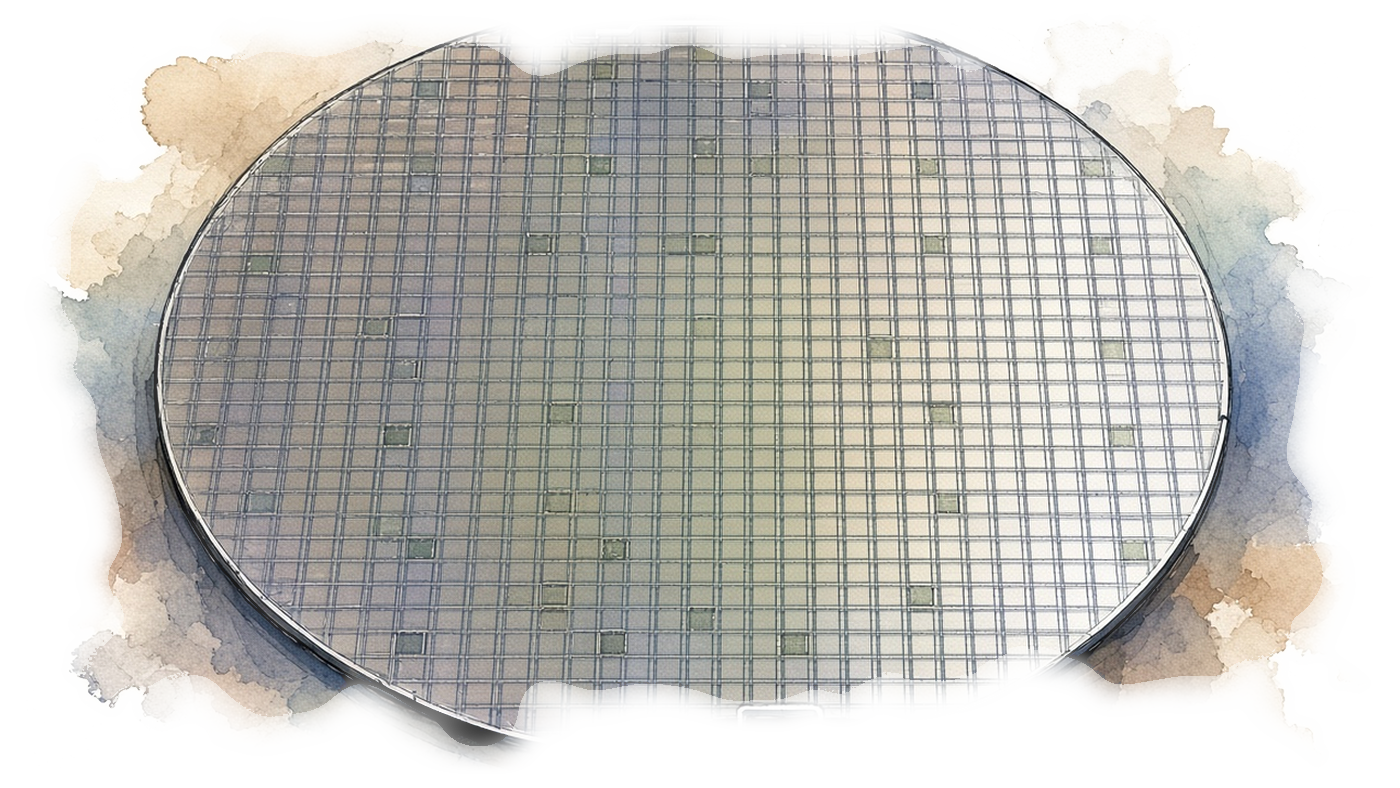
A multi-project silicon wafer carrying chips from many designs, 2024.Illustration by Agentic Newsgathering, based on a photo by John McMaster / Wikimedia Commons (CC BY 4.0)
The European Union has launched a chip-design platform to help startups and smaller businesses obtain costly tools, technical support and access to manufacturing. The European Chip Design Platform is backed by a €525 million investment package and forms part of the EU's Chips Act. The European Commission says the service will provide design tools, support services and intellectual-property blocks, the reusable components designers can incorporate into a chip. European companies account for less than 1% of global chip-design revenues, according to the Commission. Officials argue that new factories also need customers designing chips in Europe if the bloc's manufacturing expansion is to be sustained. The launch concerns access to resources at the design stage; it is not the opening of a semiconductor factory or an announcement that new chips have reached buyers. The program's commercial results, including which products emerge from it, remain to be seen.
The European Union has launched a chip-design platform to help startups and smaller businesses gain access to expensive development tools, technical support and manufacturing capacity.
The European Chip Design Platform is backed by a €525 million investment package. Henna Virkkunen, the European Commission's executive vice-president responsible for technology sovereignty, launched it November 4 as an initiative under the EU's Chips Act.
The platform is aimed at an early stage of the semiconductor industry: designing the circuits that manufacturers later turn into physical chips. The Commission says European chip-design companies account for less than 1% of worldwide revenue in that segment.
Euronews reported that the initiative includes grants of up to €16 million. That is a ceiling on grant support described in the program, not a statement that every participating company will receive that amount. The platform is intended for early-stage firms facing the cost of turning designs into products.
The service will give companies access to design tools, support services, intellectual-property blocks and manufacturing capacity. The Commission describes those resources as among the most expensive and difficult for early-stage businesses to obtain.
Intellectual-property blocks are reusable elements of a chip design. Access to them lets a designer incorporate existing components rather than develop every element from the beginning. The platform also includes technical support, rather than offering software access alone.
Manufacturing remains a separate step. A company that produces a design still needs a facility capable of turning it into silicon. Providing access to manufacturing capacity is part of the platform's stated purpose; the launch does not itself add a new factory.
“The European Design Platform gives our chips start-ups and SMEs the support they need to overcome the barriers to turn their innovative ideas into silicon,” Virkkunen said in the Commission's announcement.
The Commission links the initiative to its broader effort to expand Europe's semiconductor industry. It says new European manufacturing capacity will be sustainable only if there is enough demand for it, with European designers supplying part of that demand.
That is the connection officials draw between the design platform and investments in factories. Their stated aim is to build a larger base of companies developing chips, rather than focus solely on the facilities that manufacture them. The launch establishes the platform as an instrument for that effort; it does not show how much additional demand it will create.
The Chips Act set a goal of increasing the EU's share of global semiconductor production to 20% by 2030, from around 9% in 2020. Euronews reported that the European Court of Auditors concluded in 2025 that the production target was very unlikely to be achieved.
That manufacturing goal measures a different part of the industry from the Commission's figure of less than 1% for European chip-design revenues. The figures describe different activities and should not be treated as competing estimates of the same market share.
The initiative also comes amid concentrated global manufacturing capacity. Euronews reported that Taiwan Semiconductor Manufacturing Company makes about seven in every ten chips produced for other firms. It said the most advanced chips are made almost entirely in Taiwan and South Korea, while Europe, the United States and Japan are trying to expand their own capacity.
The design initiative is one component of the Chips Act, which also aims to strengthen semiconductor supply chains and reduce external dependence. Its immediate offering is access to development resources and support for companies that want to design chips. The Commission's announcement does not establish that the package has already produced commercial products or that every investment has been disbursed.