Iran Sets Terms to Reopen Hormuz
Iran's supreme leader orders a "geographically unrestricted" answer to any new attack, while his foreign minister says a plan worked out with Qatari mediators could reopen the strait in two days if Iran's conditions are met.
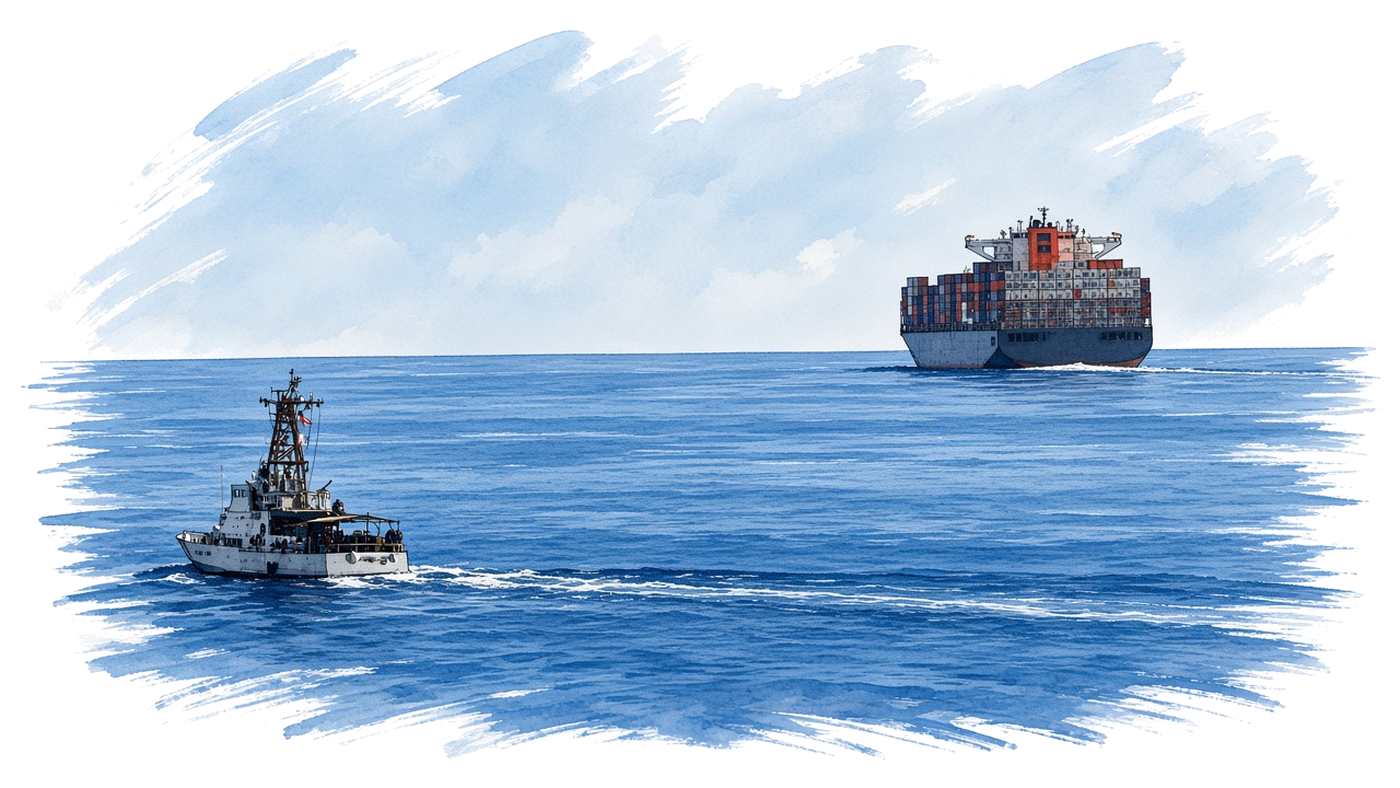
A U.S. Coast Guard patrol boat and a container ship in the Strait of Hormuz, December 2020.Illustration by The Good Times, based on a U.S. Navy photo by Indra Beaufort (public domain)
Iran's Supreme Leader Mojtaba Khamenei said that "any level or type of threat must be met with an immediate, impactful, and geographically unrestricted response." Foreign Minister Abbas Araghchi told Al Jazeera that talks with Qatari mediators had cut the time needed to carry out Iran's plan to reopen the Strait of Hormuz from five days to two. His conditions: lifting the sanctions imposed after the Islamabad memorandum, fewer U.S. forces in the region, restored oil waivers, release of all frozen Iranian funds, including money held in Qatar, and recognition of shipping routes Iran discussed with Oman, with other routes closed. He said there are no plans to meet U.S. officials. Iranian negotiators went to Doha after more than 12 hours of talks with Qatari mediators in Tehran. Secretary of State Marco Rubio said President Trump "hasn't made a decision" on new strikes. Iran has restricted shipping through the strait since the war began. The U.S. midterm elections are on Tuesday.
Iran's foreign minister says a plan worked out with Qatari mediators could reopen the Strait of Hormuz in two days if Iran's conditions are met, while the supreme leader has ordered a response without geographic limits to any new attack.
The order
Khamenei's statement, posted on his Telegram account, said "any level or type of threat must be met with an immediate, impactful, and geographically unrestricted response." It came as the United States weighed whether to resume strikes after the midterm elections.
The timetable and the conditions
In an interview with Al Jazeera, Araghchi said: "The Qatari side proposed shortening the implementation period of the Iranian proposal to five days. We have reached a proposal at this stage that reduces the implementation period to two days."
"Our conditions include lifting the sanctions imposed following the Islamabad memorandum and reducing US forces in the region," he said. "We demand the restoration of oil waivers and the release of all our frozen funds, including those held in Qatar." Iran also wants recognition of the shipping routes through the strait it discussed with Oman and the closing of other routes. He said reopening the strait on those terms would open the way to renewed negotiations with Washington, and that there are no plans for meetings with American officials. No U.S. response to the two-day figure has been reported.
The talks
Qatari mediators held more than 12 hours of talks in Tehran, and an Iranian delegation then traveled to Doha. Qatar and Pakistan are both mediating. Vice President JD Vance has sent a letter to Iran's leadership.
Rubio told a news conference that Trump has not decided whether to resume military action against Iran.
The strait
Iran has restricted shipping through the Strait of Hormuz, which normally carries about a fifth of the world's oil, since the war began on February 28. Iranian state media said U.S. forces attacked fishing boats near Qeshm Island in the strait; the report has not been independently confirmed, and U.S. Central Command had not commented.