Energy Department Backs Nuclear Uprates
A conditional loan commitment of up to $5 billion would help Constellation Energy squeeze about 1.1 gigawatts more power out of eight existing nuclear plants in Illinois, Maryland and Pennsylvania.
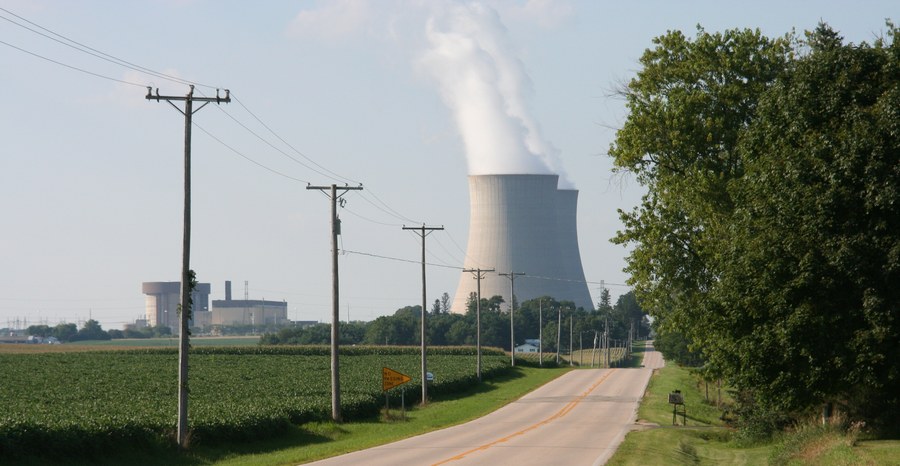
The Energy Department has offered Constellation Energy a loan of up to $5 billion to raise the power output of nuclear plants it already runs, Energy Secretary Chris Wright announced at Constellation's Byron plant in northern Illinois. The work, known as an uprate, means upgrading existing reactors so they produce more electricity, rather than building new ones. Wright told CNBC the plan covers 15 reactors at eight sites and would add about 1.1 gigawatts, which the department says is enough for more than 930,000 homes. The sites are Braidwood, Byron, Clinton, Dresden, LaSalle and Quad Cities in Illinois, Calvert Cliffs in Maryland and Limerick in Pennsylvania. The offer is a conditional commitment, which signals the government's intent to lend but is not yet a loan. Constellation must meet technical, legal, environmental and financial conditions and sign final financing papers before any money flows, and the company says it has not made a final decision on every project. The department says its uprate program has now found about 4.7 gigawatts toward a 5-gigawatt goal for 2029.
What was announced
The Energy Department's Office of Energy Dominance Financing, its lending arm, announced the conditional commitment of up to $5 billion to finance uprates and modernization across Constellation's nuclear fleet in Illinois, Maryland and Pennsylvania. Wright made the announcement on Tuesday, October 27, at the Byron Generating Station in Byron, Illinois, according to a department fact sheet.
The eight plants named by the department and by Constellation are Braidwood, Byron, Clinton, Dresden, LaSalle and Quad Cities in Illinois; Calvert Cliffs in Maryland; and Limerick in Pennsylvania. The commitment also includes an option to finance future uprates at other Constellation plants. The department says the work would add nearly 1.1 gigawatts to the grids run by PJM Interconnection and the Midcontinent Independent System Operator, known as MISO, and would support more than 10,000 project-related jobs.
"Uprates that maximize power generation from our existing nuclear facilities are yet another example of the commonsense energy addition policies the Trump Administration is embracing," Wright said in the department's release.
What an uprate is
An uprate increases how much electricity an existing reactor can produce, usually through equipment upgrades at a plant that is already built and connected to the grid. Constellation called uprates one of the fastest and most cost-effective ways to add steady power without building new plants or new transmission lines. Wright told CNBC that Byron alone would gain about 150 megawatts.
What "conditional" means
A conditional commitment is a promise to lend if conditions are met, not a signed loan. The department said Constellation must satisfy technical, legal, environmental and financial conditions before the government enters into final financing documents and funds the loan. Constellation said the commitment is subject to due diligence and negotiation, and "does not, by itself, represent a final Constellation decision to proceed with any individual uprate or at every facility under consideration." The amount is a ceiling; the final figure could be lower.
How it fits with private deals
Constellation, based in Baltimore and the country's largest nuclear operator, said 20-year power agreements with Google and Amazon have already led it to commit more than $7 billion to add about 1,080 megawatts of nuclear capacity, and a deal with Meta supports a 30-megawatt expansion at Clinton. The federal loan could lower its financing costs and let it go further and faster, the company said. "This conditional loan commitment can help us move faster and go further," said Joe Dominguez, Constellation's chairman, president and chief executive.
A plant that nearly closed
Byron's two reactors came online in 1985 and 1987, Rockford News First reported. In 2021 Exelon, which then owned the plant, announced plans to shut Byron and Dresden that fall, before Illinois lawmakers passed a clean energy law that included $694 million to keep the state's nuclear plants running. Wright told CNBC the plant "a little over five years ago was days away from being closed."
The wider program
The department launched its uprate program, the Utility Power Reactor Incremental Scaling Effort, or UPRISE, in March under an executive order from President Trump that calls for 5 gigawatts of uprates at existing reactors. With Constellation's projects, the department's fact sheet says UPRISE has identified about 4.7 gigawatts, or 95% of the goal for 2029; the department's news release puts the share of its combined uprate-and-restart goal at 94%. Earlier this month the department made a separate conditional commitment of up to $4.2 billion to Vistra for uprates in Pennsylvania and Ohio. Wright is scheduled to visit the Palisades plant in Michigan, which the department is helping restart, on Thursday, October 29.