EU Puts Security First in Arctic Plan
The European Union's new Arctic strategy is built around Russia's military buildup in the far north and China's growing reach there. It proposes a hub to guard undersea cables, wider satellite coverage, joint buying of icebreakers, a secure cable from Greenland to Europe and €200 million for Greenland, though its foreign policy chief said the money for most of it is not yet set.
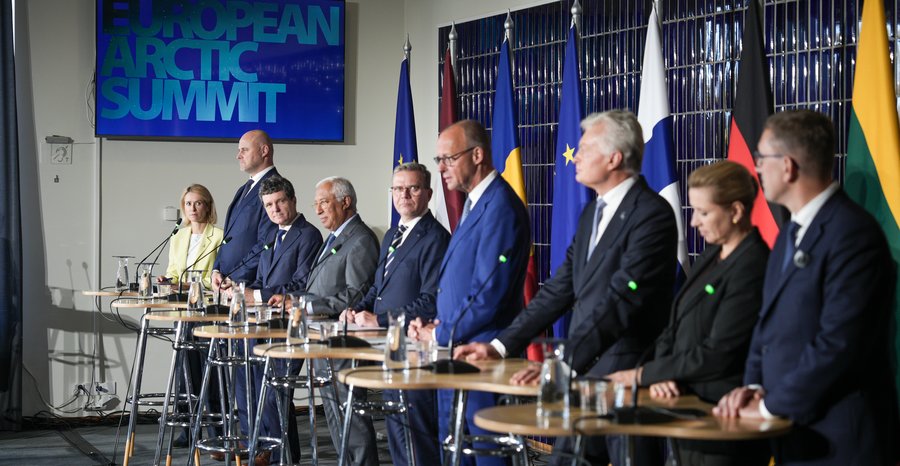
"The Arctic has become the frontline of global power competition," said Kaja Kallas, the EU's foreign policy chief, presenting the plan with the European Commission.
She pointed to Russia reopening Soviet-era bases and testing new weapons in the far north, drone incursions, GPS jamming, sabotage of undersea cables and Russia's "shadow fleet" of tankers, and said China's investments in Arctic ports, minerals and infrastructure "need careful scrutiny."
The plan proposes an Arctic Cable Hub to monitor, protect and repair undersea cables, extending the EU's Galileo and Copernicus satellite systems to watch the region, joint purchasing to expand Europe's icebreaker fleet, and better military transport through Arctic ports and airports. For Greenland, the EU plans €200 million of investment and a secure undersea cable to Europe.
Asked what is concrete, Kallas said the budget talks are still under way and pointed to the satellite upgrades as the one thing that can move quickly. She said the EU will work with Canada, Norway, Iceland "and also the United States if they so wish."
Brussels — The European Union adopted a new Arctic strategy that puts security at its center, citing Russia's growing military presence in the far north and China's investments there.
"The Arctic is no longer insulated from the world's geopolitical tensions," Kaja Kallas, the EU's high representative for foreign affairs and security policy, told reporters. "The bottom line is that the Arctic has become the frontline of global power competition."
The threats the EU names
Kallas said Russia "is expanding its military footprint in the High North," has reopened Soviet-era bases and is testing new weapons in the region, and that drone incursions, GPS jamming and the sabotage of undersea cables "undermine Arctic security." She said the growing traffic of Russia's shadow fleet puts shipping and the environment at risk and that "Beijing's investments in ports, minerals and critical infrastructure need careful scrutiny." The region is warming three to four times faster than the global average, she said, opening resources and shipping routes and "heating up competition over who controls them."
What the plan proposes
The strategy calls for extending the EU's Galileo navigation and Copernicus Earth-observation satellites to better detect threats in the Arctic, and an Arctic Cable Hub to monitor, protect and repair undersea infrastructure, which could grow into a wider Maritime Security Hub tracking suspicious ships, illegal fishing and pollution. It proposes exploring joint procurement and pooling to expand Europe's icebreaker capacity. "In the Arctic, icebreakers are the measure of power," Kallas said. It also aims to improve military mobility through Arctic ports, airports and transport corridors, and the European Defence Fund is putting €260 million into technologies such as aircraft built for severe conditions and over-the-horizon sensors.
In Greenland, the EU is investing €200 million, a package Commission President Ursula von der Leyen announced in Nuuk in September for this year and next, in renewable energy, raw materials, connectivity, housing and infrastructure, and plans a secure submarine cable linking Greenland directly to Europe, along with secure satellite links for government communications through its IRIS² system.
What is not settled
A reporter asked what concrete result could come within a year, noting there is no budget, no icebreaker purchase plan and no timetable for the cable hub. Kallas said negotiations on the EU's next long-term budget are still under way and that "one very concrete thing that we can do is the upgrades for our satellites to cover also the Arctic."
Where the United States fits
Kallas said all of the work complements NATO's role, since "the Arctic is under NATO's watch," and that the EU wants closer cooperation with Norway, Iceland, Canada, the United Kingdom and the United States. Asked whether Europe should set up its own surveillance in Greenland, she said the EU is "working together with Canada, with Norway, with Iceland, and also the United States if they so wish."