SpaceX Cleared to Launch 15,000 Satellites for Phones
U.S. regulators approved a new SpaceX fleet built to connect directly to ordinary mobile phones where there are no cell towers; half must be in orbit by 2032, and SpaceX says service could begin by the end of 2027.
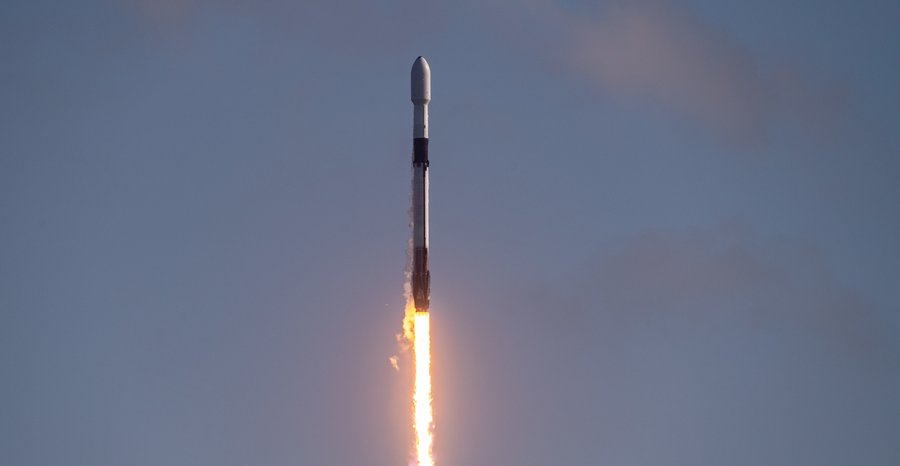
Washington — The Federal Communications Commission, the U.S. agency that licenses the airwaves and satellites, has given SpaceX permission to launch and operate 15,000 new satellites designed to talk directly to ordinary mobile phones.
The approval, issued on 6 October by the FCC's space and wireless offices, covers what the industry calls direct-to-device service: a phone in a place with no cell tower, such as a mountain road, a ship or a disaster zone, connects straight to a satellite overhead. SpaceX already offers a basic version from a fleet of around 650 satellites, Via Satellite reported. The new system, which SpaceX calls Starlink Mobile, is separate from the Starlink home-internet network.
"This action allows SpaceX to improve the quality of D2D services, increase capacity, and advance broadband connectivity for consumers in the United States and worldwide," the FCC said in its order, using the industry abbreviation for direct-to-device.
What was approved
The satellites will fly in what is called very low Earth orbit, in nine layers between 326 and 335 kilometres (about 203 to 208 miles) above the ground, Light Reading reported.
The licence runs for 15 years from the day the first new satellite reaches its orbit. SpaceX must have half of the satellites launched and in place by 7 October 2032 and the rest by 7 October 2035, and it must report twice a year on how many are working, how many have been retired and how many have fallen back into the atmosphere, Light Reading reported.
Most of the airwaves the satellites will use come from licences SpaceX is buying from the company EchoStar. The FCC made their use conditional on that deal being completed, which is expected on or about 30 November 2027, Via Satellite reported; until then SpaceX may launch the satellites and test them with EchoStar's permission, the order says. Because SpaceX will hold those mobile licences itself, the FCC waived its usual rule that a satellite company offering phone coverage from space must lease the airwaves from a mobile phone company. The system can also use airwaves SpaceX already leases from T-Mobile, the order says.
The FCC did not approve everything. It put off decisions on some frequencies SpaceX wanted, including two high-frequency bands, sought for use outside the United States, that the U.S. government uses heavily, the order says.
Satellite companies including Eutelsat, Viasat, DirecTV and SES had objected to SpaceX's application, Light Reading reported.
What SpaceX says it will deliver
"You could look at the Starlink Mobile leveraging this next-generation satellite and the EchoStar spectrum as being 100 times better than what we've got right now," SpaceX President Gwynne Shotwell told investors in August, Via Satellite reported. She said SpaceX planned to start flying the second-generation satellites in 2027 and to provide service by the end of that year.
The larger satellites are meant to be launched by Starship, SpaceX's giant new rocket, which reached orbit for the first time on a test flight on 28 September, Light Reading reported. The rocket's progress is part of the timetable.
The competition
SpaceX is not alone. AST SpaceMobile already operates in the field, and Amazon has applied to build its own direct-to-device fleet of more than 5,000 satellites, Light Reading reported. The three big U.S. carriers, Verizon, AT&T and T-Mobile, have formed a joint venture to pool their airwaves for satellite service, which one analyst said would strengthen their bargaining position with satellite companies.
Demand so far is small. T-Mobile's chief executive, Srini Gopalan, has said satellite use is just 0.0002 percent of the carrier's network traffic, Light Reading reported.
What it means in practice
For phone users, the approval clears the way for faster satellite service to ordinary phones, with more capacity. If SpaceX meets its own timetable, that could arrive by late 2027. It will still depend on which phone companies sign up. EchoStar's Boost Mobile is among the providers expected to use the new system, Light Reading reported.
For regulators, it is part of a wider push. The FCC is due to vote on 29 October on rules to make 482 megahertz more airwaves available for satellite-to-phone service. "It's become clear in recent years that the rules need a major refresh," FCC Chairman Brendan Carr said.
What happens next
SpaceX has to build and launch the satellites, and Starship has to fly them. The first deadline, half the fleet in orbit, is six years away.