
Defense · Riyadh
Saudi Defense Pact Activated for First Time
Saudi Arabia, Turkey and Pakistan said in a joint statement on 5 October that they will quickly send agreed forces to the kingdom under their August defense pact, after attacks from Yemen. They gave no troop numbers.
By ClarkRiyadh · Tuesday, 6 October 2026
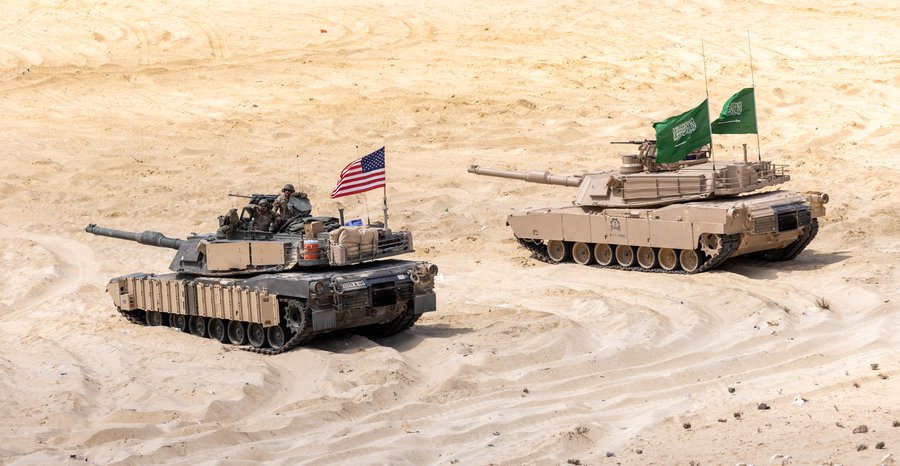
Riyadh — Saudi Arabia, Turkey and Pakistan agreed on 5 October to put their two-month-old mutual-defense pact into practice and to send agreed military forces to Saudi Arabia quickly. It is the first time the pact has been used. The decision was announced in a joint statement; it is not a new treaty, but a step to carry out the agreement the three countries signed in August.
The decision came at an emergency meeting in Riyadh of the alliance's top committee, attended by the three countries' defense and foreign ministers, according to Al Jazeera. A joint statement published by Turkey's foreign ministry said the committee decided "to move immediately to the practical implementation of the collective defense commitments" and to "provide the agreed military forces and capabilities and ensure their rapid deployment in the Kingdom."
What the pact is
Turkish President Recep Tayyip Erdogan, Saudi Crown Prince Mohammed bin Salman and Pakistani Prime Minister Shehbaz Sharif signed the agreement, the Makkah (or Mecca) Agreement for Joint Defense, on 7 August, according to Al Jazeera. It created what the three call the Makkah Alliance for Defense. Its core promise is that an armed attack on any one member counts as an attack on all three, a provision that mirrors a central part of NATO's founding treaty, Al Jazeera noted. Turkey is itself one of NATO's 32 members.
When it was signed, the agreement gave no details of what each country would actually contribute, Reuters reported. Until Monday the alliance had taken no action.
The joint statement did not say how many troops, aircraft or ships will go, or when. It said deployments would follow "approved arrangements" and each country's own laws. The committee also named its first secretary-general, retired Lieutenant General Nauman Mahmood of Pakistan, for a three-year term.
Why now
The trigger was a run of attacks on Saudi Arabia by the Houthis, an Iran-aligned armed movement in Yemen, Saudi Arabia's southern neighbour, that has been in conflict with the kingdom since 2015. The joint statement condemned "the attempted targeting of Makkah and Madinah," Islam's two holiest cities, both in Saudi Arabia, and continuing attacks on Saudi cities and economic sites.
Reuters reported that the Saudi-led coalition fighting the Houthis said last Thursday that the group had attacked a power distribution station in Medina that supplies electricity to the Prophet's Mosque. Saudi Defense Minister Khalid bin Salman said on X that the meeting "reaffirmed the solidarity and unity of our countries in confronting the heinous attacks against the Kingdom and the holy sites."
The meeting came hours after forces loyal to Yemen's internationally recognised government, which Saudi Arabia backs, began a counteroffensive to retake ground the Houthis seized last month. Those forces said they had retaken the Red Sea port of Mocha and controlled the Bab al-Mandab strait, the narrow passage at the southern end of the Red Sea used by ships heading to and from the Suez Canal, Al Jazeera reported. About a tenth of the world's seaborne oil trade passes through the strait, according to Encyclopaedia Britannica.
Why it matters beyond the Gulf
Al Jazeera reported that the alliance emerged in response to the conflicts set off in the region by the war the United States and Israel are fighting with Iran. It said analysts had said Pakistan and Turkey were reluctant to give up their roles as go-betweens in that war.
Pakistan's defense minister, Khawaja Asif, had said in September that a spillover from Yemen into Saudi Arabia would make the agreement "operational," Al Jazeera reported.
"I think now, we're beginning to see how this is fleshed out," Abdulaziz Alghashian, a senior non-resident fellow at the Gulf International Forum, told Al Jazeera. "It's a critical juncture in the history of the region."
What happens next
The three governments have not published the size, timing or bases of the deployment, and none has yet said what it will send.
Floor: Joint statement, emergency meeting of the Strategic-Political and Defense Committee of the Makkah Alliance for Defense, Riyadh, 5 October 2026: immediate implementation of collective-defense commitments; rapid deployment of agreed forces to Saudi Arabia; Lt Gen Nauman Mahmood (Ret.) first secretary-general. Makkah Agreement for Joint Defense signed 7 August 2026. Sources: Türkiye Ministry of Foreign Affairs; Reuters via Daily Maverick; Al Jazeera; NATO; Encyclopaedia Britannica.
Sources: https://www.mfa.gov.tr/joint-statement-on-the-emergency-meeting-of-the-strategic-political-and-defense-committee-of-the-makkah-alliance-for-defense-5-october-2026.en.mfa; https://www.dailymaverick.co.za/article/2026-10-05-pakistan-saudi-arabia-and-turkey-agree-rapid-force-deployment-in-saudi-arabia/; https://www.aljazeera.com/news/2026/10/5/mecca-alliance-agrees-to-activate-collective-deterrence-measures; https://www.nato.int/cps/en/natohq/topics_52044.htm; https://www.britannica.com/place/Bab-el-Mandeb-Strait.