
Defense · Kyiv
Germany Funds Ukraine Drone Defense
Chancellor Friedrich Merz pledged more than €1.3 billion in Kyiv on 4 October for drone interceptors, air-defense missiles and power-grid repairs. German firms also signed supply agreements, most of them preliminary.
By ClarkKyiv · Monday, 5 October 2026
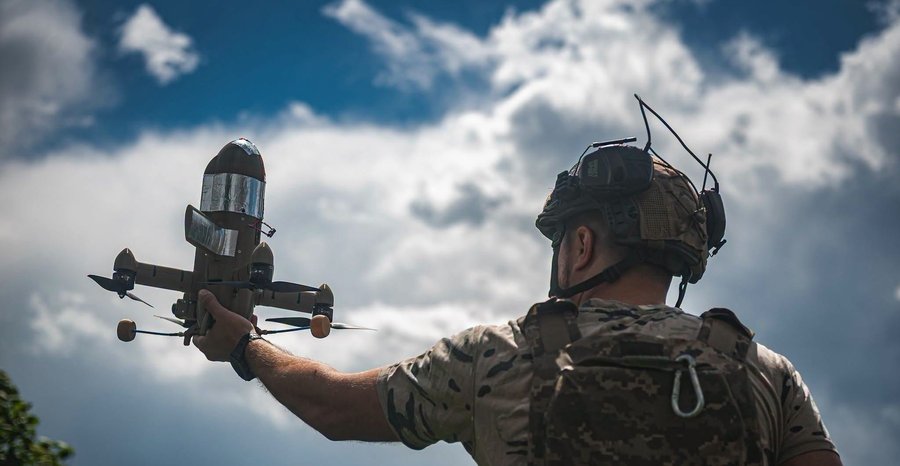
Kyiv — Germany on 4 October announced a new aid package for Ukraine worth more than €1.3 billion, about $1.46 billion, aimed in large part at a threat Russia has stepped up since the summer: fast, jet-powered attack drones.
Chancellor Friedrich Merz unveiled the package at a press conference in Kyiv with President Volodymyr Zelensky. It includes €1 billion in military aid and about €350 million to help Ukraine’s energy system get through the winter. During the same visit, German companies and Ukrainian officials signed a series of supply and cooperation agreements.
What the money buys
The military part pays for three main things, according to Merz’s announcement as reported by the Kyiv Independent.
The first is interceptor drones: drones built to hunt down and destroy incoming attack drones. Germany will finance the European drone maker Quantum Systems to produce tens of thousands of interceptors inside Ukraine, designed to counter Russia’s jet-powered drones. The second is “thousands” of missiles for IRIS-T, a German-made air-defense system Ukraine already uses to shoot down missiles and drones. The third is additional IRIS-T launch units.
The roughly €350 million in energy aid is meant for generators and for repairing power infrastructure damaged by Russian strikes, Merz said, to limit the damage from those attacks before winter.
Why interceptors
Russia has struck Ukrainian cities and infrastructure every day with dozens of jet-powered drones since the summer, CNBC reported, and Ukraine has struggled to shoot them down because they fly much faster than the propeller-driven drones used earlier in the war. Zelensky said that in the past week alone Russia launched more than 1,900 attack drones, 1,700 aerial bombs and 25 missiles, and that more than 800 of the drones were jet-powered.
Zelensky praised a new Quantum Systems jet-drone interceptor, called SPYS, for showing promising results, CNBC reported.
The business deals
German officials said executives who traveled with Merz signed 14 agreements with the Ukrainian government and companies worth roughly €6.6 billion, CNBC reported. Zelensky put the total value of the day’s agreements at more than €8.5 billion.
Many of the documents are memorandums of understanding or letters of intent. These are signed statements of what both sides plan to do. They set up deals but are not yet final purchase contracts.
According to Ukrainska Pravda, Ukraine’s Defence Ministry signed three memorandums with Diehl Defence, the maker of IRIS-T, covering thousands of missiles, more launch units and work on precision artillery shells. A memorandum with Hensoldt covers tactical radars. A letter of intent with Quantum Systems covers testing and buying interceptor drones built to stop the jet-powered Shahed-type drones Russia uses. Ukraine’s National Guard also agreed with Quantum Systems and the Ukrainian firm Frontline Robotics to make some Ukrainian drones in Germany.
On energy, Siemens Energy signed memorandums with Ukraine’s Energy Ministry and with the state energy company Naftogaz. German grid operators 50Hertz and Amprion signed with Ukrenergo, which runs Ukraine’s high-voltage power lines.
Zelensky stressed that the help runs both ways. “What is important in this visit is that not only Germany is helping Ukraine, but Ukraine is sharing its knowledge, experience, as well as orders,” he said. “These are jobs for Germany.”
What Merz said
Merz said Germany would not be pushed into dropping its support. “We do this not only to protect Ukraine’s territorial integrity; we do it deeply in our own interest, for it is a matter of Europe’s security,” he said. “This demonstrates that we will not be intimidated.”
He also called on Russian President Vladimir Putin to end the war. “We are ready for talks, we are ready to discuss bringing this war to an end, but these barbaric attacks on the civilian population of Ukraine must stop,” Merz said.
What happens next
Zelensky said Ukraine and Germany were close to finishing a broader defense agreement, which he has said would cover producing drones, missiles and related software jointly. He also said U.S. envoy Steve Witkoff had urged a return to talks among the United States, Ukraine and Russia as soon as possible, and that Ukraine was willing to meet this month.
Floor: Merz announces more than €1.3bn package in Kyiv 4 Oct 2026: €1bn military (interceptor-drone production via Quantum Systems, thousands of IRIS-T missiles, more IRIS-T units) and about €350m energy (Kyiv Independent; CNBC). 14 company agreements worth about €6.6bn (German officials via CNBC); Zelensky puts total above €8.5bn. Diehl, Hensoldt, Quantum, Siemens Energy, 50Hertz/Amprion documents (Ukrainska Pravda). Sources: Kyiv Independent, 4 Oct 2026; CNBC, 4 Oct 2026; Ukrainska Pravda, 4 Oct 2026.
Sources: https://kyivindependent.com/ukraine-war-latest-germany-supplies-kyiv-with-interceptors-air-defense-missiles-in-1-5-billion-aid-package/; https://www.cnbc.com/2026/10/04/germanys-merz-arrives-in-kyiv-to-finalize-drone-deal-release-aid.html; https://www.pravda.com.ua/eng/news/2026/10/04/8056441/.