
Elections · Topeka
Court Keeps Kansas Ballot Grace Period
A Kansas appeals court on 2 October left in place a block on a 2025 law that ended the three-day grace period. Mail ballots postmarked by Election Day still count in November if they arrive within three days.
By ClarkTopeka · Monday, 5 October 2026
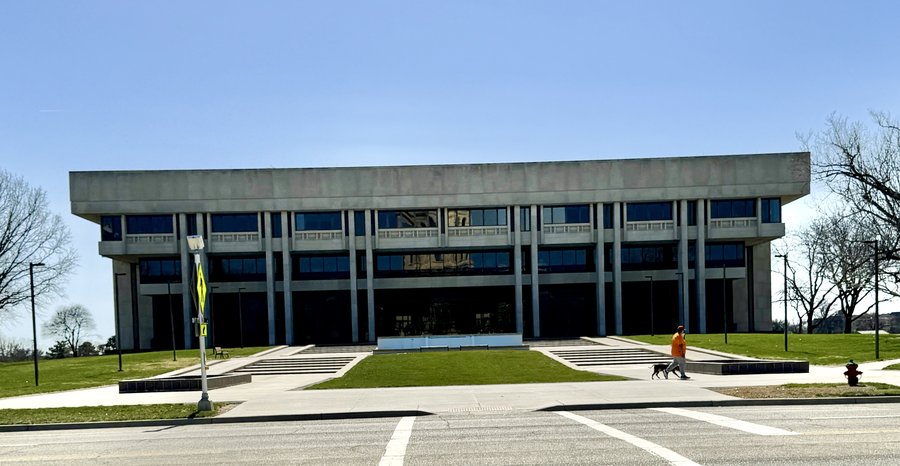
Topeka — Kansas will keep counting some late-arriving mail ballots in the November general election. On 2 October a three-judge panel of the Kansas Court of Appeals denied Secretary of State Scott Schwab’s renewed request to suspend a lower-court order that paused a Republican-backed 2025 law ending the state’s three-day grace period for advance mail ballots.
Chief Judge Sarah E. Warner wrote for a panel that also included Judges Hill and Schroeder. The order does not decide whether the new law is constitutional. It only keeps the temporary block in place while the full appeal goes forward.
What the grace period is
Kansas lets people vote early by mail. Those ballots are called advance-voting ballots. For about eight years, starting in 2017, state law said a mail ballot had to be postmarked by Election Day and received by the county election office within three days after Election Day to count. That cushion covers letters that leave on time but take a few days to arrive.
In 2025 the Legislature passed Senate Bill 4, which wiped out the three-day window and set the deadline as 7 p.m. on Election Day. Without the grace period, a ballot mailed on Election Day that arrives a day later would not count even if it was sent on time.
Voting-rights groups and other plaintiffs sued, arguing the change violates the Kansas Constitution’s protections for voting. On 16 July 2026 District Judge Carl Folsom in Douglas County issued a temporary injunction, leaving the three-day rule in place while the case proceeds. A temporary injunction is a court order that freezes the status quo until the case is decided on the merits.
What the secretary asked for
Schwab appealed and asked the Court of Appeals to stay, or pause, that temporary injunction. The panel denied a similar request on 27 July before the August primary, saying the risk that voters who relied on the three-day rule would lose their ballots outweighed the administrative burden of keeping it. The Kansas Supreme Court declined emergency review.
Schwab tried again ahead of the November election. He argued that the situation was different this time: advance voting for the general election had not yet started, the first mail ballots are due to go out on 14 October, and the legal briefs are now fully filed.
Why the court said no
The panel used the same four-factor stay test federal courts use: whether the secretary is likely to win the appeal, whether he would be irreparably harmed without a stay, whether a stay would hurt the other side, and where the public interest lies. The secretary had to show why the temporary injunction should be lifted.
On the merits, the court said the secretary’s showing was not strong enough to justify changing the rules before the appeal is fully heard. The Kansas Supreme Court had already noted that the temporary injunction “may not ultimately survive appellate scrutiny” but was not “plainly erroneous.”
The decisive point was the harm to voters. “A Kansas voter may reasonably rely on the temporary injunction—and the rule that governed the August primary—when mailing an advance ballot by Election Day,” Warner wrote. “If we were to grant a stay, and that ballot were received in the three-day window after Election Day, the ballot would not be counted.” That loss, the court said, could not be fixed later. “The potential injury to voters, by contrast, is final.”
By contrast, if the injunction stays, Kansas simply keeps running the same three-day rule it has used since 2017 and used in August. If the secretary eventually wins, the court can set the law for future elections. Keeping the temporary order “minimizes the risk of an injury that could not be corrected after Election Day,” the panel said.
What happens next
The Court of Appeals said it will set oral argument and decide the constitutional questions through the normal appeal. For November, election offices must keep counting advance mail ballots that are postmarked by Election Day and arrive within three days afterward. The first advance ballots are scheduled to be mailed on 14 October. Election Day is 3 November.
Floor: Kansas Court of Appeals Order Denying Renewed Motion to Stay, Kansas Appleseed v. Schwab, No. 130,839, filed 2 Oct 2026 (Warner, C.J., for Hill and Schroeder); three-day grace period remains for Nov. 3 election; first advance ballots mail Oct. 14. Temporary injunction entered July 16, 2026 (Judge Carl Folsom, Douglas County, per Democracy Docket 27 July); prior stay denied July 27. Sources: Court of Appeals PDF; Democracy Docket, 2 Oct 2026; Sunflower State Journal, 2 Oct 2026.
Sources: https://sunflowerstatejournal.com/wp-content/uploads/2026/10/Secretarys-Renewed-Motion-to-Stay-or-Suspend-Temp.-Inj.-is-Denied-1.pdf; https://www.democracydocket.com/news-alerts/gop-bid-to-scrap-kansas-mail-ballot-grace-period-fails-again/; https://www.democracydocket.com/news-alerts/kansas-court-rejects-last-minute-gop-bid-to-toss-late-arriving-mail-ballots/; https://sunflowerstatejournal.com/appeals-court-keeps-three-day-grace-period-in-place-for-now-denies-request-to-delay-injunction/.