
Politics · Bucharest
Romania Rejects Premier Nominee
Romania’s Parliament on 30 September refused confidence in Prime Minister-designate Siegfried Mureșan’s proposed government, with 182 votes in favor short of the 233 required, prolonging a months-long political crisis.
By ClarkBucharest · Thursday, 1 October 2026
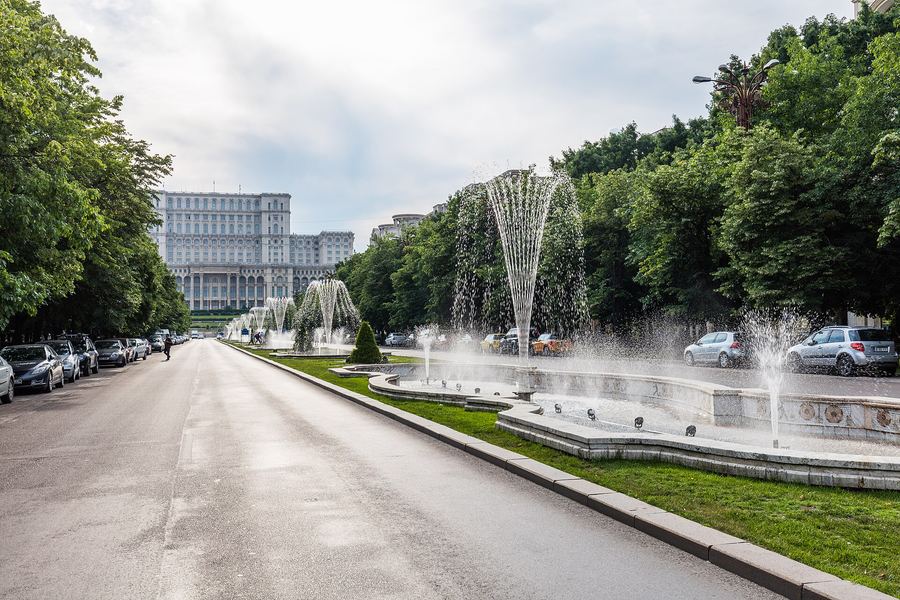
Bucharest — Romania’s Parliament, meeting in joint session on 30 September, refused to invest the cabinet nominated by Prime Minister-designate Siegfried Mureșan. Official Romanian news agency AGERPRES reported that 321 of 464 members of Parliament were present and that 197 valid votes were cast: 182 in favor and 15 against. Investment required a majority of all deputies and senators — at least 233 votes in favor — so the government failed.
A confidence vote, also called an investiture vote, is the parliamentary step that installs a proposed prime minister and cabinet. Without it, the nominee does not take office. Mureșan, a 45-year-old European Parliament member from the centre-right National Liberal Party (PNL), was President Nicușor Dan’s third prime-ministerial designation since a previous government fell in May.
How the vote broke
Lawmakers from the far-right Alliance for the Union of Romanians (AUR) were not in the hall for the vote, AGERPRES reported. Social Democratic Party (PSD) lawmakers attended but did not vote. Support came from Mureșan’s PNL together with the Save Romania Union (USR) and the small ethnic Hungarian party UDMR, which had backed what he called a reform-oriented programme — still short of the 233 threshold.
Mureșan said afterward that parties that had triggered the crisis had voted to prolong it, and that he would wait for the president’s next steps while continuing to advocate reforms. USR leader Dominic Fritz called for early elections, arguing the crisis was hurting prices and business confidence. PSD leader Sorin Grindeanu said Romania urgently needs a government with full powers and that his party was ready to take responsibility for recovery. AUR leader George Simion told the joint sitting his party would not vote for any government proposal until former presidential candidate Călin Georgescu was released and “given justice,” according to AGERPRES’s account of the floor speech.
How Romania got here
On 5 May 2026, Parliament dismissed liberal Prime Minister Ilie Bolojan in a no-confidence motion after governing social democrats joined the opposition far right, Al Jazeera and AFP reporting establish. President Dan then designated MEP Eugen Tomac on 4 June; Tomac resigned the mandate after failing to secure a majority. Dan’s second pick, Adrian Veștea, failed a confidence vote on 22 June. Mureșan was the third try. Romania, an EU and NATO member that borders Ukraine, has not held snap parliamentary elections since the fall of communism in 1989.
The far right holds about a third of Parliament and has threatened to push for the president’s impeachment if he does not call early elections once constitutional conditions are met, Al Jazeera reported. The country of about 19 million has been struggling with the European Union’s highest public deficit and inflation rates in recent months, according to that coverage.
What the Constitution allows next
Article 89 of Romania’s Constitution, quoted by AGERPRES, says the president may dissolve Parliament after consulting chamber presidents and parliamentary group leaders if Parliament has failed to grant confidence for a government within 60 days of the first request and only after rejecting at least two investiture requests. Parliament may be dissolved only once in a given year, and not in the last six months of a president’s term or during mobilisation, war, siege or emergency. By 30 September, at least two investiture requests (Veștea and Mureșan, after Tomac’s abandoned mandate) had failed; whether the 60-day clock and other conditions are fully met is a constitutional question for the presidency and courts, not settled in the vote count itself.
President Dan said on 29 September that early elections were not a solution and would mean continued instability, and that Romania would stay the fiscal course regardless, AGERPRES reported. After Wednesday’s defeat, Al Jazeera quoted him saying he would nominate a new prime-minister candidate on Monday afternoon after talks with party leaders, seeking to avoid snap elections. Analyst Cristian Pîrvulescu told AFP that early elections could mean roughly four months before a new government formed — a long gap given the economic strain.
Floor: Joint Parliament sitting 30 Sep 2026 — Mureșan government investiture fails: 182 yes, 15 no; 233 required; 321 of 464 present (AGERPRES). AUR absent; PSD present non-voting (AGERPRES). Third Dan nominee after Bolojan no-confidence 5 May; Tomac June; Veștea 22 June fail (AGERPRES; Al Jazeera/AFP). Const. Art. 89 dissolution conditions summarized via AGERPRES. Dan: new nominee Monday / avoid snap elections (Al Jazeera). Sources: AGERPRES; Al Jazeera; Mediafax vote tallies corroboration, 30 Sep 2026.
Sources: AGERPRES English, 30 Sep 2026; Al Jazeera / AFP / AP, 30 Sep 2026; Mediafax, 30 Sep 2026.