
Defense · Erbil
Last US and UK Troops Leave Iraq
U.S. Central Command and the British Ministry of Defence said on 30 September that the last American and British forces left Erbil Air Base, ending the Operation Inherent Resolve mission in Iraq after more than a decade and handing primary security responsibility to Iraqi forces.
By ClarkErbil · Thursday, 1 October 2026
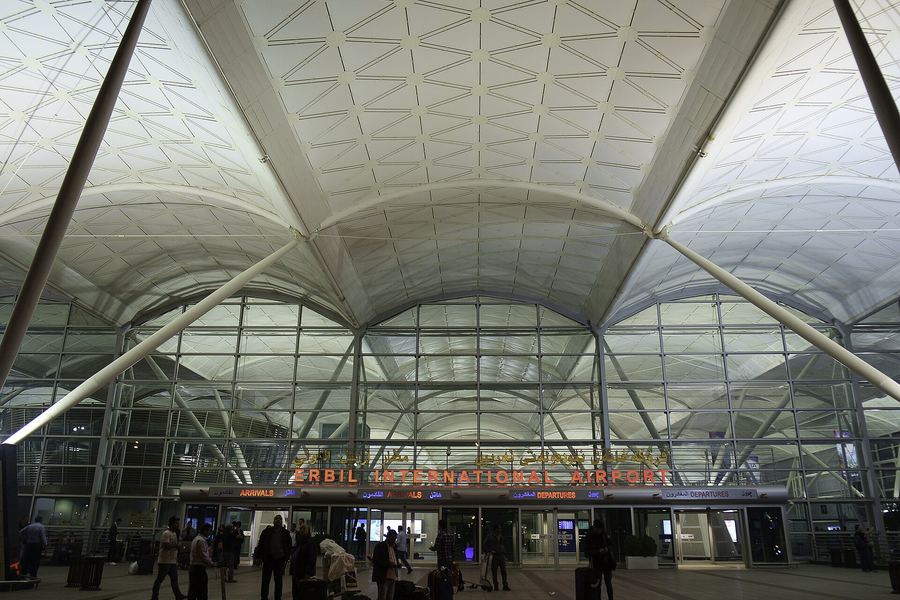
ERBIL, Iraq — U.S. Central Command said on 30 September that it had completed the orderly departure of U.S. forces and equipment from Erbil Air Base, marking the end of the Operation Inherent Resolve mission in Iraq. The British Ministry of Defence said the same day that the last British military personnel — about 100 — also left Erbil in a coordinated exit with U.S. forces.
Operation Inherent Resolve is the name the United States gave to the international military campaign against the Islamic State group, also called ISIS or Daesh, in Iraq and Syria. Combined Joint Task Force–Operation Inherent Resolve has advised, assisted and enabled partner forces in that fight since CENTCOM established the unit in 2014. Wednesday’s departure ends that mission in Iraq; CENTCOM said the task force remains operational and is now headquartered in Jordan while U.S. forces continue counter-ISIS work in Syria with coalition partners and the Syrian government.
What changed on the ground
Erbil Air Base, in Iraq’s northern Kurdistan Region, had been the main operational hub for the task force and hosted most of the roughly 1,500 American and coalition forces still supporting counter-ISIS operations in Iraq. American and coalition forces began leaving federal Iraq in October 2025 as part of a planned transition that culminated in the removal of personnel and equipment from Erbil in September 2026, CENTCOM said.
The exit follows a U.S.–Iraq bilateral arrangement, described in BBC reporting as an agreement signed two years earlier, to withdraw foreign troops by the end of September 2026. Pentagon spokesman Sean Parnell said the departure from Erbil marked “the successful conclusion of the military mission that defeated [IS] in Iraq,” and that primary responsibility for remaining security challenges — including ISIS remnants and Iran-aligned militias — now rests with the government of Iraq. CENTCOM commander Adm. Brad Cooper said Iraqi security forces, including the Peshmerga and other Kurdistan Region forces, now have the capacity to manage threats to their homeland unilaterally, while U.S. and coalition forces elsewhere in the region “remain ready to respond to any ISIS threats that arise.”
Iraqi Prime Minister Ali al-Zaidi said the end of the coalition’s mission marked Iraq’s transition to full responsibility for its own security and stability. Iraq planned “Sovereignty Days” as a national holiday to mark the withdrawal, according to BBC reporting. President Donald Trump called the withdrawal a “victory for the United States, a victory for Iraq, and a decisive victory over ISIS” in a Truth Social post quoted by the BBC.
Background, in plain terms
The Islamic State seized large parts of Iraq and Syria in 2014. The United States and partners returned troops to help Iraqi forces push the group back; Iraq declared a military defeat of ISIS in 2017, but coalition trainers and advisers stayed to help prevent a rebound. A recent United Nations assessment cited by the BBC said sustained Iraqi pressure had left ISIS in Iraq with several hundred fighters able to carry out only unsophisticated operations. In Syria, the UN has estimated the group still has up to about 3,000 fighters.
This is the third major U.S. and British drawdown from Iraq: after the 1991 Gulf War period, after the 2003–2011 war that toppled Saddam Hussein, and now the end of the post-2014 anti-ISIS mission inside Iraq. Nearly 4,500 U.S. and 179 British military personnel died in the 2003–2011 war, the BBC notes; Wednesday’s story is about the end of the later coalition advisory mission, not a reopening of that earlier conflict’s casualty ledger.
What happens next
The UK MoD said British and coalition forces had supported training for more than 111,000 members of Iraqi security forces, including more than 21,000 Peshmerga, and that the Royal Air Force had struck more than 2,300 ISIS targets over the mission’s life; the RAF is expected to keep flying over Syria. The Pentagon said the United States would continue targeted training and intelligence support to Iraqi partners. Kurdish officials and regional reporting have raised concerns about air-defense gaps after the Erbil departure; those concerns are political and security judgments, not part of the CENTCOM end-of-mission announcement itself. Zaidi has vowed to disarm Iran-backed militias and bring weapons under state control; several factions have resisted, the BBC reported.
Floor: CENTCOM 30 Sep 2026 — orderly U.S. departure from Erbil Air Base ends OIR mission in Iraq; CJTF-OIR HQ now Jordan; Syria counter-ISIS continues (centcom.mil). UK MoD: last ~100 British personnel left Erbil same day; training/strike tallies and RAF Syria note (BBC). Iraqi PM Ali al-Zaidi: full security responsibility; Sovereignty Days (BBC). Trump Truth Social / Parnell / Cooper quotes via BBC and CENTCOM. Bilateral withdrawal timeline ~two years (BBC). Sources: CENTCOM public release; BBC; ABC Australia wire coverage, 30 Sep–1 Oct 2026.
Sources: U.S. Central Command, 30 Sep 2026; BBC, 30 Sep–1 Oct 2026; ABC News Australia, 30 Sep 2026; Stars and Stripes, 30 Sep 2026.