EU Freezes Assets of 826 Russian Arms Suppliers
EU foreign ministers meeting in Luxembourg froze the assets of 826 Russian companies that supply the country's weapons makers and banned 743 of their chief executives from the bloc, the largest set of sanctions listings the bloc has ever agreed at once; more than half are tied to ballistic-missile production.
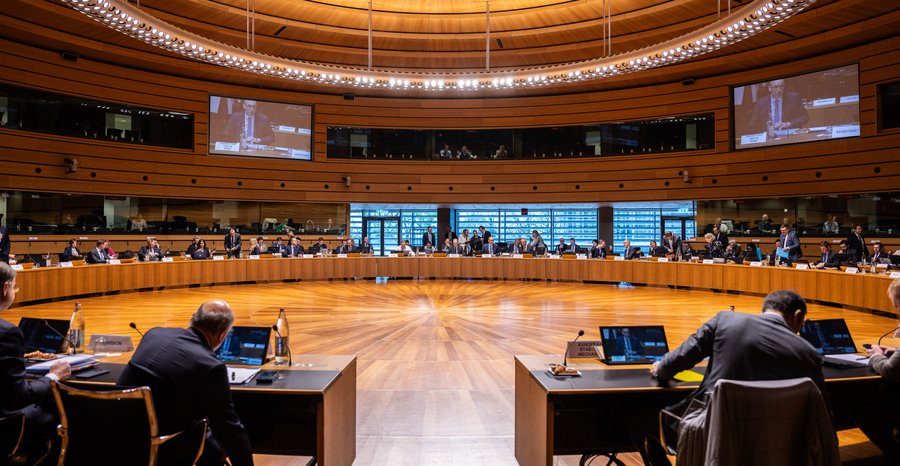
Luxembourg — European Union foreign ministers on Monday, 12 October, adopted the bloc's largest-ever set of individual and company sanctions against Russia's military and industrial complex, naming 826 Russian firms and 743 people who run them.
The Council of the European Union, the body where member-state governments take decisions, agreed the measures in Luxembourg. They amend the long-running sanctions regime that dates to 2014 and that now covers roughly 4,600 people and organisations linked to the war against Ukraine, according to Agence Europe and the Finnish government.
What the listings do
Listed companies and people face an asset freeze inside the European Union. It is illegal to make money or other economic resources available to them, directly or indirectly. The named individuals are also banned from travelling into the EU.
Agence Europe, citing the Council's action, said the companies supply essential parts for Russia's production of missiles, drones and aircraft. They work in electronics, communications, aeronautics, satellite systems, explosives, munitions, optics and navigation. The EU put their combined annual turnover at at least €20 billion and said they employ more than 250,000 people. More than half of the new listings are tied to the ballistic-missile production chain, the Council of the EU said in its 12 October announcement; High Representative Kaja Kallas made the same point after the meeting, IEU Monitoring reported.
A separate decision the same day added 77 people for their roles in organising elections to Russia's State Duma in September 2026 in territories of Ukraine that Russia occupies, the Finnish government and IEU Monitoring reported.
Why now
The Council said it acted in response to Russia's continued aggression and, in particular, to recent large-scale strikes on civilian infrastructure in Ukraine. Kallas told ministers that pressure on Moscow should not ease, and that a ceasefire on energy targets cannot work if only one side honours it, IEU Monitoring reported from Luxembourg.
French Foreign Minister Jean-Noël Barrot raised the prospect of a further, 22nd package of sanctions in the coming weeks, Agence Europe reported. Lithuanian Foreign Minister Kęstutis Budrys said Monday's listings did not go far enough and called for Russian military intelligence, the GRU, to be treated as a terrorist organisation.
The decisions sit alongside, rather than replace, earlier sectoral measures such as oil, finance and technology controls. They also arrive days after United States President Donald Trump said Russia would supply diesel to the United States under a temporary sanctions licence; several European ministers publicly regretted that move, Agence Europe reported.
What it means in practice
For a company or executive on the list, EU banks freeze accounts and EU persons may not pay them, sell to them or otherwise provide resources. Travel bans keep the executives out of the Schengen area and other EU territories. The measures do not, by themselves, stop factories inside Russia from operating; they cut those factories and their bosses off from European money, travel and business partners.
European and other firms that still deal with listed suppliers face legal and banking risk if they continue. Enforcement depends on national authorities in each of the 27 member states.
What happens next
Kallas said the Union would keep pressure on through more listings, stricter enforcement, action against the "shadow fleet" of tankers used to move Russian oil outside Western controls, and better sharing of intelligence on hybrid attacks, IEU Monitoring reported. France plans an international conference on the shadow fleet in Paris this autumn, Agence Europe said.
Ukraine and the EU are also moving ahead with accession talks; ministers in Luxembourg welcomed Ukrainian laws needed to open two more negotiating clusters, IEU Monitoring reported. Those steps are separate from Monday's listings.