
Courts · Strasbourg
Strasbourg Faults Turkey in 947 Cases
The European Court of Human Rights on 29 September found rights violations in three judgments covering 947 applicants convicted in Turkey after the 2016 coup attempt, extending a line of rulings that Turkish courts mishandled terrorism prosecutions tied to alleged ByLock use.
By ClarkStrasbourg · Wednesday, 30 September 2026
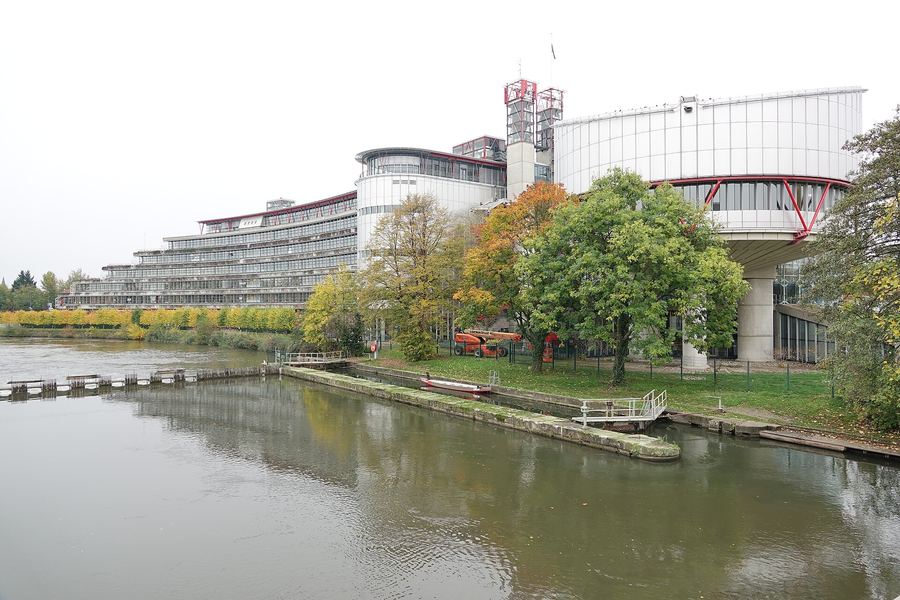
Strasbourg — The European Court of Human Rights on 29 September issued three unanimous judgments finding that Turkey violated the European Convention on Human Rights in cases brought by 947 people convicted after the failed July 2016 coup, continuing a series of rulings that Turkish courts treated weak or categorical evidence as proof of terrorism membership.
The European Court of Human Rights, often called the Strasbourg court, is the permanent court of the Council of Europe. Countries that have ratified the European Convention on Human Rights are bound by its final judgments; the Council of Europe's Committee of Ministers supervises whether governments actually fix the problems the court identifies.
The three judgments
According to contemporaneous reporting that names the cases, and HUDOC case identifiers listed in open search results, the court decided:
- *Ünal and Others v. Türkiye* — fair-trial violations under Article 6 § 1 for 591 applicants;
- *Korkmaz and Others v. Türkiye* — violations of Article 7 (no punishment without law) for 11 applicants;
- *Parun and Others v. Türkiye* — violations involving 345 applicants (fair trial and, in that reporting, the legality principle).
Together the three judgments cover 947 applicants. In the opened accounts, the court said the finding of a violation was enough compensation for non-pecuniary damage and did not need to examine every remaining complaint.
Why ByLock keeps coming up
The rulings follow the court's 2023 Grand Chamber decision in *Yüksel Yalçınkaya v. Türkiye*. That landmark case found systemic problems when Turkish courts treated alleged use of ByLock — an encrypted messaging app — and similar associations as enough, by themselves, to prove membership in an armed terrorist organization without proving individual criminal intent.
Turkish authorities say the Gülen movement, inspired by cleric Fethullah Gülen (who died in 2024), infiltrated the state and helped organize the 2016 coup; the movement denies both the coup role and any terrorist activity. After the coup, Turkey investigated hundreds of thousands of people and convicted more than 127,000 over alleged Gülen links, according to figures Justice Minister Akın Gürlek announced in July, as relayed in secondary reporting. Those aggregate figures are government statements reported by monitors, not findings of the Strasbourg court.
The court has applied the *Yalçınkaya* approach in earlier batches — including 239 applicants in *Demirhan* (July 2025), thousands more in late 2025, and 893 in June — and Tuesday's 947 continue that line.
What a violation finding means
A Strasbourg violation finding does not automatically free every applicant from prison. It declares that Turkey's process or legal reasoning broke the Convention. Turkey must then reopen cases, change practices, or otherwise remedy the breach under Committee of Ministers supervision. Turkish officials have rejected the court's criticism of post-coup prosecutions, saying the measures were needed for national security. Turkey still accounts for the largest share of applications pending in Strasbourg — more than 40 percent of the court's caseload at the end of May, according to court data cited in the opened monitor report.
What happens next
More clone judgments are likely while thousands of similar files remain. Domestic Turkish courts decide whether to retry or release individual defendants. The Committee of Ministers keeps Turkey's compliance with *Yalçınkaya* and its follow-ons on its agenda.
Floor: ECtHR judgments 29 September 2026 — Ünal and Others (591, Art. 6); Korkmaz and Others (11, Art. 7); Parun and Others (345); total 947 applicants (Stockholm Center for Freedom / Turkish Minute line; Bold Medya; HUDOC ids 001-252504 / 001-252506 in open search). Builds on Grand Chamber Yalçınkaya (2023). Sources: Stockholm Center for Freedom; Bold Medya; HUDOC search listings, 29 Sep 2026.
Sources: Stockholm Center for Freedom, 29 Sep 2026; Bold Medya, 29 Sep 2026; HUDOC — Ünal and Others v. Türkiye listing; HUDOC — Korkmaz and Others v. Türkiye listing.