CENTCOM Says Hormuz Lanes Are Clear of Mines
U.S. Central Command says the main shipping routes through the strait are free of Iranian sea mines and that its forces have supported more than 3,000 ship transits. Iran says the strait will not reopen until seven conditions are met.
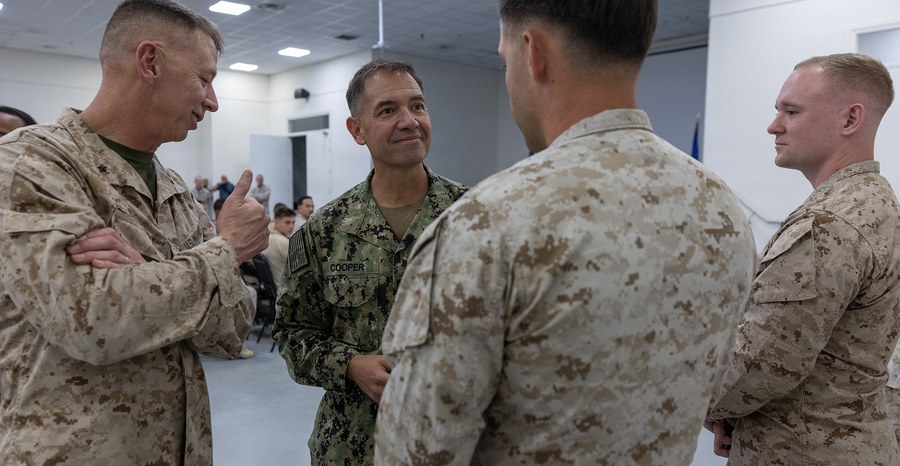
U.S. Central Command says the primary transit routes through the Strait of Hormuz are free of Iranian sea mines. Its commander, Adm. Brad Cooper, flew over the strait in an Army CH-47 Chinook helicopter, and the command released figures: more than 3,000 commercial vessels have passed through the strait with support from its forces over the past six months, U.S. forces have helped Gulf partners export more than 1.5 billion barrels of crude oil since summer, and more than 95% of ships have crossed safely in recent months. All of those figures are the command's own.
Iran disputes the command's account. Its leaders say the strait will reopen only after seven conditions are met, including lifting the U.S. naval blockade of Iranian ports and easing sanctions on Iranian oil, and Iran's Islamic Revolutionary Guard Corps has said tankers struck mines it laid in the strait's southern route. Central Command has called those claims false. Separately, the data firm Kpler estimates crude exports from the Gulf region, excluding Iran, returned to prewar levels in September.
Strait Of Hormuz — U.S. Central Command said that the main shipping routes through the Strait of Hormuz are clear of Iranian sea mines, and that its forces have helped Gulf countries export more than 1.5 billion barrels of oil since summer.
What Central Command says
Cooper, the commander of Central Command, "observed the current operational environment" while flying over the strait in an Army CH-47 Chinook on October 25, according to the command's release, which Seapower published in full. "Today, primary transit routes in the Strait of Hormuz remain free and clear of Iranian sea mines thanks to incredible efforts by our people," Cooper said. He met U.S. service members who supported the mine-clearing mission.
The command said more than 3,000 commercial vessels had transited the strait with its support over the last six months and that more than 95% of ships navigating it in recent months had sailed through safely "despite the IRGC's unwarranted aggression, clearly demonstrating that the United States and regional partners control the international waterway." Al Jazeera and Arab News reported the figures as claims by the command.
What Iran says
Iran has claimed control of the strait since the war began and has targeted vessels trying to cross without its authorization, Arab News reported. Iran's parliament speaker, Mohammad Baqer Qalibaf, has said the strait will not reopen until seven Iranian conditions are met, a position state media reported on October 4 and Nournews reported again on October 20. They include ending the U.S. blockade of Iranian ports, lifting sanctions on Iranian oil exports and halting hostilities on all fronts. Qalibaf has said the conditions are based on the Islamabad Memorandum of Understanding, an interim agreement from June.
On October 20, Euronews reported that the IRGC said two tankers had struck mines laid by its navy in what Iran calls an unauthorized passage in the strait's southern section. Kurdistan 24 reported the same day that a Central Command spokesman called claims that tankers are hitting mines "false" and said the command had "cleared the international waterways in the Strait of Hormuz of mines." The command made a similar denial on August 31, according to One America News Network.
Oil flows
Crude oil leaving the Gulf region has recovered. Kpler estimated that at least 16.5 million barrels a day left the region between September 1 and 28, matching the prewar average excluding Iran, Kpler and Al Jazeera reported. Both attributed the recovery in part to ship-to-ship transfers at sea and greater use of pipelines. Iran, whose ports are under the U.S. blockade, is not part of that figure.
Oil prices remain high. Brent crude traded near $115 a barrel on Monday, down from the previous session, the Guardian and Oil & Gas Journal reported. The war began on February 28 with U.S. and Israeli strikes on Iran.