Lula Wins a Fourth Term in Brazil
President Luiz Inácio Lula da Silva defeated Flávio Bolsonaro, the son of his jailed predecessor, in a presidential runoff, becoming the first candidate since Brazil's return to democracy to win after finishing second in the first round.
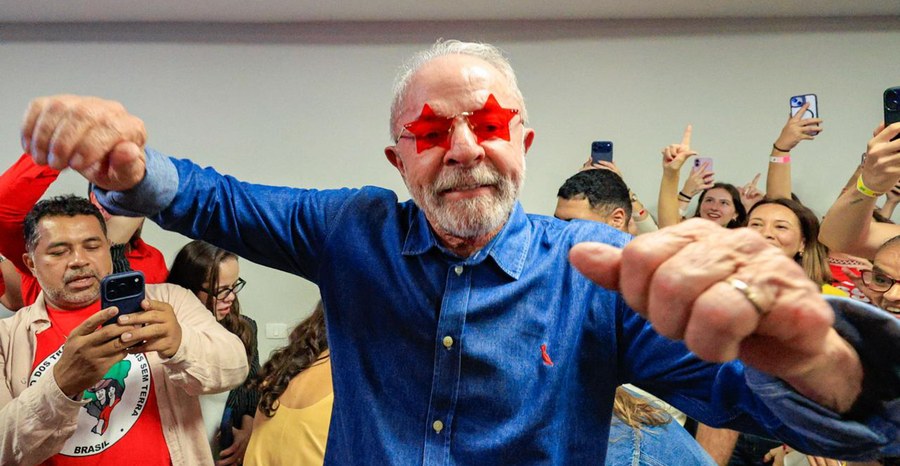
Luiz Inácio Lula da Silva won Brazil's presidential runoff, defeating Flávio Bolsonaro, a senator and the son of former President Jair Bolsonaro. With nearly all votes counted, the Superior Electoral Court's tally gave Lula 64,239,690 votes, or 51.78% of valid votes, to Bolsonaro's 59,818,124, or 48.22%, a margin of about 4.4 million. Folha de S.Paulo reported that the court's system confirmed the result at 9:10 p.m. Brasília time, when Bolsonaro could no longer catch up.
Bolsonaro had led the first round on October 4 by about 2.2 million votes. Since Brazil returned to democracy in 1985, no candidate who finished second in a first round had gone on to win the runoff. Abstention fell to 19.21% from a record 21.08% in the first round, according to the Guardian, a drop that reporters there and at Folha tied to higher turnout among Lula's voters.
Voting was extended by two hours across the country after Supreme Court Justice Cristiano Zanin granted a request from Lula's campaign, which cited problems with public transport for voters. Supporters of Bolsonaro questioned the extension on social media; justices of the higher courts dismissed the idea of annulling the vote, Folha reported. Lula, the first Brazilian elected president four times, turns 81 on Tuesday.
Brasília, Brazil — Luiz Inácio Lula da Silva was reelected president of Brazil, defeating Flávio Bolsonaro in a runoff and winning a fourth term, the first Brazilian to be elected to the office four times by popular vote.
The count
The Superior Electoral Court's national tally, updated at 10:00 p.m. Brasília time with 99.98% of polling sections counted, showed Lula, of the Workers' Party, with 64,239,690 votes and Bolsonaro, of the Liberal Party, with 59,818,124, or 51.78% to 48.22% of valid votes. Brazil elects its president by popular vote alone: a candidate needs more than half the valid votes, with no electoral college and no role for Congress. In 2022, Lula beat Jair Bolsonaro 50.9% to 49.1%.
Lula lost the first round to Flávio Bolsonaro, who won it by about 2.2 million votes and carried the swing state of Minas Gerais. In the runoff, Folha reported, stronger results in Minas Gerais and the northeast were decisive. The Guardian put abstention at 19.21%, down from a record 21.08% three weeks earlier; Lula's allies had said his voters, who tend to live farther from polling stations, were the most likely to stay home.
Election day
Polls were due to close at 5 p.m. Justice Cristiano Zanin of the Supreme Federal Court ordered voting extended by two hours nationwide after Lula's campaign complained of obstacles to free public transport for voters in 10 states, including São Paulo and Bahia, according to Folha. The Guardian reported that many Lula supporters in São Paulo accused pro-Bolsonaro politicians of trying to disrupt transport in Lula-leaning areas. Bolsonaro supporters immediately questioned the extension online, and justices of Brazil's higher courts rejected the idea that the vote could be annulled, Folha reported.
The candidates
Lula, a former factory worker and union leader, served two terms from 2003 to 2010 and returned to office in 2023. He turns 81 on Tuesday, making him the oldest person to hold the office. Flávio Bolsonaro, 45, is a lawyer and senator from Rio de Janeiro. His father is serving a 27-year sentence for plotting a coup after losing the 2022 election and had endorsed him, hoping to be freed if his son won. Jair Bolsonaro is under house arrest in Brasília, where his son watched the count, according to the Guardian.
Brazil and the United States
The Guardian noted that President Trump is the Bolsonaro family's most important international ally. Folha reported that Trump did not act to support Flávio Bolsonaro during the campaign and that Lula's government has made its relationship with the Trump administration a particular focus. Lula's new term begins in January, and Folha noted he will face a Congress with a stronger right-wing bloc.