NASA Reworks Its Moon Landers for 2028
NASA, Blue Origin and SpaceX have streamlined both crewed lunar landers and changed how each will meet Orion, and NASA will fly whichever lander is ready first for the 2028 landing. Next year's Artemis III becomes a docking test in Earth orbit.
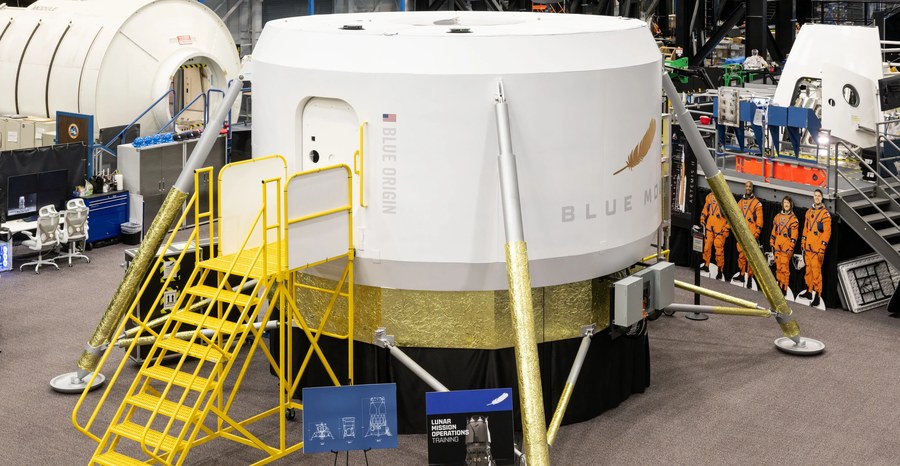
NASA and its two commercial lander providers, Blue Origin and SpaceX, have streamlined the designs of their crewed moon landers and changed how each will carry astronauts to the lunar surface, the agency said. The landers and NASA's Orion capsule will no longer meet in the distant halo orbit around the moon used in earlier plans; each will use an orbit suited to its own system.
Artemis III has been redefined. Instead of a landing, it will send four astronauts aboard Orion into low Earth orbit next year to rendezvous and dock with test versions of both landers. NASA will then choose, based on readiness, which company flies astronauts to the surface in 2028, with a second landing to follow.
"We're launching three spacecraft on three different rockets and testing how they operate together — something NASA has never attempted," said Jeremy Parsons, NASA's Artemis program manager. NASA is planning two moonwalks of about two hours each on the first landings, in spacesuits made by Axiom Space.
Kennedy Space Center, Fla. — NASA has reworked how its two commercial moon landers will carry astronauts to the lunar surface, and it will give the first crewed landing, planned for 2028, to whichever company is ready first.
Two new plans
Under the old plan, the landers and Orion would rendezvous in a near-rectilinear halo orbit around the moon. Now each will meet Orion in an orbit that differs by company, NASA said. SpaceX still plans to fill its Starship lander through a series of tanker Starships in low Earth orbit that transfer super-cold propellant to a depot ship. Under the revised plan, the Starship lander will wait for Orion in Earth orbit, dock with it there, and then push the combined stack to low lunar orbit. NASA said it is modifying Orion so Starship can push it, and that the change sharply cuts the propellant Starship must gather in orbit and shortens the trip back to Orion from the surface.
Blue Origin will put off in-space refueling. It will use three transfer stages, built from its existing Mark 1 and Mark 2 hardware and working like a multistage rocket, to send its Blue Moon Mark 2 lander into an elliptical polar orbit around the moon. NASA said that orbit allows faster returns to Orion and lowers the lander's propellant needs. Both companies must fly an uncrewed demonstration of their crewed landers first, and NASA will certify the landers before any crew flies.
Artemis III becomes a test near Earth
Artemis III, launching next year, will carry NASA astronauts Randy Bresnik, Frank Rubio and Andre Douglas and European Space Agency astronaut Luca Parmitano on a planned 14-day mission in low Earth orbit, NASA said. Orion will first dock with a Blue Moon test lander, and the crew will spend about two days inside it checking its cabin and life support. It will then dock with a Starship test vehicle for up to two hours; the crew will not enter Starship. "We're launching three spacecraft on three different rockets and testing how they operate together — something NASA has never attempted," said Jeremy Parsons, NASA's Artemis program manager.
Who lands first
Under the original contracts, Starship was assigned to Artemis III and IV and Blue Moon to Artemis V. Under the revised contracts, neither company is assigned to a specific landing, and NASA will pick based on lander readiness. Two crew members will descend to the moon while two stay aboard Orion. NASA is targeting two moonwalks of about two hours each on the first landings, to collect samples and test the Axiom Space spacesuit.
"NASA is energized, our core capabilities are being rebuilt, our machine shops are running 24/7, and our experts are in the field attacking the critical path," Isaacman said. SpaceX is adding two demonstrations of its Starship crew cabin, and Blue Origin is adding human-in-the-loop tests and hardware readiness milestones, NASA said.