EU Court Rules Dublin Airport's Passenger Cap Must Count in Slot Allocation
The Court of Justice of the European Union ruled that the 32 million annual passenger limit in Dublin Airport's planning permissions must be taken into account when airlines' take-off and landing slots are allocated, and that slots are not the airlines' property.
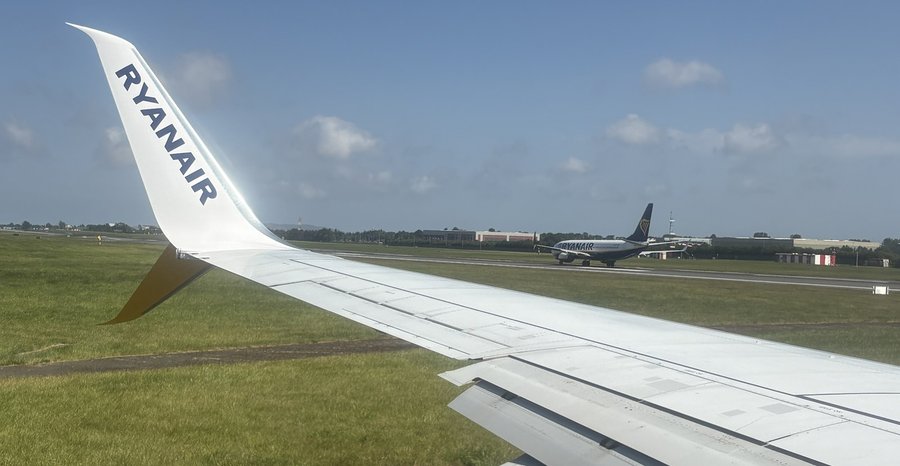
The Court of Justice of the European Union, the EU's highest court, ruled that Dublin Airport's cap of 32 million passengers a year must be taken into account when take-off and landing slots are given to airlines. A slot is permission to use the runway and terminal at a set time. The ruling means the Irish Aviation Authority, which allocates slots at Dublin, can limit them to fit the cap, and in exceptional cases an airline could lose all or part of a slot series it used before.
The court said legal limits written into an airport's planning permission can form part of the assessment of its capacity, however old the rule is. It also said slots are not the airlines' property, because they are temporary.
Dublin Airport's operator, daa, and several airlines, among them Ryanair, challenged the authority's seasonal caps in Ireland's High Court, which asked the Court of Justice for guidance. The case now returns there.
A law passed this summer lets Ireland's transport minister, Darragh O'Brien, lift the cap, and he has said he intends to. Slots for winter 2027 are not expected to be allocated until May 2027.
Dublin — The Court of Justice of the European Union ruled that the 32 million annual passenger cap at Dublin Airport must be taken into account when take-off and landing slots are allocated to airlines, and that in exceptional cases an airline could lose slots it has used before.
A slot is permission for an airline to use an airport's runway and facilities on a given day and time. At busy airports, an independent coordinator hands them out each season. At Dublin, that is the Irish Aviation Authority.
What the court held
The court said the capacity figures used to allocate slots must reflect all the capacity actually available, and that legal limits count: a cap in an airport's development consent, its planning permission, is such a limit when the operator must comply with it. It does not matter whether the limit is longstanding or whether the policy behind it has changed. Ignoring Dublin's cap, the court said, could mean allocating slots that cannot be used. Airlines that regularly used a series of slots have priority to keep them, but that priority depends on available capacity and is not automatic renewal. The court also ruled that slots, being temporary, are not property under the EU Charter of Fundamental Rights.
The cap comes from planning permissions for the airport's terminals granted in 2007 and 2008. In 2024, after the airport operator forecast that the limit could be reached or exceeded, the Irish Aviation Authority set seasonal passenger caps for flights. The operator, daa, and several airlines challenged those decisions in Ireland's High Court; Ryanair and Airlines for America, a U.S. airline industry group, were among the challengers. The High Court asked the Court of Justice for guidance.
Reactions
Ryanair and Aer Lingus both said the ruling shows the cap should be lifted. Ryanair called the ruling "absurd in the case of Dublin Airport," saying the airport's second runway raises its capacity to 60 million passengers a year and that traffic this year will exceed 36 million. Aer Lingus said the "remaining statutory process" to amend the cap should be completed "as quickly as possible."
Friends of the Irish Environment said the government should manage passenger and flight numbers to limit climate effects and protect residents from aircraft noise. Sorcha Tunney, a senior manager at the environmental group Opportunity Green, said removing the cap without addressing emissions could expose Ireland to legal challenge under the European Convention on Human Rights.
The Department of Transport said the minister notes the ruling and would not comment further because the matter is before Ireland's High Court. The Irish Aviation Authority said it will consider what the judgment means for the domestic case and for future slot decisions.
What happens next
The case returns to the Irish High Court. A law passed this summer by the Oireachtas, Ireland's parliament, gives Minister for Transport Darragh O'Brien the power to lift the cap, which he has said he intends to do. A process that may include an environmental assessment comes first. The Irish Aviation Authority is not expected to allocate Dublin's winter 2027 slots until May 2027. If the cap is removed or changed before then, the ruling may not affect them.