
Elections · Washington
Judge Strikes Down Justice Department Voter-Roll Checks
A federal judge vacated the department's policy of running state voter lists through a federal immigration database and pressing states to drop people it flagged, finding it broke federal law and removed citizens.
By ClarkWashington · Saturday, 10 October 2026
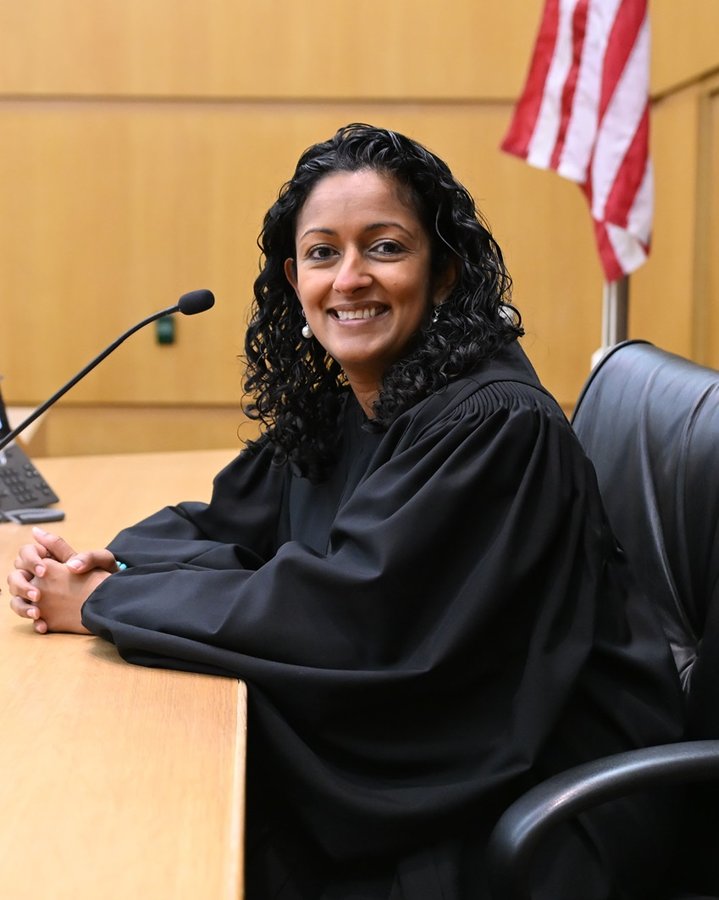
Washington — A federal judge on 9 October threw out the Trump administration's policy of checking state voter lists against a federal immigration database and pressing states to remove people it identified as noncitizens, weeks before the November midterm elections.
In a 78-page ruling, U.S. District Judge Sparkle Sooknanan of the District of Columbia found that the Justice Department had no legal power to demand the lists for that purpose and that the policy violated federal laws on how agencies must act, how they must protect personal data and how they may collect information. "The challenged policy represents the federal government's attempt to decide who gets to vote," she wrote. "But Congress has left that authority where our Constitution has always placed it: with the states."
What the government was doing
In the United States, each state keeps its own voter roll: the official list of people registered to vote. Two federal laws, the Help America Vote Act and the National Voter Registration Act, require states to keep those lists accurate.
The Justice Department said those laws let it demand complete voter files from every state. The files include home addresses, Social Security numbers and voting histories, Courthouse News Service reported. The department demanded them from 49 states and Washington, D.C. It then ran names through the Systematic Alien Verification for Entitlements database, known as SAVE. That is a Homeland Security system built to check whether people applying for public benefits are citizens or legal immigrants. The department told states to remove voters the system flagged.
At least 18 states fully cooperated, the judge noted. Twenty-six refused, and the department sued them. Federal judges dismissed every one of those suits, and an appeals court upheld one dismissal, Courthouse News reported.
Who brought the case
The voting rights group Common Cause sued in April with four voters whose states had handed their records to the department. The judge found that one of them had already been removed from the rolls. Anthony Nel of Denton County, Texas, got a letter in October 2025 saying SAVE had identified him as a noncitizen and that his registration would be cancelled unless he proved citizenship within 30 days. His passport had expired. By the time he renewed it two months later, he had been removed. He was later reinstated.
An analysis by ProPublica and The Texas Tribune in February found that SAVE makes "persistent mistakes," especially with people born abroad who later became citizens, Courthouse News reported.
What the judge decided
Sooknanan vacated the policy, meaning she cancelled it outright rather than pausing it. CBS News reported that her ruling covers the voter files the department has already received as well as those still being fought over in court.
She found the policy broke the Administrative Procedure Act, the law that requires federal agencies to follow proper process and act within their legal authority, and the Privacy Act, which limits how the government collects and shares personal records. She also found it broke the Paperwork Reduction Act, which limits how agencies gather information, and wrote that the department had knowingly relied on "an inaccurate database" to check who could vote.
"Today's decision does not prevent the federal government from taking lawful steps to support states' efforts to maintain accurate voter rolls," she wrote. "And to state the obvious, the Court's decision does not pave the way for ineligible voters to vote in our elections." The policy, she wrote, "has removed United States citizens from the voter rolls in their home states and risks disenfranchising many more."
What it means in practice
The Justice Department can no longer use SAVE checks to tell states whom to strike from their rolls. States remain free to clean up their own lists under their own rules. The near-term effect on the 3 November elections may be limited, CBS News noted, because federal law already bars states from systematically removing voters within 90 days of a federal election.
Sooknanan ruled separately in June that the administration's overhauled SAVE database, which now draws on Social Security records, was created unlawfully. The Supreme Court temporarily paused that ruling last month, CBS reported.
Reaction and next steps
"It's time the Trump administration stop these desperate attempts to seize voters' private data and take control of our elections," said Virginia Kase Solomón, Common Cause's chief executive. The Justice Department said it was reviewing the decision. It has not said whether it will appeal.
President Trump says closer federal checks are needed to stop noncitizens from voting. Most election experts say noncitizen voting is extremely rare, CBS reported.
Floor: A federal court has put the job of policing voter lists back with the states, and ordered Washington's citizenship checks stopped.
Sources: U.S. District Court for the District of Columbia, memorandum opinion, Common Cause v. U.S. Department of Justice, No. 26-cv-1352; CBS News; Courthouse News Service.