
Immigration · Manhattan
Judge Bars ICE Courthouse Arrests
A federal judge in Manhattan on 1 October granted summary judgment against Immigration and Customs Enforcement’s practice of making civil arrests at immigration courthouses, calling the policy arbitrary and capricious and restoring tighter 2021 limits nationwide.
By ClarkManhattan · Friday, 2 October 2026
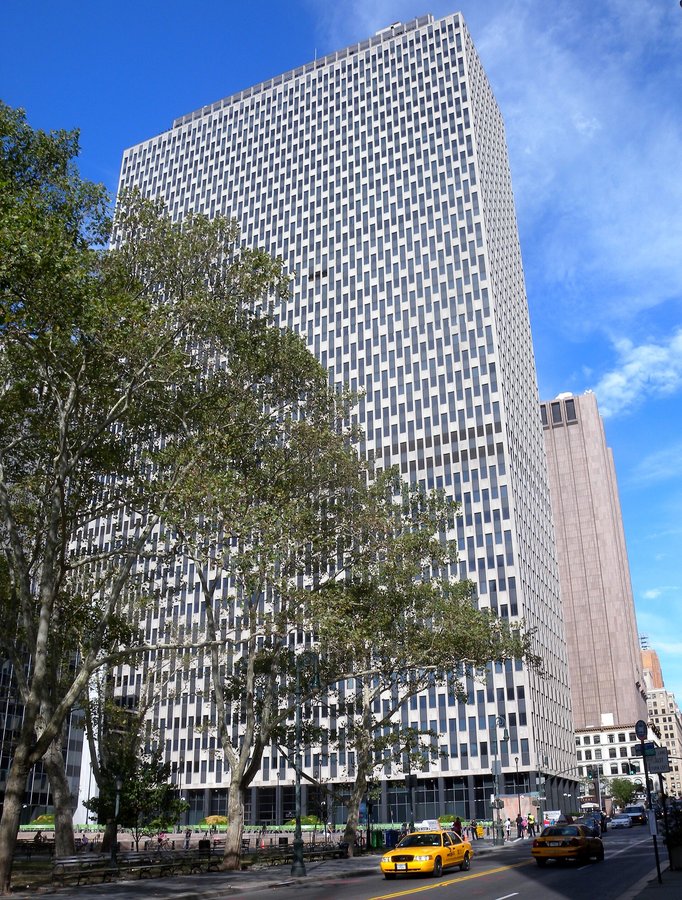
Manhattan — U.S. District Judge P. Kevin Castel on 1 October granted summary judgment to migrant-rights groups that sued Immigration and Customs Enforcement over civil arrests at immigration courthouses, holding that the agency’s approach was arbitrary and capricious under the Administrative Procedure Act — the main U.S. statute that requires federal agencies to explain and justify major policy changes.
Summary judgment means the judge decided the legal question on the written record without a full trial. Castel’s order, described by the American Civil Liberties Union and New York Civil Liberties Union as final and immediately effective, bars ICE from conducting civil immigration enforcement in or near immigration courthouses except under limited circumstances, and plaintiffs’ counsel say the relief applies nationwide, not only in New York City.
How the policy collapsed
Before the second Trump administration, ICE had generally avoided courthouse arrests for fear they would deter people from attending required hearings. In 2025 the agency ramped up arrests at Manhattan’s main immigration courts, including 26 Federal Plaza, often in hallways after routine appearances. Castel at first allowed the practice, relying on a May 2025 ICE memo that the government said authorized it.
Earlier this year ICE admitted in court that the memo never actually covered immigration courthouses. Federal prosecutors apologized for what they called a “material mistaken statement of fact.” Without that legal footing, Castel flipped course in May and blocked the arrests at three Manhattan immigration courts. Thursday’s thirty-six-page order goes further: he found ICE now appears to have “no policy whatsoever” guiding such arrests and that officers were left with “unfettered discretion … with no guidance whatsoever.”
Under the Administrative Procedure Act, an agency action is “arbitrary and capricious” when the agency fails to offer a reasoned explanation — including when it changes course without acknowledging the change. Castel held that ICE never provided a reasoned explanation for abandoning prior practice, and that the absence of a real policy is itself reviewable. “It is therefore arbitrary and capricious,” he wrote.
What the ruling restores
The order restores the substance of a 2021 policy that permitted courthouse-area civil arrests only in limited circumstances, rather than as a default enforcement tactic. The lawsuit was brought by African Communities Together and The Door, represented by the NYCLU, ACLU, Make the Road New York, and private counsel. A related claim about an Executive Office for Immigration Review dismissal policy was dismissed as moot because the government had already withdrawn that policy after an earlier order in the same case.
The ACLU said the ruling builds on a separate Northern California case, Pablo Sequen v. Albarran, that also rejected broad courthouse-arrest practices. Courthouse News and amNewYork reported that arrests at Manhattan immigration courts slowed after Castel’s interim block but did not stop entirely; advocates say the final nationwide framing is meant to close that gap.
A Department of Homeland Security spokesperson did not immediately comment, according to Courthouse News. The practical takeaway for noncitizens with immigration court dates is that showing up for a required hearing should no longer, under this order, expose them to open-ended civil arrest in the courthouse hallway — subject to the limited exceptions the restored policy still allows.
Floor: S.D.N.Y. Judge P. Kevin Castel on 1 October 2026 granted summary judgment in African Communities Together and The Door v. Lyons (et al.); ICE courthouse civil-arrest practice held arbitrary and capricious under APA; 2021 limited-circumstances policy restored; plaintiffs describe nationwide scope (Courthouse News; ACLU; amNewYork). Prior May stay followed ICE admission that 2025 memo never authorized immigration-court arrests (Courthouse News). Sources: Courthouse News Service; ACLU press release; amNewYork, 1 Oct 2026.
Sources: Courthouse News, 1 Oct 2026; ACLU, 1 Oct 2026; amNewYork, 1 Oct 2026.