
Courts · Washington
Judge Voids FEMA Election Conditions
A federal judge in Washington on 28 September vacated Trump administration rules that would have withheld 20 percent of counterterrorism grant money from states and cities unless they changed how they run elections, including citizenship checks on voter rolls and poll workers.
By ClarkWashington · Wednesday, 30 September 2026
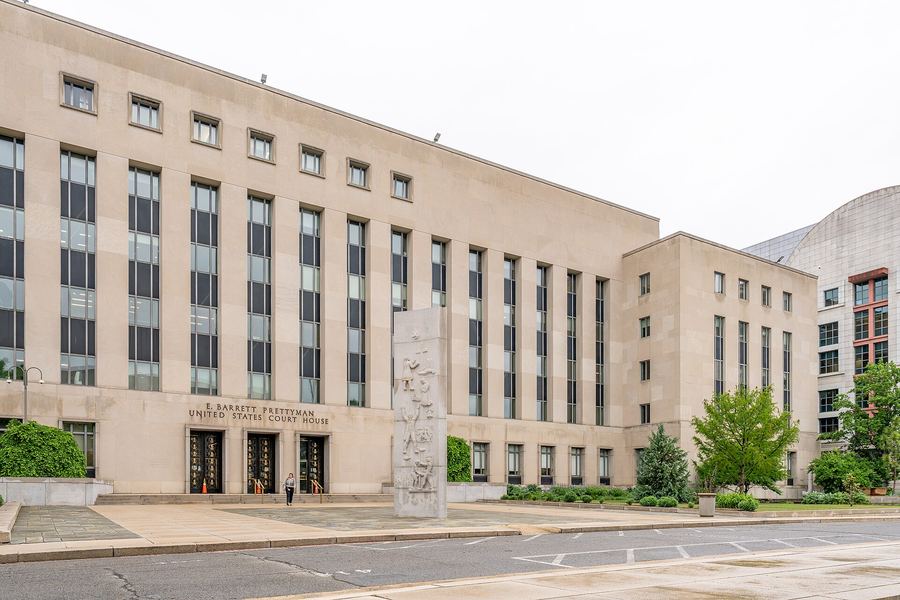
Washington — U.S. District Judge Amir H. Ali on 28 September struck down election-administration conditions that the Federal Emergency Management Agency had attached to federal counterterrorism grants, ruling that FEMA went beyond the authority Congress gave it.
FEMA is the federal agency inside the Department of Homeland Security that helps prepare for disasters and for terrorist attacks. Each year it runs the Homeland Security Grant Program, which sends roughly $1 billion to $2 billion to states and large urban areas for projects that prevent, prepare for, protect against, or respond to acts of terrorism. Congress wrote that purpose into statute after the September 11, 2001 attacks.
What FEMA demanded
In June 2026, FEMA published a Notice of Funding Opportunity — the formal invitation that sets the rules for who can get the money — for fiscal year 2026. That notice said states and designated high-risk urban areas had to make several changes to ordinary election administration or face a 20 percent holdback of their grant award until they proved compliance.
The required changes included: a plan to move from electronic voting systems that use barcodes or QR codes to hand-marked paper ballots; a post-election manual audit of 5 percent of ballots under federal guidelines; reconciliation of the number of voters who voted with the number of ballots cast; use of a federal citizenship-check system to verify everyone on the state voter registration database within 120 days of accepting the award, with removal of verified non-citizens; and citizenship checks for poll workers, election administrators and election-system vendors.
Counties in Texas and Tennessee, the metropolitan government of Nashville and Davidson County, and the city of Columbus, Ohio, sued FEMA and the Department of Homeland Security. They argued the conditions were unlawful and that complying in time for the November 2026 elections was impractical. The Brennan Center for Justice at New York University represented some of the plaintiffs.
What the judge held
Ali granted the plaintiffs partial summary judgment on their main Administrative Procedure Act claim. The Administrative Procedure Act is the federal law that lets courts set aside agency actions that exceed statutory authority. He vacated the election-administration conditions and the 20 percent holdback on pages of the funding notice, and he vacated FEMA's 10 August 2026 implementing guidance for those conditions.
He did not vacate the rest of the funding notice. A separate requirement that recipients spend at least 3 percent of the award on physical or cyber election-security investments was left standing; the plaintiffs had not challenged it.
Ali wrote that the statute lets FEMA fund counterterrorism projects that states and cities propose. It does not let FEMA withhold counterterrorism money until states pay, on their own, for routine election-administration reforms the federal government prefers. He also found that conditions about ballot form, audits, voter rolls and poll-worker eligibility are not tied to preparing for or responding to acts of terrorism as Congress defined the program. The government had framed the conditions as strengthening election integrity; Ali said that goal is not the counterterrorism purpose of the grant law.
He denied a permanent injunction, saying vacatur — wiping the unlawful conditions out of the notice — was the normal and sufficient remedy under the Administrative Procedure Act. A Department of Justice spokesman declined to comment to CNBC on the ruling. Harris County Attorney Abbie Kamin called the decision a win against holding public-safety funding hostage to force election-policy changes.
What happens next
FEMA had planned to issue fiscal year 2026 awards by 30 September. With the election conditions vacated, states and cities can accept Homeland Security Grant Program money without those election-administration demands, while the separate 3 percent election-security spending rule remains. The government can appeal. The ruling does not rewrite state election laws; it blocks FEMA from using this grant program as the lever to force those specific federal conditions.
Floor: U.S. District Judge Amir H. Ali (District of Columbia) vacated FEMA's FY2026 Homeland Security Grant Program election-administration conditions and 20% holdback on 28 September 2026, plus the 10 August 2026 implementing guidance; denied permanent injunction; left the rest of the NOFO, including the 3% physical/cyber election-security spend rule, intact (memorandum opinion, Metropolitan Government of Nashville v. DHS, No. 26-02886). Plaintiffs included Texas and Tennessee counties, Nashville/Davidson County, and Columbus, Ohio. Sources: court opinion (Brennan Center / Democracy Docket PDF); CNBC; Bloomberg Law, 28 Sep 2026.
Sources: U.S. District Court for the District of Columbia, memorandum opinion, 28 Sep 2026; same opinion, Democracy Docket; CNBC, 28 Sep 2026; Bloomberg Law, 28 Sep 2026.