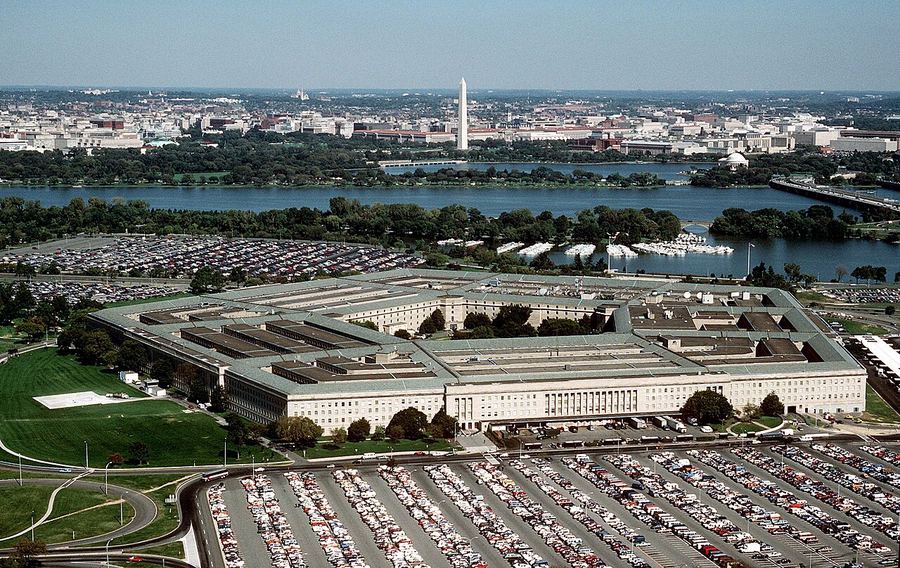
WASHINGTON — A federal appeals court on Friday, 25 September 2026, sided with the Pentagon, the U.S. Defense Department, in its fight with Anthropic, an American artificial-intelligence company. The court ruled 2–1 that the department acted within the law when it labeled Anthropic a "supply-chain risk." That label bars the military from using the company's AI models, sold under the name Claude, and bars defense contractors from using them in their work for the department. The ruling was reported the same day by CNBC, Breaking Defense and Reuters, whose story was carried by Military Times.
What the fight is about
Anthropic makes Claude, an AI system that can write, analyze documents and carry out tasks on a computer. In July 2025 it signed a $200 million contract with the Pentagon, CNBC reported. The relationship broke down over how the military could use the technology. The Pentagon wanted to be able to use Claude for any lawful purpose. Anthropic insisted that its technology not be used for fully autonomous weapons, meaning weapons that select and attack targets without a human making the decision, or for mass surveillance of people inside the United States, CNBC and Military Times reported. Talks over rolling Claude out on the Pentagon's internal AI platform, GenAI.mil, collapsed in September 2025, CNBC reported.
Defense Secretary Pete Hegseth accused Anthropic of seeking "veto power" over the operational decisions of the U.S. military, CNBC reported. In March 2026, the department formally labeled Anthropic a supply-chain risk.
What the label means
Being labeled a supply-chain risk means the government believes a supplier's products could endanger national security, for example through sabotage, hidden malicious functions or tampering. A 2018 law, the Federal Acquisition Supply Chain Security Act, lets agencies cut such suppliers out of government systems. By applying it to Anthropic, the Pentagon removed Claude from its own systems and from contractors' defense work.
What the court decided
The case was heard by a panel of three judges on the U.S. Court of Appeals for the District of Columbia Circuit, one of the most important courts in the country for cases involving the federal government. Two judges, Gregory Katsas and Neomi Rao, both appointed by President Donald Trump, made up the majority. The third, Judge Karen LeCraft Henderson, appointed by President George H.W. Bush, disagreed.
Writing for the majority, Katsas said: "The Department had ample support for its conclusion that the continued integration of Claude into the Department's information systems, by the Department or its contractors, presented a statutorily covered national-security risk." In plain terms, the court found the Pentagon had enough evidence that using Claude posed the kind of security risk the law covers.
Katsas also wrote: "In our Republic, it is the President and the Secretary of War who must determine how best to balance the competing risks." Secretary of War is a second title President Trump authorized for the defense secretary by executive order in September 2025. By law the job is still called secretary of defense; the House has voted to rename it, but the Senate has not, so the change is not law. Katsas added that the defense secretary "did not transgress any limits on his authority under the Supply Chain Security Act or the Constitution," CNBC reported.
The judge pointed to the limits Anthropic builds into Claude. Breaking Defense reported that Katsas noted these built-in restrictions had, more than once, stopped Claude from carrying out tasks that government users asked it to do. The majority also took up Hegseth's concern that an AI model with too many restrictions could shut down unexpectedly in the middle of an operation or could be manipulated. Katsas called that a "deeply sobering" prospect, Military Times reported.
The dissent
Judge Henderson said this was not what Congress had in mind when it passed the 2018 law, Breaking Defense reported. She said the law was meant to protect against sabotage by hostile foreign governments, not to punish a U.S. company that openly builds safety and ethics limits into its products.
The California case
There is a second, separate court fight. Last month in San Francisco, U.S. District Judge Rita Lin ruled that a related designation of Anthropic, made under a different law, was illegal. She blocked a ban on Claude across the whole federal government and a ban on contractors using it, CNBC, Breaking Defense and Military Times reported. Friday's ruling in Washington covers only the Defense Department's supply-chain label, so Judge Lin's ruling still stands.
Anthropic's response
Anthropic said it "respectfully disagree[s] with the court's decision," pointed to Judge Lin's ruling, and said it remains "confident in our position and [is] considering all options, including further review," CNBC and Breaking Defense reported. The company says the blacklisting has cost it billions of dollars in lost business and has hurt its reputation ahead of its planned initial public offering, its first sale of shares on the stock market, Reuters reported through Military Times.
What happens next
The court delayed the effect of its ruling to give Anthropic time to ask for a rehearing. Anthropic can ask the same three judges to reconsider, or ask the full D.C. Circuit court, with all of its active judges, to rehear the case, which is known as en banc review. It could also ask the U.S. Supreme Court to take the case, CNBC noted. Meanwhile, contractors face two rulings pointing in different directions, one from Washington upholding the Pentagon's label and one from California blocking the wider bans.
Floor: U.S. Court of Appeals for the D.C. Circuit, 2–1, Friday 25 Sep 2026, upholds the Defense Department’s supply-chain-risk designation of Anthropic under the Federal Acquisition Supply Chain Security Act. Majority: Judges Katsas and Rao (Trump appointees); dissent: Judge Henderson (George H.W. Bush appointee). Katsas: ample support for a national-security risk; the President and the Secretary of War balance competing risks. Designation came in March after talks collapsed: the Pentagon wanted use for all lawful purposes; Anthropic refused fully autonomous weapons and domestic mass surveillance. The designation blocks military and contractor use of Claude for Defense Department work. In San Francisco, U.S. District Judge Rita Lin last month held a parallel designation unlawful and blocked government-wide and contractor bans; the D.C. ruling covers the Defense Department designation only. The panel delayed its ruling’s effect so Anthropic can ask for rehearing by the panel or the full court. Anthropic is considering all options, including further review. Anthropic says the blacklisting has cost it billions of dollars and hurt its reputation before a planned share listing (Reuters via Military Times). Hegseth “veto power” accusation (CNBC). Sources: CNBC, Breaking Defense, Reuters via Military Times, 25 Sep.