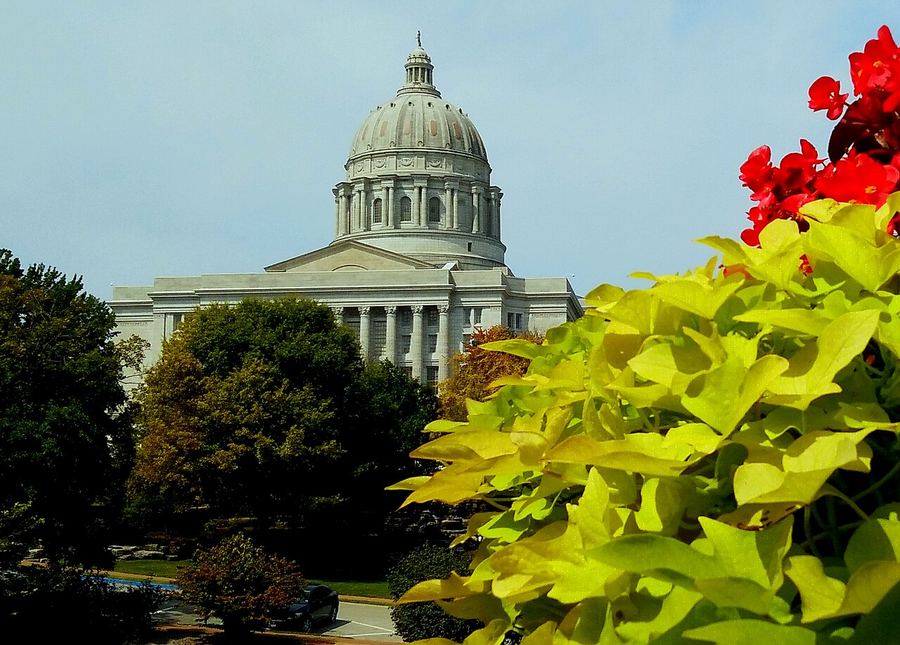
WASHINGTON — The Supreme Court on Friday, 25 September 2026, cleared the way for Missouri to use its existing 2022 map of congressional districts in this year's election, not a new map drawn by the state's Republican lawmakers in 2025. The Court blocked orders from two lower federal courts that would have forced the state to switch to the new map even though voting has already started. It told those courts not to try again. Reuters reported it was the third time the Supreme Court had intervened in the dispute, and that no justice publicly disagreed.
What the fight is about
Every state with more than one member in the U.S. House of Representatives is divided into districts, and each district elects one member. The lines are redrawn from time to time, a process called redistricting. Where the lines fall can decide which party wins a seat.
Missouri's legislature drew a House map in 2022. In 2025, lawmakers passed a new one. Reuters reported that the 2025 map broke up a Kansas City district held by Democratic Rep. Emanuel Cleaver, and that President Trump had urged Republican-led states last year to redraw their House maps.
A petition was filed to put the new map to a referendum, a statewide vote in which citizens decide whether to keep a law. People Not Politicians, a Missouri group, is the side that brought this case to the Supreme Court. Under Missouri's constitution, as the state's top court reads it, a new law does not take effect while a valid referendum petition is pending, until voters approve it. On 3 September 2026, the Missouri Supreme Court ruled that the 2025 map "is not the law and has never been the law" until that vote happens. Under state law, that meant the 2022 map had to be used this year. By then, Missouri had already held its August primary, the earlier vote in which each party picks its candidates, using the 2025 map. The state's top election official had chosen to go ahead with the 2025 map for that vote.
How it reached the Supreme Court
Supporters of the 2025 map then went to federal court. They argued that the U.S. Constitution requires Missouri to use the 2025 map, even though state law delays it until the referendum.
On 8 September, Justice Brett Kavanaugh, who handles emergency requests from that part of the country, refused to block the Missouri Supreme Court's decision. That same evening, a federal trial court in Missouri issued a temporary restraining order, a short-term emergency order, that in practice required the state to use the 2025 map. The Supreme Court described that as granting relief that Kavanaugh had just denied. On 10 September, the full Supreme Court put that order on hold, with no justice noting disagreement, and the election began under the 2022 map.
Then, on 21 September, the federal appeals court that covers Missouri, the U.S. Court of Appeals for the Eighth Circuit, told the trial court to issue a permanent order that would effectively require the 2025 map. The trial court issued orders on 21 and 22 September. Those are the orders the Supreme Court blocked on Friday.
What the Supreme Court decided
The Court issued an unsigned opinion, meaning it is issued in the Court's name and no justice is named as its author. No justice publicly disagreed. It paused all of the lower-court orders and said those courts "should not enjoin or otherwise prohibit the use of the 2022 map in the 2026 congressional election in Missouri" and "should not order or otherwise require Missouri to use the 2025 map." To enjoin means to order someone to stop doing something.
Given its two earlier orders, the Court said, its conclusion that the appeals court was wrong "should come as no surprise."
The Court gave two reasons. The first is about timing. The Supreme Court has long held that federal courts should not change a state's election rules close to an election, because late changes confuse voters and election workers. This is known as the Purcell principle, named after a 2006 case. "Lower federal courts should not 'alter the election rules' of a state 'on the eve of an election,'" the Court repeated. Here the election had already started. Ballots with the 2022 districts have been printed and mailed, and absentee voting (voting by mail before Election Day), including voting by military members and citizens overseas, is under way. Local election officials told the appeals court it would be "practically impossible to revert" to the 2025 map. Forcing a switch "in the midst of an ongoing election would usher in electoral chaos," the Court wrote, a line Reuters also highlighted.
The second reason is about the law itself. The map's supporters relied on Article I, Section 2 of the Constitution, the part that sets out how members of the House are chosen. The Court said none of its earlier decisions has held that this section requires a state to use the same map in the general election that it used in the primary. When the balance of harms weighs so heavily against a late change, the Court said, it is enough that the legal question is "not entirely clearcut."
Reactions
Richard von Glahn, executive director of People Not Politicians Missouri, praised the ruling. He said the group is "done with corrupt politicians trying to force their map into effect outside the process outlined in the Missouri constitution" and that "people, not politicians will be the final deciders," Reuters reported. A spokesperson for the Republican National Committee, the national Republican Party's organization, said the decision "throws Missouri voters into unnecessary uncertainty after they already cast their primary ballots," Reuters reported.
What happens next
Missouri will hold its 3 November congressional election using the 2022 districts. Voters will decide in the 3 November election whether the 2025 map becomes law. The federal lawsuit over the map can continue, but the Supreme Court said lower courts may not require the 2025 map for this year's election.
Floor: Supreme Court unsigned (per curiam) opinion, 25 Sep 2026, No. 26A388, People Not Politicians v. Onder. It pauses the U.S. Court of Appeals for the Eighth Circuit’s 21 Sep mandate and 22 Sep order and the 21 and 22 Sep injunctions of the U.S. District Court for the Eastern District of Missouri; the Court’s 10 Sep stay remains. The 2022 map is used for Missouri’s 2026 congressional election; lower courts must not require the 2025 map. Missouri Supreme Court, 3 Sep: the 2025 map “is not the law and has never been the law” pending a referendum. The election has begun under the 2022 map: ballots printed and mailed; absentee, military and overseas voting underway; county election officials told the appeals court it is “practically impossible to revert.” Rule against late changes to election rules (the Purcell principle); the merits of the claim under Article I, Section 2 of the U.S. Constitution are “not entirely clearcut.” “Electoral chaos” quote. Reuters: third Supreme Court action in the case; no justice publicly dissented; the 2025 map dismantled Rep. Emanuel Cleaver’s Kansas City district; von Glahn praise; Republican National Committee uncertainty quote; Trump urged Republican-led states to redraw maps. Sources: Supreme Court opinion and Reuters, 25 Sep.