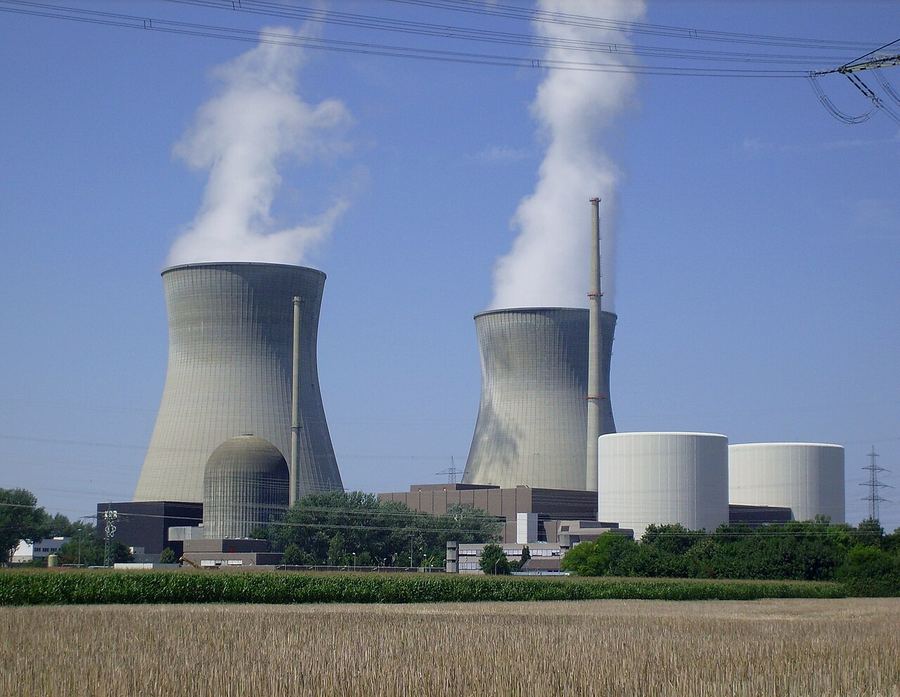
Unit 3 of the Huaneng Changjiang Nuclear Power Plant Phase II in China’s island province of Hainan entered commercial operation on Thursday, 17 September 2026, according to World Nuclear News, China Daily and Global Times reports opened for this pack. The unit is the first of two Hualong One (HPR1000) reactors under Phase II and is described by China Daily and Global Times as Hainan’s first reactor powered by the indigenous third-generation Hualong One design. It is also, China Daily and WNN report, the first large-scale pressurized-water reactor that China Huaneng Group has constructed and operated as the controlling stakeholder — after Huaneng’s controlling stake in the Shidaowan HTR-PM demonstration high-temperature gas-cooled reactor, which entered commercial operation in December 2023, WNN notes.
The mechanism is reactor physics and grid connection on a fixed commissioning path. World Nuclear News records first concrete for Unit 3’s nuclear-island base slab in March 2021, with Unit 4’s base slab poured in December of that year. Changjiang 3 achieved first criticality — a sustained chain reaction — on 10 July 2026 and was connected to the grid on 1 August. Phase II is two units of about 1.2 gigawatts each — China Daily’s “1.2-gigawatt” framing and Global Times’ “1.2-million-kilowatt” wording are the same class — with a total estimated investment of CNY 40 billion (about USD 5.9 billion) according to China Huaneng via WNN. China Huaneng holds a 51 percent share in the project. Both Phase II units are scheduled to be fully operational in early 2027, WNN says. China Daily adds that the project has driven indigenous design of nuclear infrastructure and maximized localization of domestic equipment manufacturing, and describes Hualong One as integrating active and passive safety design concepts.
Named actors and output claims: Liu Bin, general manager of Huaneng Hainan Changjiang Nuclear Power Company Ltd, is quoted by China Daily (and echoed in WNN) that upon full Phase II completion the project is expected to generate 18 billion kilowatt-hours of clean electricity a year, replace more than 6.32 million metric tons of standard coal and cut carbon dioxide emissions by about 11.6 million tons annually. Global Times, citing China Huaneng figures obtained for that report, puts the same annual generation at 18 billion kWh with coal savings of about 6.326 million tons and CO₂ reductions of 11.68 million tons — desk notes the rounding difference and attributes both. Soft FLAG: those annual figures are full Phase II projections, not Unit 3 alone.
Site context from WNN: Changjiang already hosts two operating CNP-600 PWRs — Units 1 and 2, commercial in 2015 and 2016 — and China National Nuclear Corporation began construction in 2021 of a demonstration ACP100 small modular reactor (Linglong One), a multi-purpose ~125 MWe PWR designed for electricity, heating, steam or desalination, now in pre-commissioning tests. Soft FLAG: Global Times’ on-site colour — Unit 4 completing a cold functional test on 6 September; a domestic nuclear production-management system using video, 5G and AI; plant official Che Yu on Hainan’s shift from a 220 kV island grid toward 500 kV after million-kilowatt units; undersea shield-tunneling cost of 300–400 million yuan to bypass coral — is that outlet’s reporting, attributed, not independently verified by this desk. Soft FLAG: Global Times’ national nuclear capacity figures (66.14 GW operational end-June; +3.62 GW net in H1; 234.6 TWh generation in H1) are that outlet’s statistics block.
What to watch without mood: Unit 4 commissioning toward the early-2027 Phase II full-ops target; any Hainan grid or Huaneng traffic on delivered megawatt-hours after commercial declaration; progress notes on the ACP100/Linglong One demonstration unit at the same site.
Floor: Changjiang Unit 3 commercial 17 Sep — Hainan’s first Hualong One; first criticality 10 Jul; grid 1 Aug; Phase II two ~1.2 GW units, early-2027 full-ops target.