Saudi-listed ACWA Power announced on 6 September 2026 that its consortium has reached Project Commercial Operation Date (PCOD) for the utility systems serving The Red Sea destination. The company’s media-centre release — opened for this pack, with matching EcoPulse24 recirculation — says the Commercial Operation Certificate was signed by Marafiq Red Sea for Energy Company (“Marafiq”), the ACWA-led project company formed with SPIC Huanghe Hydropower and Saudi Tabreed, and by The Red Sea Utilities Company, a subsidiary of Red Sea Global. Soft FLAG: PCOD is dated 6 September in the ACWA release; this edition recirculates that primary.
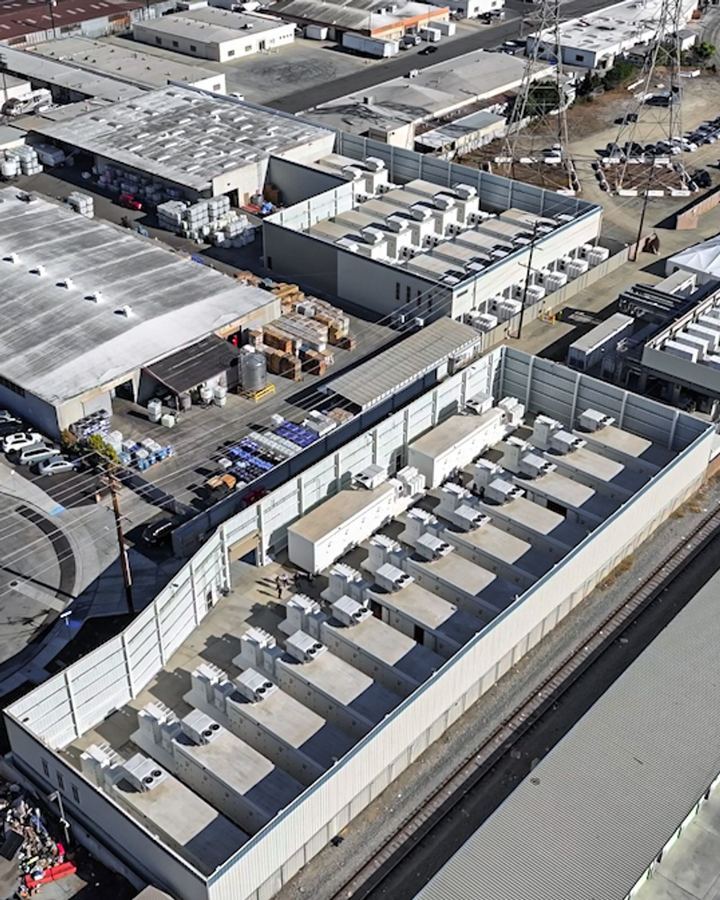
The mechanism is integrated off-grid utilities under one concession. Generation comes from a 340 MWac solar photovoltaic plant paired with a 1,227 MWh battery energy storage system that ACWA describes as the largest off-grid battery installation built anywhere. Soft FLAG: “world’s largest off-grid battery” and “first giga-project in the Kingdom to bring its entire utility systems into commercial operation powered solely by renewable energy, with no reliance on or support from the national grid” are company phrasings — attribute, do not certify global rankings beyond the named configuration. The pairing is sized to supply the destination through the night; ACWA puts annual clean generation at up to 760,000 MWh and avoided carbon dioxide at around 600,000 tons a year when running at full capacity.
Beyond power, the same concession covers three seawater reverse-osmosis plants, a waste-management centre, a sewage treatment plant rated at 16,000 cubic metres per day, and district cooling totaling 32,500 refrigeration tons serving hotels and the airport, the release states. The system now serves Red Sea Global’s operational hotels, Red Sea International Airport, the logistics hub, electric fleet, staff village and community facilities. Financial close had been announced in February 2022 with about U.S. $1.33 billion in senior debt and total investment around U.S. $1.84 billion, funded by Saudi and international banks. EPC was SEPCO III (Shandong Tiejun consortium); operations and maintenance sit with ACWA Operations under a long-term agreement aligned with the 25-year concession.
Named actors: Mohammad Abunayyan, founder and chairman of ACWA, framed the project as embodying Saudi Vision 2030 and as a public–private model for integrated utilities. John Pagano, group CEO at Red Sea Global, said the destination is operating without a national-grid connection and powering itself entirely through renewable energy. Construction-phase colour in the ACWA text: an LTI-free milestone across 30 million safe working hours; Environmental and Social Impact Assessments and permits from the National Center for Environmental Compliance; local content in equipment, materials and Saudi engineering staffing — all company-reported.
Scale of integration, restated without mood: five utility services — renewable power, potable water, wastewater, district cooling, waste management — sit inside one 25-year concession rather than as separate EPC handovers. ACWA’s release says that structure is deliberate because the obligations can conflict unless designed cohesively. Soft FLAG: Vision 2030 and “regenerative tourism” language in the Abunayyan and Pagano quotes is attributed colour from the principals, not desk endorsement.
What to watch without mood: any Red Sea Global phase notices that trigger stated capacity expansions alongside destination growth; published operating data for the 1,227 MWh battery through peak tourism seasons; whether sister giga-projects cite this concession structure as a template in their own filings.
Floor: Red Sea PCOD signed — 340 MWac solar + 1,227 MWh battery, off-grid; 25-year Marafiq concession covers power, water, cooling, waste.