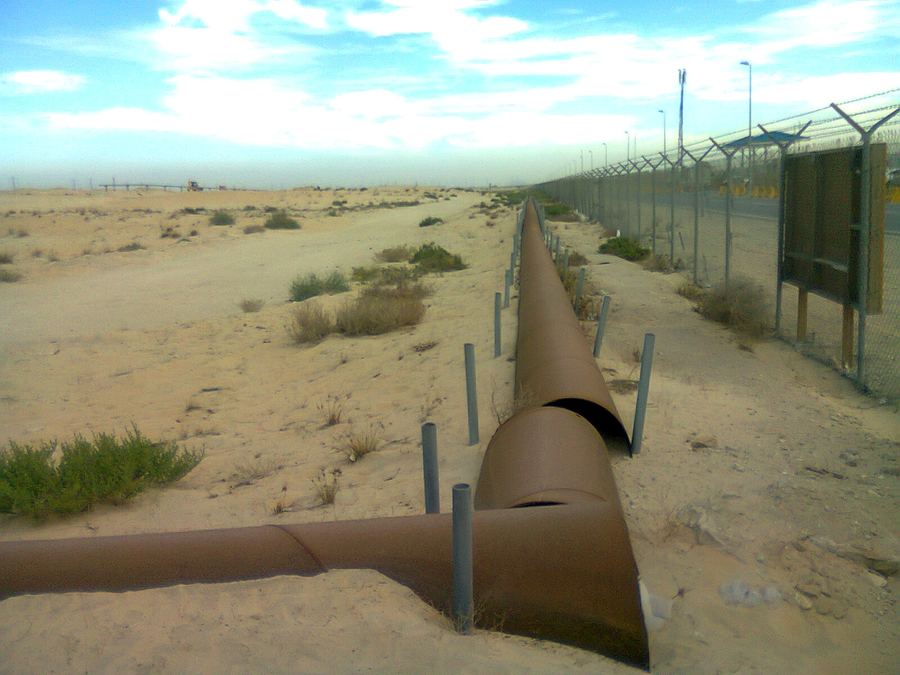
Two regional officials briefed on the damage told the Associated Press on Monday 14 September that repairing Saudi Arabia’s East-West oil pipeline — including work at a major pumping facility — could take three to five weeks, and that the line may work partially while teams repair the damage. They could not say how much oil might get through during partial operations. The officials spoke on condition of anonymity because they were not authorized to brief the media. Middle East Eye’s live-blog update the same day carried the same Associated Press framing: mostly out of service for three to five weeks, pumping-facility work, partial ops possible.
That is a different fact pattern from last week’s shut-and-postpone lead. The measurable news on 14 September is the repair clock and the U.S. energy secretary’s public timeline language — not the initial closure itself.
U.S. Energy Secretary Chris Wright, speaking Monday on Bloomberg Television, said he thinks “you’ll see that pipeline running back soon,” according to Bloomberg’s write-up of the interview; Argus Media’s same-day market note quotes him saying the pipeline will be “back running very soon,” without a firm date, and reports that he said he might have more clarity on a restart timeline on Tuesday, 15 September. The Associated Press wrap carried by Daily Sabah does not quote Wright; Argus and the Bloomberg Television interview are the opened sources for that line.
The mechanism is named and geographic. The East-West pipeline — also called the Petroline — runs about 1,200 kilometres (745 miles) from eastern Saudi fields toward the Red Sea port of Yanbu, a wartime bypass around the Strait of Hormuz. Associated Press material in the Daily Sabah wrap puts total capacity at up to 7 million barrels a day and notes the line had appeared to be moving about 4 million barrels a day — about 4% of world oil supplies — based on Red Sea outlet volumes at Yanbu cited via an Atlantic Council report. Al Jazeera’s 14 September explainer, citing Reuters and Kpler, puts recent wartime westbound flows in a roughly 4–5 million barrels-per-day band and notes August Kpler flows near about 2 million barrels a day as Red Sea risk rose; Al Jazeera also flags that repair-time estimates vary, with some Reuters-familiar sources talking five to six weeks and another source saying a sooner restart is possible. The desk keeps those as attributed ranges, not as a single firm COD.
Saudi Arabia shut the line after an attack it blamed on drones from militias in Iraq; Associated Press dates the forced shutdown to Thursday in the Daily Sabah wrap, while Argus dates Aramco’s shut to 10 September after attacks Riyadh said originated in Iraq. Aramco did not immediately respond to Associated Press comment requests in that wrap; Saudi Arabia’s Center for International Communication said it was looking into an inquiry about repair duration. Al Jazeera notes the Ministry of Energy framed the shutdown as a precautionary measure after damage and injuries in the Riyadh and Medina regions.
Oil prices on the Monday Associated Press account gained more than 2% amid supply worries. Argus separately put front-month Ice Brent around $107 a barrel Monday, up about $10 on the week — market colour attributed to Argus, not a desk forecast.
Al Jazeera’s mechanism section also notes Yanbu stocks and Egyptian storage at Ain Sukhna and Sidi Kerir as short buffers if the line stays shut — attributed Reuters-familiar sourcing inside that explainer, kept as context only. The desk’s load-bearing repair clock remains the Associated Press officials’ three-to-five-week band and Wright’s “soon” language, not those buffer estimates.
What to watch without mood: any Aramco or Saudi official restart notice; whether partial pumping resumes before full repair; Wright’s Tuesday clarity if he provides it; Yanbu loading figures as they are published.
Floor: AP officials — mostly out 3–5 weeks, pumping work, partial ops possible; Wright (Bloomberg TV / Argus) — “soon” / “very soon,” more clarity possible 15 Sep.