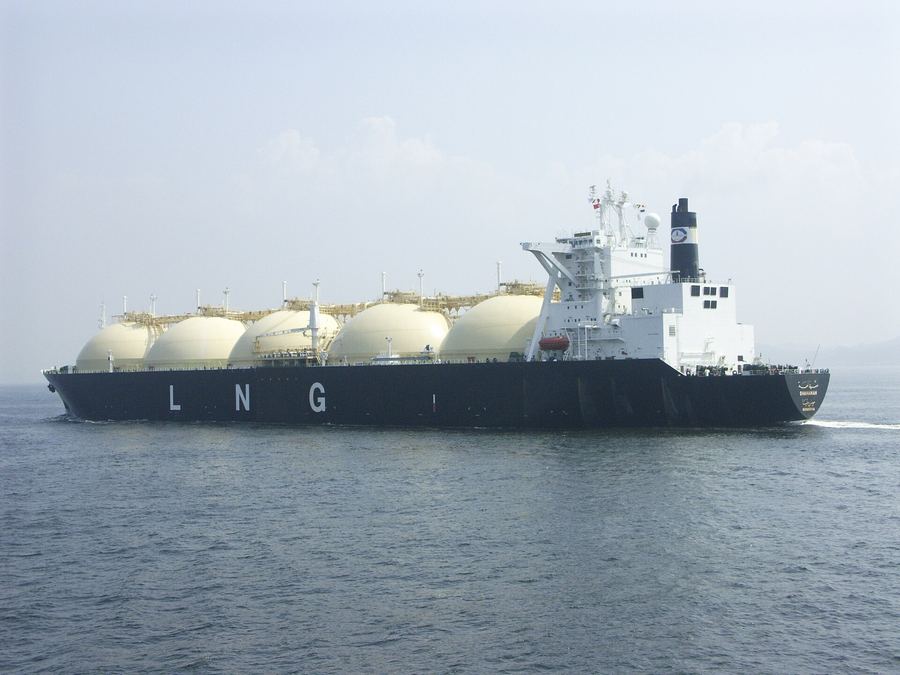
Yangzijiang’s yard company page, dated 10 September, says YANGZE LNG 01 finished its first cross-border commercial freight run from Oman to Shenzhen, berthed in the Shenzhen port area, and completed unloading. The hull was built by group yard Yangzi Xinfu Shipbuilding; the group’s shipping centre took part in commercial operations and safety management. The company says the maiden commercial passage ran smoothly and that port-state control on arrival passed with no deficiencies — a clean PSC sheet on first commercial call is the operational claim, not a launch speech. LNG Prime, the same day, confirmed the maiden-voyage wrap for the 175,000-cbm ship and identified it as the first large LNG carrier built by a private Chinese shipbuilder.
Large LNG carriers are among the highest-barrier commercial hulls: flexible and rigid membrane work, pump towers, cargo pumps, and full liquid-cargo system commissioning. The Chinese release says the Yangzi Xinfu team worked those steps with technical support from GTT and ran construction, trials, and acceptance under a full-process quality system. Specs listed: overall length 297 metres, breadth 46 metres, depth 26.5 metres; classed by Bureau Veritas; GTT MARK III Flex membrane containment; two dual-fuel MAN 5G70ME-C10.5-GA-EGRBP main engines; a 1.5-tonne-per-hour reliquefaction plant able to meet IMO emission limits in fuel-oil and gas modes; BV notations including LNG dual-fuel, propulsion redundancy (AVM-DPS), one-man bridge (SYS-NEQ-1), Clean Ship, and Green Passport; plus integrated navigation monitoring, safety, and cargo-monitoring systems sized for long ocean cycles.
The company draws a line between a builder’s sea trial and this commercial first cargo. Ocean passage, it says, kept power, containment, and monitoring stable; energy-use and cargo-retention numbers met design; Shenzhen discharge closed the loop. After that, the ship moved into normalised commercial operations and linked an Australia-route second voyage without an idle gap — a turnaround claim the desk can watch against subsequent AIS and fixture reporting. Yangzijiang frames the milestone as making the group China’s fourth yard, and the first private one, in the large LNG carrier build club.
What the competitive fact is, stripped of brochure language: membrane LNG newbuilds have been dominated by a short list of yards with GTT know-how and serial experience. A private Chinese group clearing that barrier on a 175,000-cbm MARK III Flex ship, then proving the hull on a real Oman export cargo into Shenzhen — and turning onto an Australia second voyage — is a supply-side change in who can deliver that class. LNG Prime’s one-line confirm matches the company chronology without adding volume claims the desk cannot open.
Readers should not confuse a successful first commercial cargo with a finished orderbook story. The pages opened do not state how many sister ships are under construction or when the next hull delivers. They do state that this ship is in commercial service after Oman–Shenzhen and that the Australia leg is already sequenced.
What comes next is schedule, not symbolism: second-voyage performance on the Australia run, and whether follow-on hulls from the same private yard clear the same commercial bar.
Floor: Maiden Oman–Shenzhen commercial cargo complete; PSC clean on company account; Australia second voyage already sequenced.