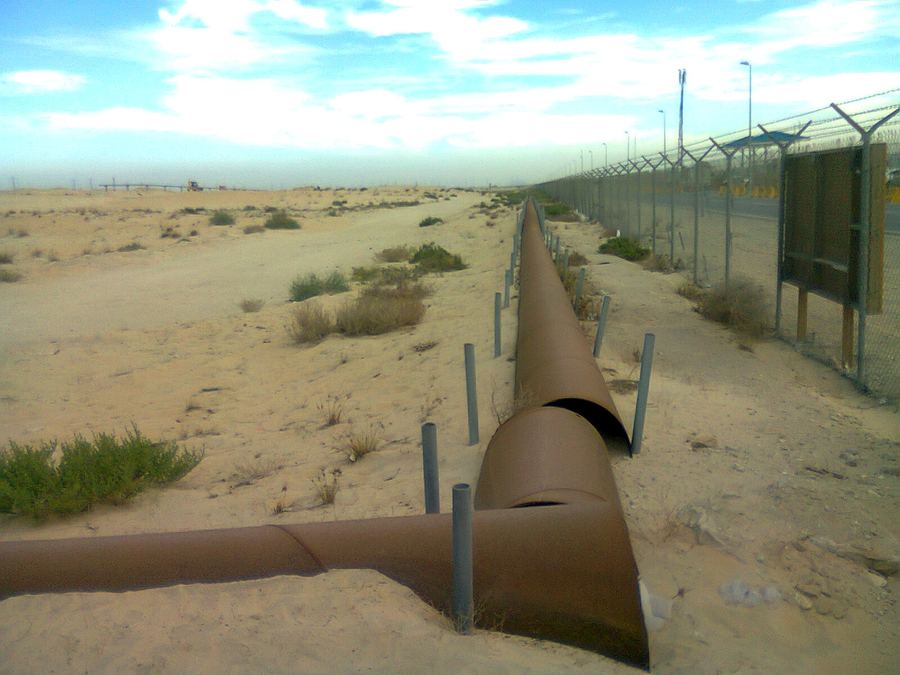
Reuters, writing from Beijing early Monday 14 September, said oil jumped more than 2% after new Houthi strikes on Saudi Arabia and Iranian attacks on ships in the Gulf compounded supply worries following the pipeline closure. Brent crude futures were up $2.90, or 2.77%, to $107.51 a barrel as of 2313 GMT on the figures in that story; WTI was up $2.27, or 2.27%, to $102.32. Prices had risen more than 3% at the open. Oil had already surged about 8% on the week, climbing back above $100 for the first time since July.
The mechanism is geographic and named. The 1,200-kilometre East-West pipeline across the Arabian Peninsula had been moving Saudi crude to Red Sea export routes while Hormuz traffic stayed disrupted in the six-month U.S.–Israel–Iran war. Reuters says the line was shut on Friday by a drone strike that originated in Iraq, and that its loss threatens up to about 4% of global oil supply. That bypass had been the market’s main wartime escape around Hormuz; Reuters ties the shut line to as much as about 4% of global oil supply.
At sea, the British maritime security agency UKMTO said on Sunday a vessel in the Strait of Hormuz was struck by a projectile, causing a fire and forcing a crew evacuation. Iran said one person was killed and four crew wounded aboard an Iranian commercial vessel struck off its coast. On land, Saudi state media released video of damage to homes and a mosque from what it said was a Houthi attack on southern Jazan province; the Houthis said they had also hit a Saudi military base in a neighbouring province.
Diplomacy moved the other way. Omani Foreign Minister Badr Albusaidi said on X late Sunday that a scheduled Monday meeting in Oman between Gulf countries and Iran to discuss the Strait of Hormuz had been postponed. Reuters notes no peace talks have been held in the war — launched about six months ago by the United States and Israel — since an interim agreement in June collapsed after a few weeks. Separately, the same wire says Yemen’s Iran-aligned Houthis reached the strategic island of Perim on Friday, tightening their hold near the Bab el-Mandeb Strait, another lane that has been shipping about 4–5% of global supply in recent months.
IG market analyst Tony Sycamore, quoted by Reuters, put the near-term fork plainly: unless the Oman talks produce something operational or the East-West line comes back quickly, crude risks extending toward the early-March high around $119.48. That is a market note, not a desk forecast — the observable facts are the shut pipeline, the postponed meeting, the Sunday maritime reports, and Monday’s open above $100.
The desk lays the sequence as printed: Friday pipeline shut, Sunday maritime and Houthi reports, Sunday Oman postpone, Monday oil open above $100. Readers can watch repair notices and any new Muscat date without needing a thesis about the war’s end.
What comes next is checkable without mood: repair or restart notices for the East-West line; any new date from Muscat; UKMTO and regional military statements on Hormuz and Bab el-Mandeb traffic.
Floor: East-West pipeline shut (up to ~4% global supply at risk on Reuters’ framing); Oman meeting postponed; Brent ~$107 on the Monday open printed.